A Venetian Capriccio — History & Facts
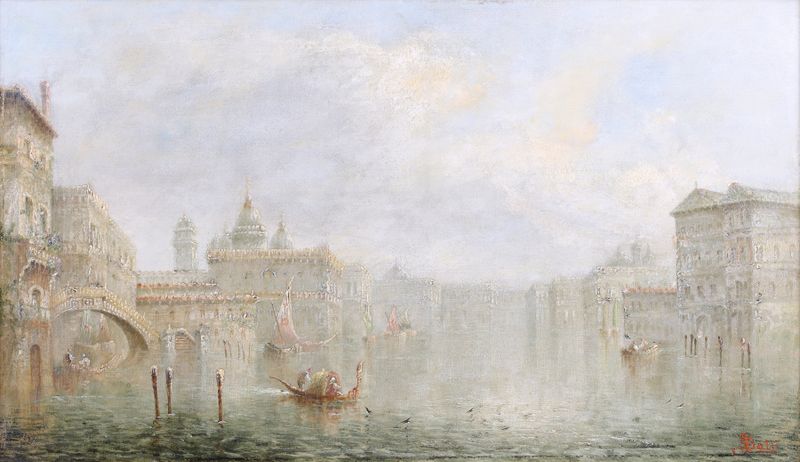
In the delicate brushstrokes of A Venetian Capriccio, memory intertwines with imagination, allowing the viewer to drift through a dreamscape of nostalgia and beauty. Look closely at the intricate blend of architectural forms, where imaginary palaces and bridges coexist. The soft hues of blues and ochres dance upon the canvas, inviting you to trace the lines of each structure that rises fluidly from the water's surface. Notice how the warm sunlight bathes the scene, casting elongated shadows that deepen the sense of mystery and longing, as if these buildings are remnants of forgotten tales. Delve deeper, and you will find an interplay of reality and fantasy.
The juxtaposition of the serene canal with the fantastical architecture evokes a sense of yearning for places that may never have existed. Each figure, rendered in such thoughtful detail, appears lost in their own reverie, suggesting a collective nostalgia for moments that have slipped away, urging us to question what we remember and what has been altered by time. James Salt crafted this evocative piece during a period when artists began exploring the bounds of imagination and memory. Although the exact date of creation is unknown, Salt's work emerged amidst the 19th-century fascination with landscapes and the picturesque, a time when the romantic sensibilities were at the forefront of artistic expression.
The ethereal quality of this painting reflects both the aspirations of its creator and the broader currents of art that sought to capture the ephemeral nature of beauty.