
A Venetian Capriccio — History & Facts
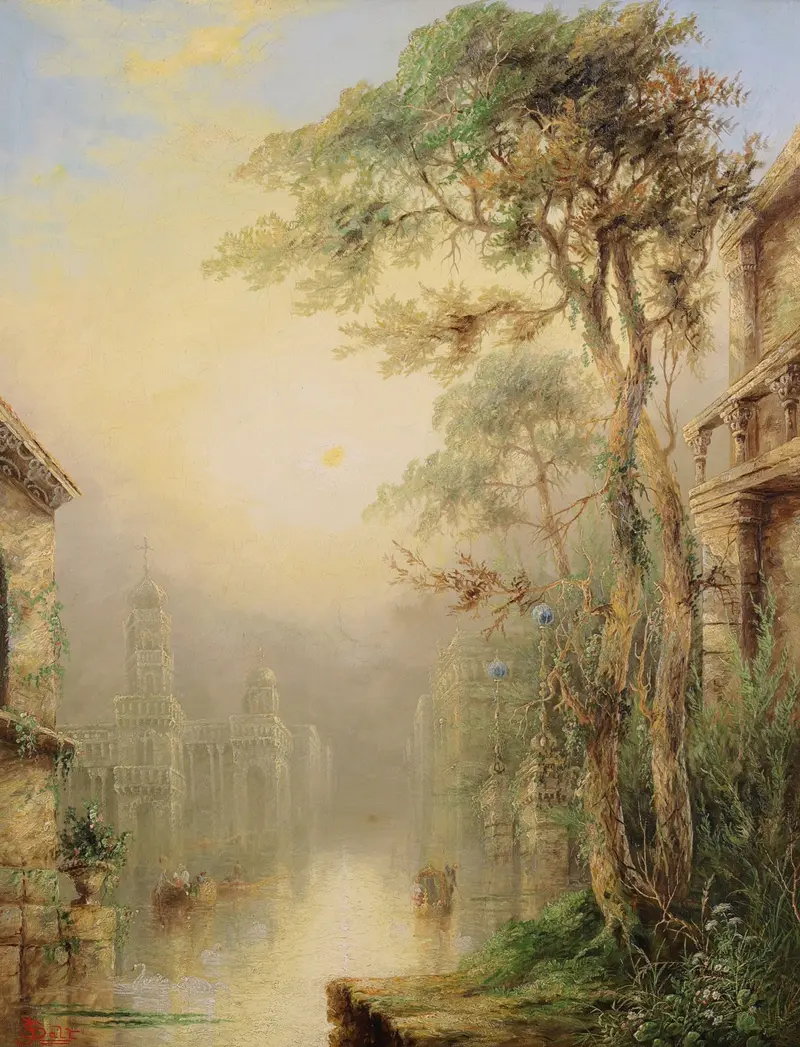
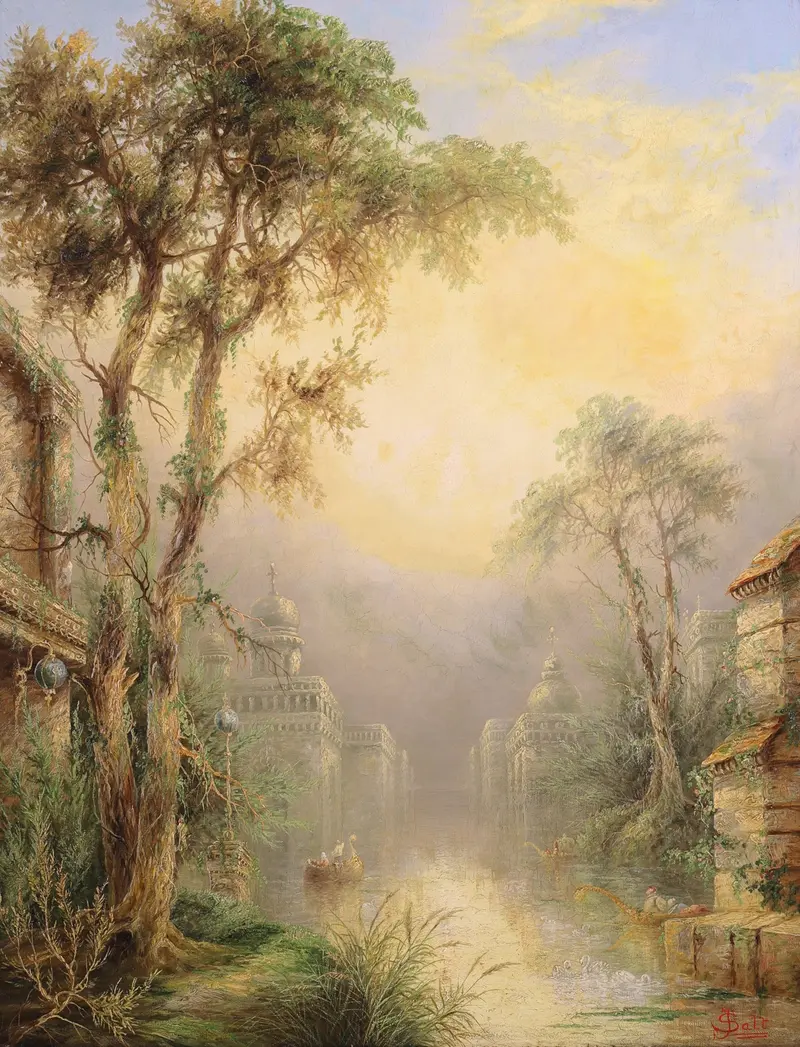
Is this a mirror — or a memory? The fractured reflections of bustling canals and timeless architecture capture both reverie and discord, inviting the viewer to contemplate the violent juxtaposition of beauty and chaos. Look to the center where the shimmering water mimics the vibrant hues of the sky. Notice how the artist masterfully blends blues and golds, creating a mesmerizing dance of light that flickers across the surface. The intricate architectural details, with their sharply defined lines and soft curves, pull the eye outward, while the contrasting shadowy areas lend depth and intensity to this whimsical landscape. The composition evokes a sense of longing, as if these serene waters conceal deeper currents of unrest.
The vibrant colors, though initially inviting, suggest a hidden turmoil beneath the surface. Ponder the juxtaposition of the lively figures against the stillness of the water — their carefree gestures are at odds with the undercurrents of violence that can ripple through even the most picturesque settings. James Salt painted this work during a time when the art world was experiencing significant shifts toward romanticism and the capriccio genre. His immersive response to Venice's allure reflected both a personal fascination and broader artistic trends of the late 19th century.
While the exact date remains uncertain, Salt’s ability to capture the duality of serenity and chaos speaks to a period ripe with exploration and innovation in depicting urban landscapes.
More Artworks by James Salt
More Landscape Art

Starry Night
Vincent van Gogh

View of Delft
Johannes Vermeer

Water Lilies
Claude Monet

The Grand Canal, Venice, looking north-west from the Ca' Corner to the Ca' Contarini degli Scrigni, with the campanile of Santa Maria della Carità
Canaletto

Windsor Castle
Canaletto

The Grand Canal looking North-East from the Palazzo Dolfin-Manin to the Rialto Bridge
Canaletto