A Venetian Capriccio — History & Facts
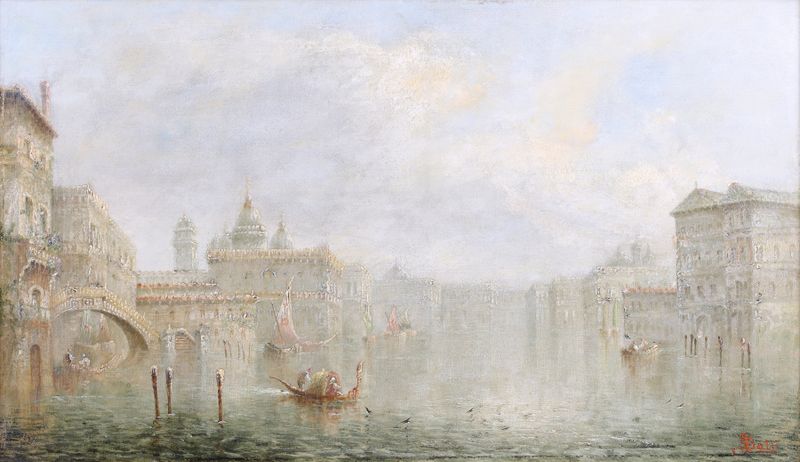
What secret hides in the quiet of the canvas? In the enigmatic stillness of A Venetian Capriccio, a mesmerizing world unfolds, inviting us to explore the interplay between reality and imagination. Look closely at the horizon where soft pastel hues meld into one another, creating a dreamlike skyline bathed in twilight. The delicate archways and ethereal reflections in the water draw your eye, leading you on a journey through the painting. Notice how the subtle brushstrokes evoke a soothing rhythm, enhancing the serene atmosphere.
The intricate details of the architecture, intertwined with the flowing water, suggest a harmonious balance that transcends mere representation. Amidst the beauty lies an undercurrent of nostalgia. The juxtaposition of vibrant colors against the muted tones of the sky invites a contemplation of time—an echo of forgotten moments within the bustling canals of Venice. The solitary figure, poised on the edge of a bridge, conjures feelings of solitude and introspection, transforming the scene into a dialogue between the observer and the landscape.
Each element speaks of the ephemeral, evoking a sense of awe at the history and stories these walls might tell. Created during a period of exploration in the 19th century, the artist mastered the fusion of realistic detail with imaginative landscapes. Although exact dates are elusive, it was during this time that he sought to capture the essence of Venice, a city steeped in romantic allure yet grappling with the passage of time. As art movements evolved, so did the artist's style, reflecting both personal yearning and broader artistic trends, making his work a significant contribution to the genre of capriccio.