A View at Lucerne — History & Facts
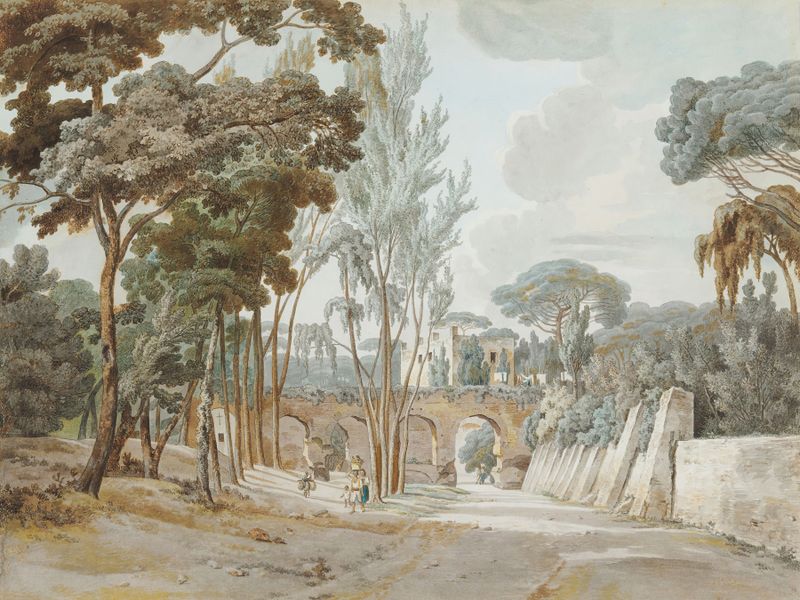
In A View at Lucerne, the essence of destiny unfolds within the tranquil embrace of a serene landscape, inviting contemplation of what it means to capture fleeting moments of beauty and existence. Look to the foreground where the gentle ripples of Lake Lucerne shimmer under a soft sun, evoking a sense of calm. The meticulous brushwork defines the undulating hills and distant mountains, intertwined with a palette that oscillates between lush greens and tranquil blues. The way light interacts with the water draws the eye across the composition, creating a pathway that leads to the shadowed peaks, each brushstroke an echo of nature's serenity. Beyond its surface beauty, this artwork embodies the tension between human ambition and the grandeur of the natural world.
The juxtaposition of the human figures, small and contemplative, against the vast expanse of landscape evokes the insignificance of individual desires in the face of destiny. The interplay of light and shadow hints at the transience of life itself, making the viewer ponder their own place within the unfolding narrative of existence. In 1775, amidst the burgeoning Romantic movement, William Pars created this piece while residing in Switzerland, a time when artists began to explore the emotional depth of landscapes. This period was characterized by a growing fascination with nature and its sublime beauty, reflecting the artist's own journey towards understanding the interplay of humanity and the natural world.