The Grotto at Posillipo — History & Facts
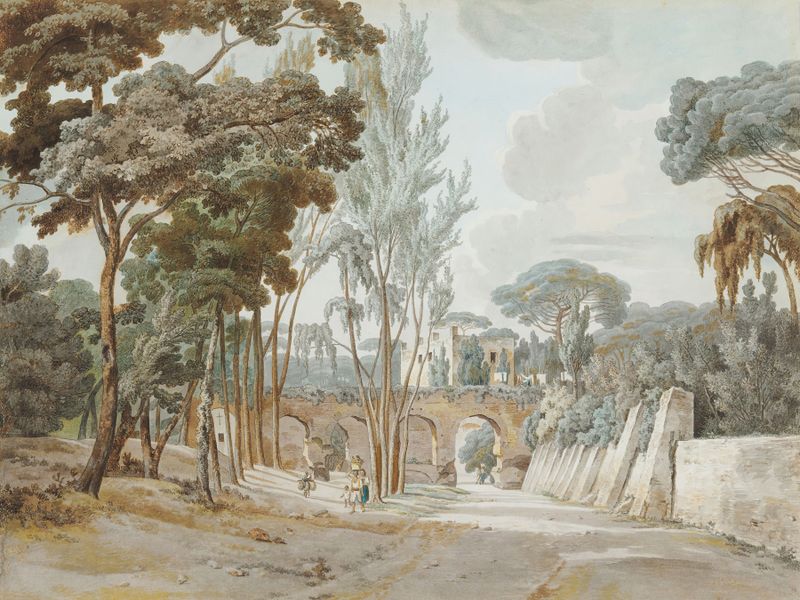
Can paint confess what words never could? In The Grotto at Posillipo, a world of longing unfolds, where nature's beauty intertwines with the whispers of the heart. Look to the left at the cascading vines, their verdant tendrils enveloping the rocky entrance. Notice how the dappled sunlight filters through the foliage, casting playful shadows upon the water's surface. The artist's masterful use of light and shadow not only highlights the grotto's serene environment but also evokes a sense of mystery, inviting viewers to step further into this ethereal realm. The interplay between light and darkness creates a contrast that mirrors the emotional undertones of the piece.
The tranquil water reflects the rocky formations, hinting at an underlying restlessness. Each brushstroke conveys a yearning for connection, as the lush surroundings seem to cradle hidden stories, lost in the depths of time. The soft hues of blue and green transition seamlessly, evoking an atmosphere that balances peace with an unexpressed desire, as if the landscape itself wishes to reveal its secrets. William Pars painted this work around 1779-1781, during a period when he was deeply influenced by the sublime beauty of nature and the culture of the Romantic movement.
Living and working in Italy, he captured the essence of the picturesque landscapes that so enthralled European artists of the time. This piece reflects not only his personal journey but also the artistic shift towards exploring the emotional connection between humanity and the natural world.