
Temple of Venus and Rome from the Colosseum — History & Facts
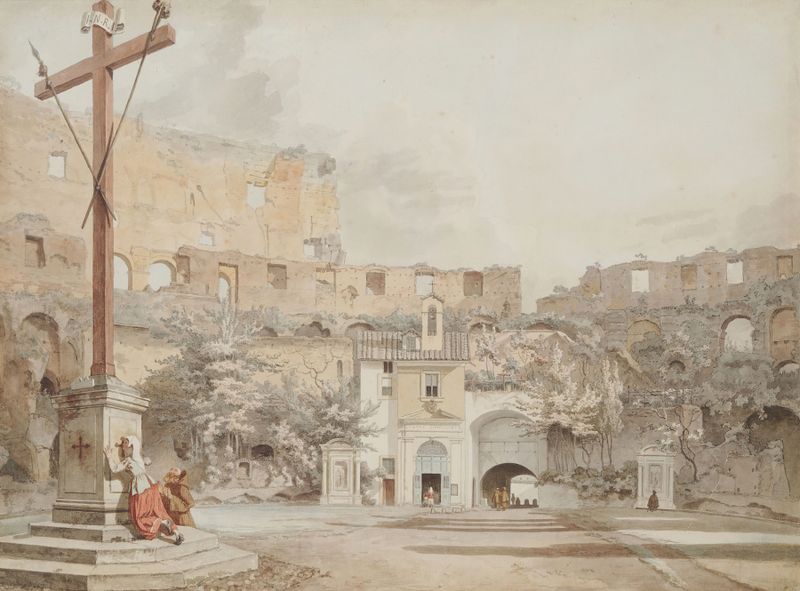
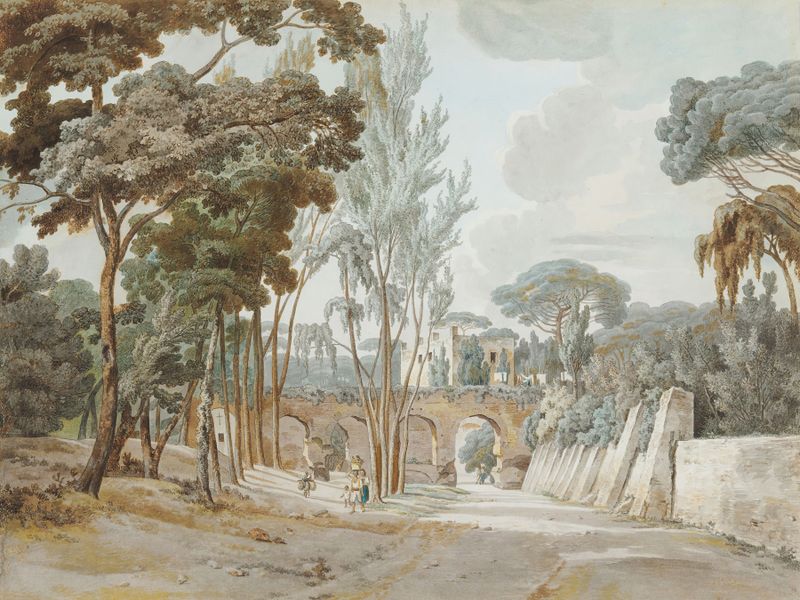
Did the painter know this moment would outlive them? The shadow of the ancient Temple of Venus and Rome stretches across time, a silent witness to the interplay of human ambition and nature’s indifference. Focus on the intricate details nestled in the arches, where soft light bathes the crumbling marble, revealing nuances of texture and form. The placement of the temple against the colossal structure of the Colosseum creates a dynamic contrast, inviting your eye to wander from the monumental to the delicate. Notice the muted earth tones that evoke a sense of history, as if the colors themselves are remnants of stories whispered through the ages. Beneath the surface lies a poignant tension—the juxtaposition of grandeur and decay.
The steadfast columns appear to cradle the weight of history while simultaneously hinting at the fragility of civilization. Shadows dance across the scene, suggesting a passage of time that both preserves and erodes, echoing the eternal cycle of creation and destruction found in human endeavors. William Pars painted this evocative scene during a transformative period in the 18th century, a time when neoclassicism was reinterpreting the past through fresh eyes. He found himself in Rome, amidst a surge of interest in antiquity spurred by the Grand Tour.
This fervor for historical representation and the exploration of light and shadow would shape the trajectory of his artistic career, embedding him firmly within the conversation of his time as he sought to capture the essence of a civilization long gone.
More Artworks by William Pars
Browse all →
More Architecture Art
Browse all →
The statue of Liberty
Frédéric Auguste Bartholdi

View of Houses in Delft, Known as ‘The Little Street’
Johannes Vermeer

View of Houses in Delft, Known as ‘The Little Street’
Johannes Vermeer

The Cathedral in Rouen. The portal, Grey Weather
Claude Monet

The yellow house
Vincent van Gogh

The Church in Auvers-sur-Oise, View from the Chevet
Vincent van Gogh