
A view of Baalbek in the Lebanon — History & Facts
What if beauty was never meant to be finished? The fleeting essence of a moment captured in time, every brushstroke echoing the fragility of existence itself. Look to the left, where the ancient ruins of Baalbek rise majestically against a sky brushed with soft hues of orange and violet. Notice how the light dances across the weathered stones, revealing intricate details that speak of history and time’s relentless passage. The composition skillfully frames the ruins amid a tranquil landscape, inviting the viewer’s gaze to wander from the hills in the background to the intricacies of the architecture, all while enveloped in an ethereal glow. Yet, there is more beneath the surface.
The juxtaposition of the sturdy ruins against the tender sky suggests the dual nature of permanence and transience, inviting contemplation of their fragility. The delicate interplay of colors—earthy browns and vibrant blues—evokes a sense of nostalgia, hinting at a civilization once mighty but now faded. Each detail, from the meticulously painted foliage to the soft clouds, reveals an inherent vulnerability, asking the viewer to reflect on what endures and what eventually fades away. Eduard Hildebrandt painted this masterpiece in 1852, during a period of significant artistic exploration in Europe.
Having traveled extensively, he sought to encapsulate the beauty of distant lands through detailed landscapes. At that time, the world was witnessing a growing fascination with archeology and the romantic allure of ancient civilizations, which would influence many artists. In this context, his work serves not only as a visual experience but also as a poetic meditation on beauty’s impermanence.
More Artworks by Eduard Hildebrandt
Browse all →
Jerusalem from the Mount of Olives
Eduard Hildebrandt

A Lively Scene on the Thames Embankment, in the Background the Old Royal Navy College in Greenwich
Eduard Hildebrandt

Sea tempest
Eduard Hildebrandt

Winterliche Kanallandschaft mit Blick auf eine holländische Stadt
Eduard Hildebrandt
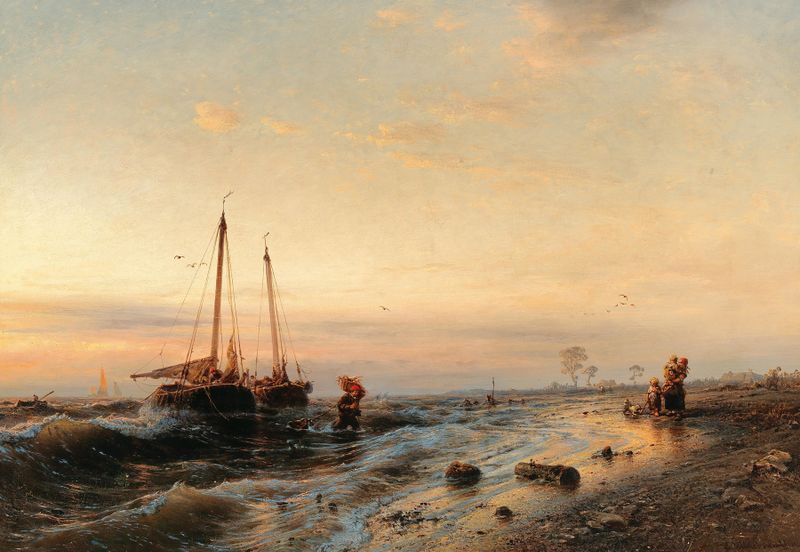
The arrival of the fishing boats
Eduard Hildebrandt

Landscape with Black People
Eduard Hildebrandt

Crows in an Open Winter Landscape
Eduard Hildebrandt





