
Crows in an Open Winter Landscape — History & Facts
What if beauty was never meant to be finished? In a world where chaos disrupts the fragile balance of nature, the haunting presence of crows evokes both allure and madness. Look to the left at the ominous figures, the crows, their inky feathers stark against a pale winter sky. The artist employs a muted palette of whites and greys, evoking the chill of the season, yet the crows pulse with a dark vitality, drawing the viewer's eye. Notice how the horizon line stretches wide, embracing the void of the landscape while inviting a sense of solitude that resonates throughout the canvas.
This interplay of color and form reveals a tension between life and desolation, suggesting a deeper narrative beneath the surface. Explore the hidden meanings within the barren expanse. The crows symbolize freedom yet embody an unsettling presence, hinting at madness lurking beneath the serene façade. Their sharp contrast to the tranquil landscape suggests a disruption in the natural order, a reminder that beauty can coexist with darkness.
The starkness of winter enhances this emotional tension, urging reflection on the fragile relationship between life and death, creation and destruction. In the winter of 1851, Crows in an Open Winter Landscape emerged from the brush of Eduard Hildebrandt, a German painter whose works often explored nature's duality. During this period, Hildebrandt was captivated by the landscapes of Northern Europe, navigating the shifting tides of Romanticism that sought to capture both the sublime and the grotesque. His focus on nature would continue to influence his oeuvre, marking a pivotal moment in an era where the boundaries between beauty and madness were constantly reevaluated.
More Artworks by Eduard Hildebrandt
Browse all →
A view of Baalbek in the Lebanon
Eduard Hildebrandt

Jerusalem from the Mount of Olives
Eduard Hildebrandt

A Lively Scene on the Thames Embankment, in the Background the Old Royal Navy College in Greenwich
Eduard Hildebrandt

Sea tempest
Eduard Hildebrandt

Winterliche Kanallandschaft mit Blick auf eine holländische Stadt
Eduard Hildebrandt
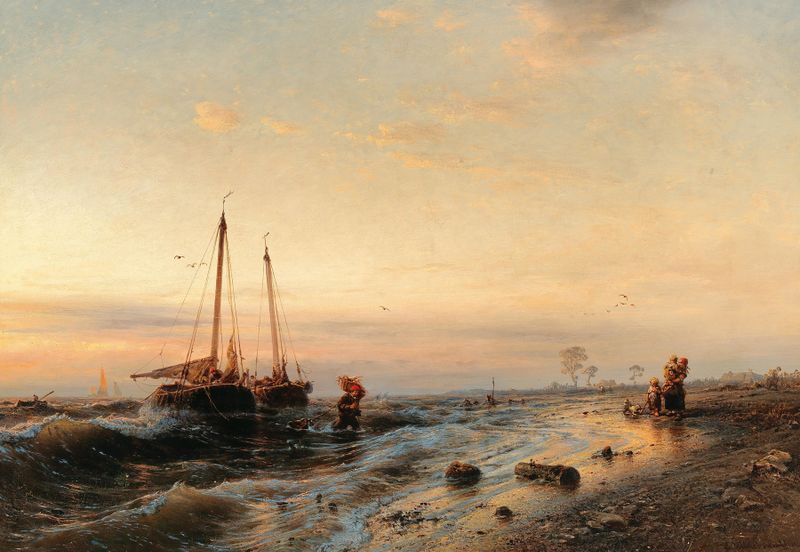
The arrival of the fishing boats
Eduard Hildebrandt

Landscape with Black People
Eduard Hildebrandt





