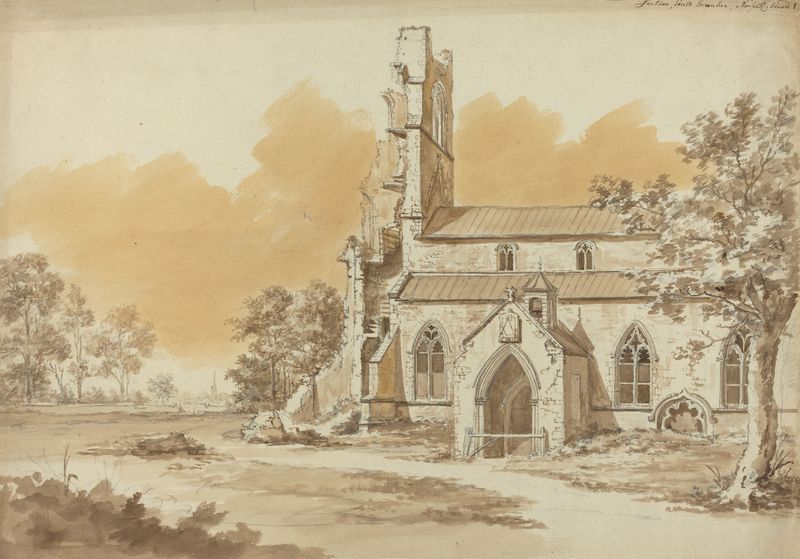
A view of Cowdray Park from the northwest — History & Facts
In this moment of awakening, a serene panorama unfolds, inviting us to breathe in nature’s splendor. It beckons the viewer to pause, to absorb the stillness of a rural landscape where every detail tells a tale of tranquility and renewal. To truly engage with the artwork, look to the center, where the undulating hills cradle a rich tapestry of greens and browns. Notice how the light captures the soft contours of the land, creating a gentle interplay of shadow and sunlight that evokes the rhythm of the earth.
The sky, painted in delicate washes of blue, stretches expansively above, providing a harmonious backdrop to the flourishing vegetation below. Hidden within this tranquil scene are layers of meaning: the contrast between the vibrant life of the trees and the muted colors of the distant buildings hints at the delicate balance between nature and civilization. Each brushstroke carries an echo of the past, as the viewer senses the park's history intertwining with its natural beauty. The stillness of the atmosphere invites contemplation, allowing the viewer to reflect on their own connection to the landscape. Hendrik Frans de Cort created this work during a time when landscapes were becoming increasingly popular in the realm of art.
Though the exact date remains uncertain, it is likely painted in the late 18th or early 19th century, a period marked by a growing appreciation for the natural world and the picturesque. Living in the Netherlands, de Cort's artistic journey mirrored broader developments in landscape painting, as artists sought to capture the essence of their surroundings with both accuracy and emotion.