
A View Of Marepoort, Leiden — History & Facts
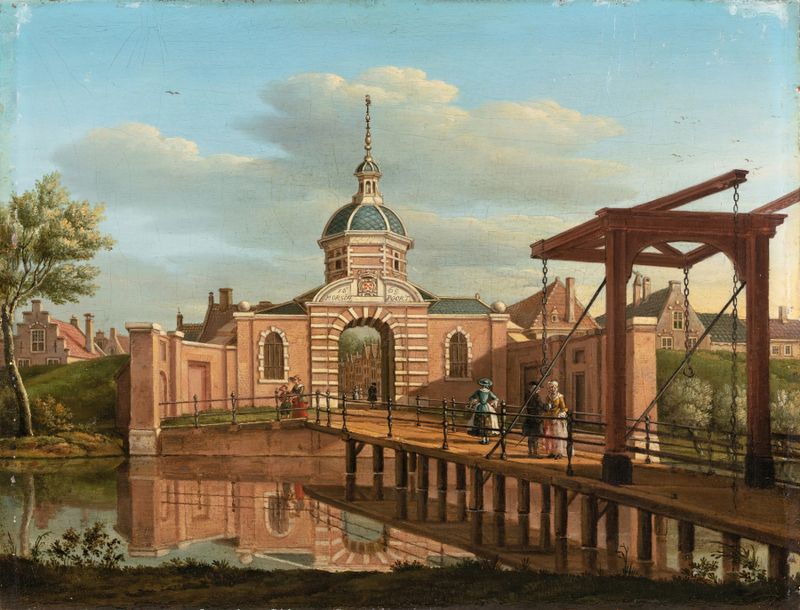
When did color learn to lie? In a world where hues can deceive and illuminate, fragility dances within each brushstroke, whispering the truths of existence. Look first at the cerulean sky that stretches across the canvas, a vibrant backdrop to the intricate scene below. Notice how light cascades over the tranquil waters of the Marepoort, reflecting delicate ripples that suggest a gentle breeze. The artist’s deft use of soft pastels in the buildings and their subtle shadows creates an ethereal quality, inviting the viewer to linger upon the details of life unfolding in this serene town. Deceptive tranquility reigns here, as the scene captures both the beauty of daily life and the ever-present fragility of time.
Each figure, whether bustling in conversation or lost in thought, embodies the fleeting nature of existence. The weathered architecture hints at a history that clings lightly to the surface, while the vibrant flora around the scene suggests renewal even as it hints at decay—life's bittersweet dichotomy held in tension. In 1772, Paulus Constantijn la Fargue painted this piece in Leiden, a city thriving with artistic exchange and intellectual fervor. He emerged during a period when Dutch painting was refining its focus on everyday life, and La Fargue's work reflected both local charm and a broader, contemplative meditation on human experiences within the landscape.
This moment crystallized the artist’s ability to merge the ordinary with philosophical inquiry, making his work resonate beyond his time.
More Artworks by Paulus Constantijn la Fargue
Browse all →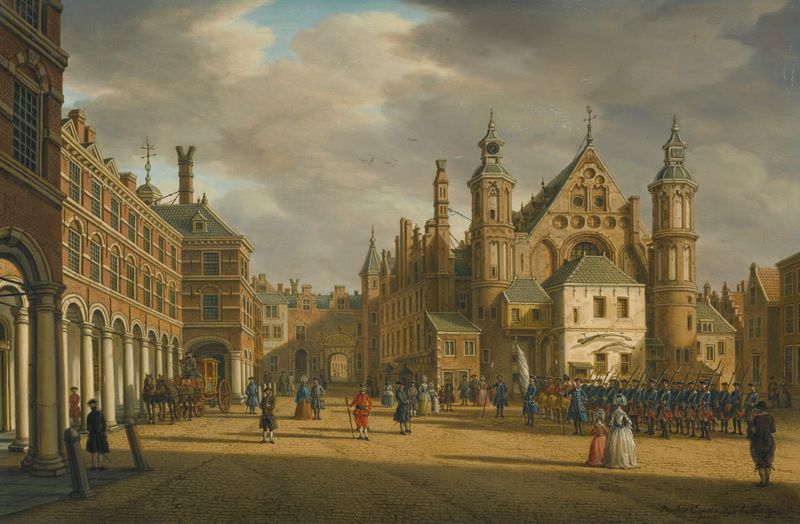
The Hague, A View Of The Binnenhof Looking North With The Ridderzaal
Paulus Constantijn la Fargue
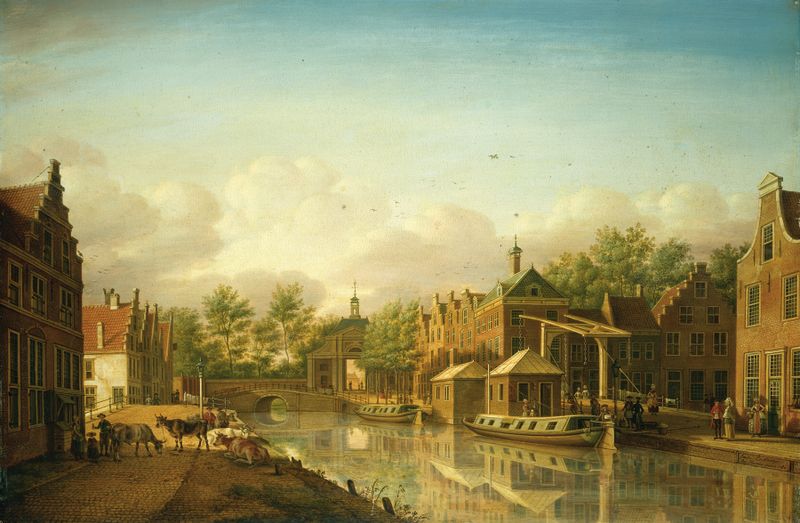
The Haarlem Gate in Leyden as Seen From the City
Paulus Constantijn la Fargue
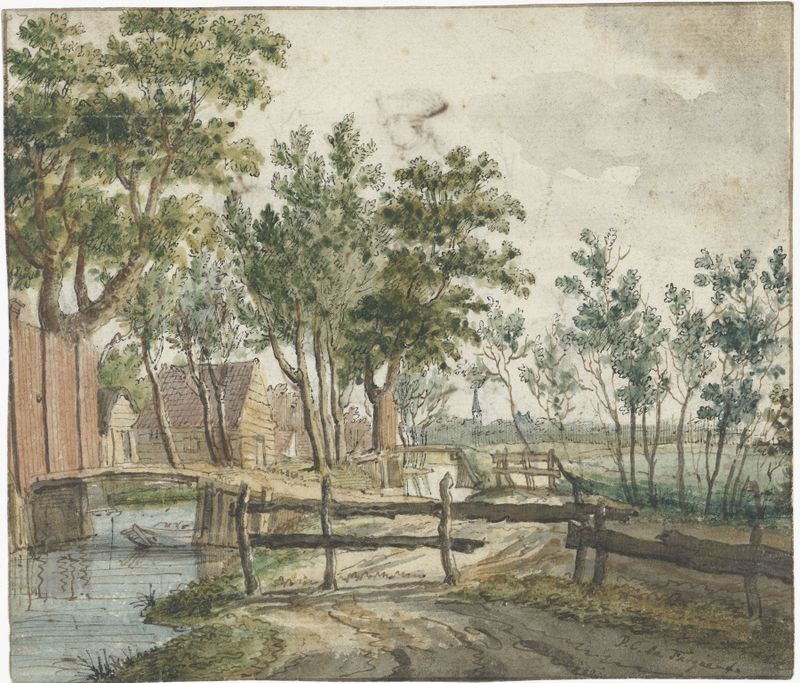
Landelijk vaart bij Voorburg
Paulus Constantijn la Fargue
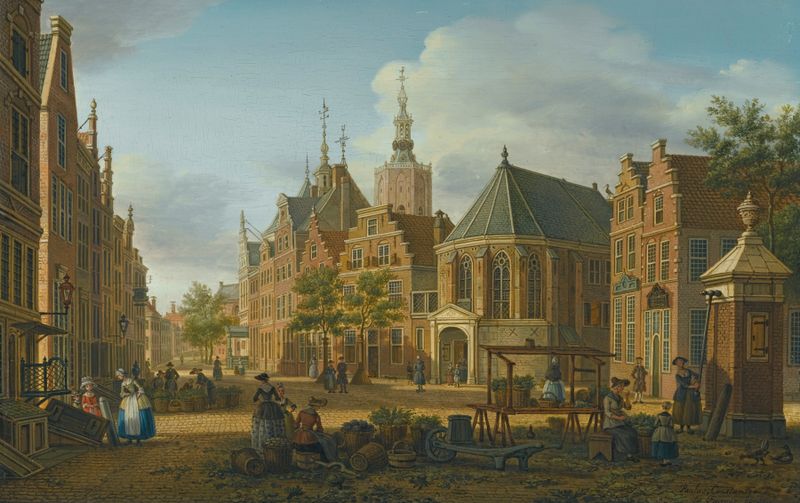
The Hague, A View Of The Groenmarkt Near The Westeinde Looking West
Paulus Constantijn la Fargue
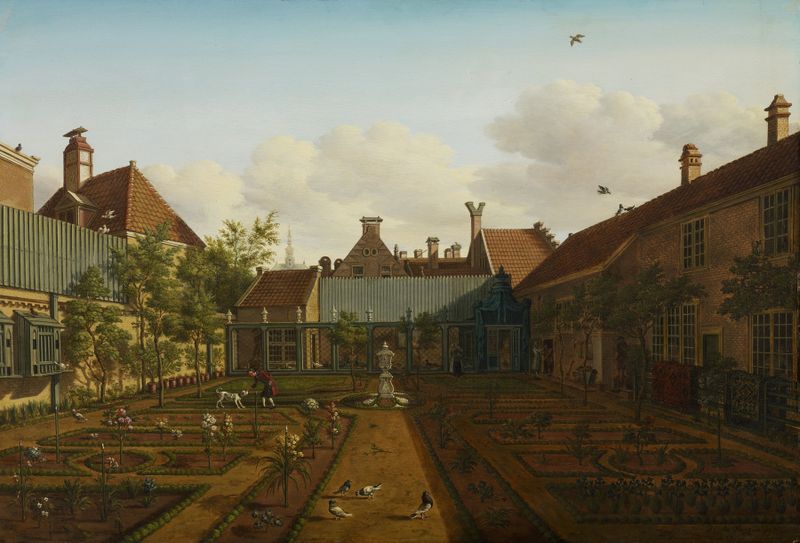
View of a Town House Garden in The Hague
Paulus Constantijn la Fargue
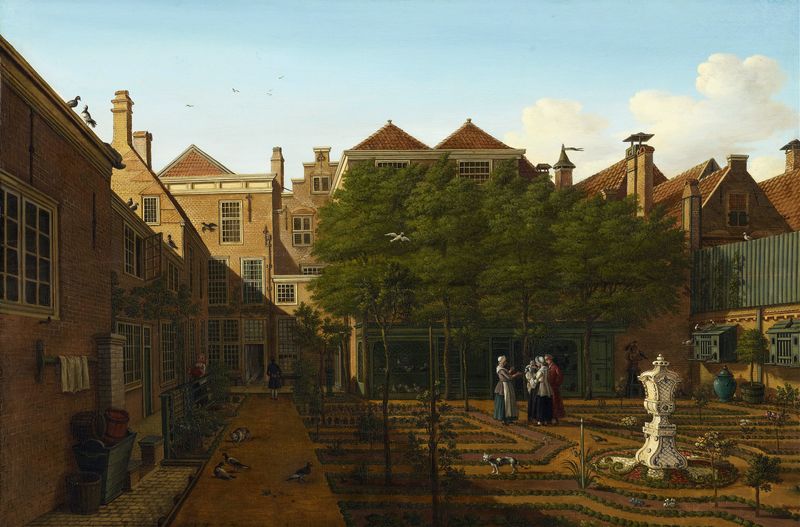
View of a Town House Garden in The Hague
Paulus Constantijn la Fargue
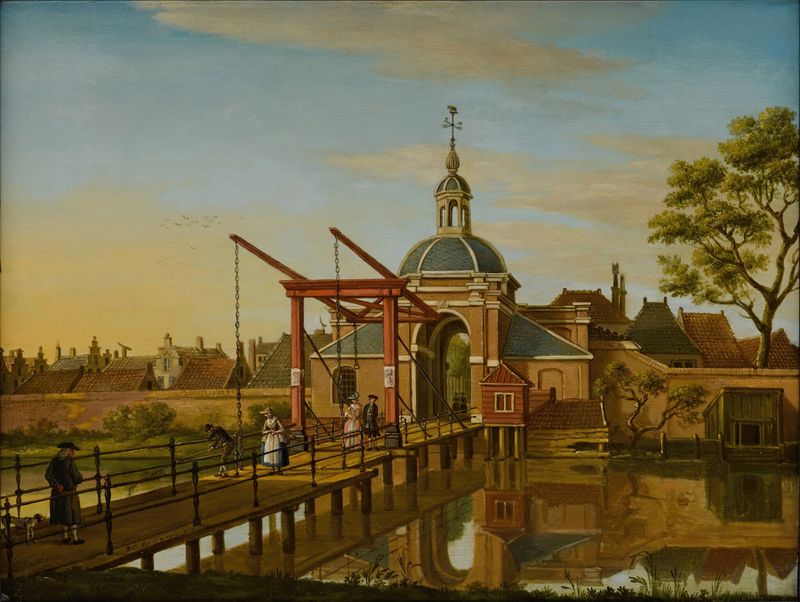
Leiden, a view of Koepoort, seen from the road to Zoeterwoude
Paulus Constantijn la Fargue
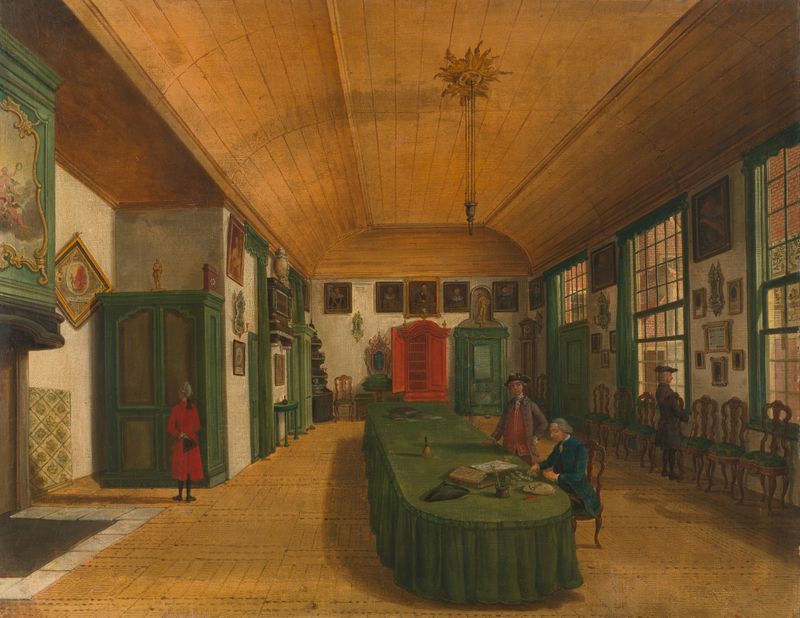
The Hall of the Artistic Society 'Kunst wordt door Arbeid verkregen' (Art is Acquired through Labor) in Leiden
Paulus Constantijn la Fargue
A View Of Morspoort, Leiden
Paulus Constantijn la Fargue
View of the Zijlpoort, Leiden
Paulus Constantijn la Fargue





