
A View of the Church of S. Sabina and the Pyramid of Cestius, Rome — History & Facts
The delicate interplay of light and shadow in this scene suggests an underlying turmoil, hinting at betrayals hidden beneath the surface of picturesque landscapes. Look to the foreground, where the Church of S. Sabina stands proudly against an azure sky. The warm ochres of the building contrast sharply with the cool greens of the surrounding trees, creating a harmonious balance yet evoking a sense of unease.
Notice how the pyramid, stoic and ancient, looms in the background; its sharp edges cutting through the serenity, inviting contemplation of time, history, and the secrets they hold. The subtle brushwork captures the texture of the stone, breathing life into the architecture, while the play of light emphasizes both the beauty and the transience of the scene. Beneath the surface, the elements whisper stories of lost grandeur and forgotten tales. The towering structures symbolize both steadfastness and fragility, embodying the tension between permanence and decay.
The juxtaposition of the church and the pyramid serves as a reminder of the betrayals of time — faith and history, intertwined yet distant, revealing the heartache that often accompanies beauty. Each stroke conveys a longing, evoking a sense of nostalgia for a past that can never be reclaimed. Created during an era of personal and artistic exploration, the artist rendered this piece in Rome, where influences were as vibrant as the city itself. Eastlake, known for his romantic landscapes, was navigating a world that straddled the ancient and the modern.
Although the exact date of this work remains uncertain, it reflects the broader movement of 19th-century art, where the quest for beauty often confronted the shadows of betrayal and historical memory.
More Artworks by Charles Lock Eastlake
Browse all →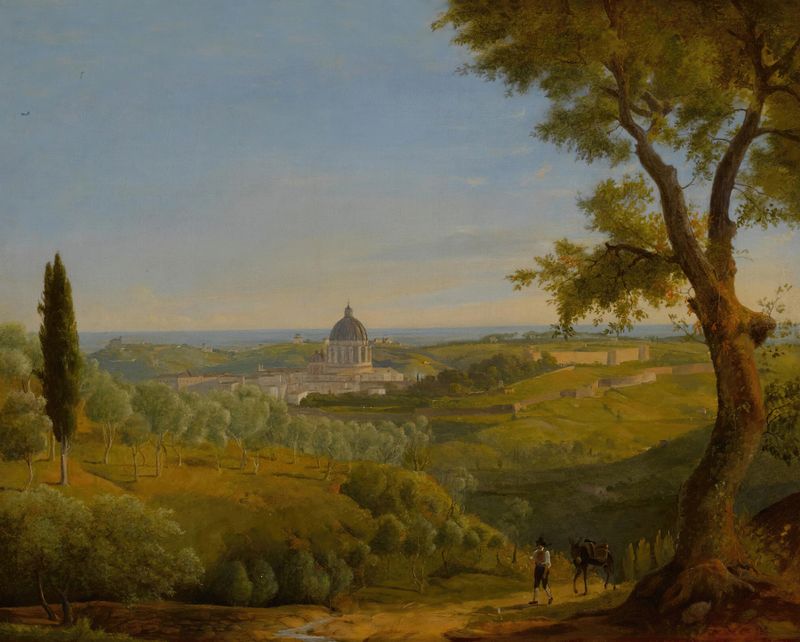
Rome, a view of Saint Peter’s from Monte Mario
Charles Lock Eastlake
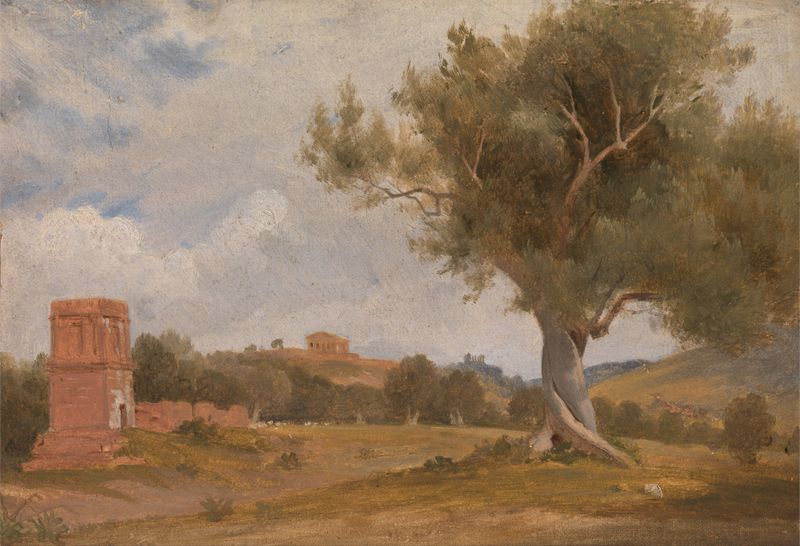
A View at Girgenti in Sicily with the Temple of Concord and Juno
Charles Lock Eastlake
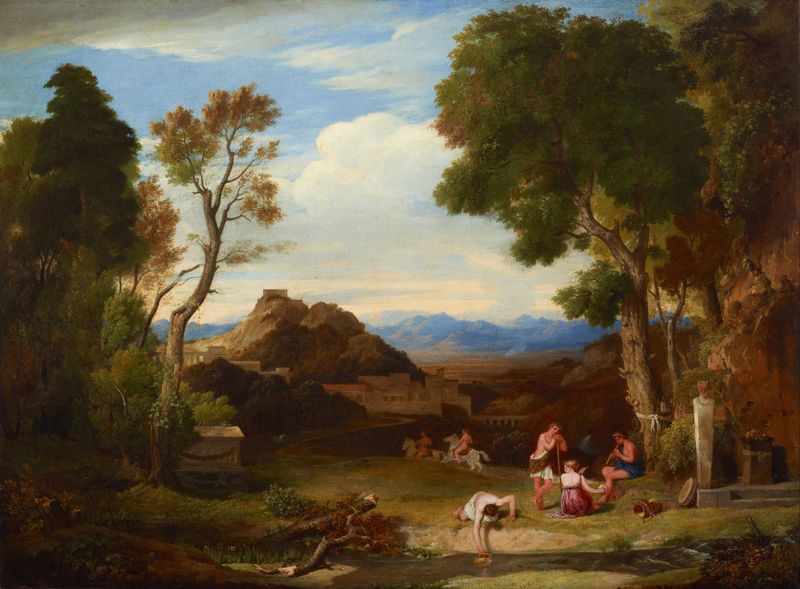
Classical landscape
Charles Lock Eastlake

The Erechtheum, Athens, with Figures in the Foreground
Charles Lock Eastlake
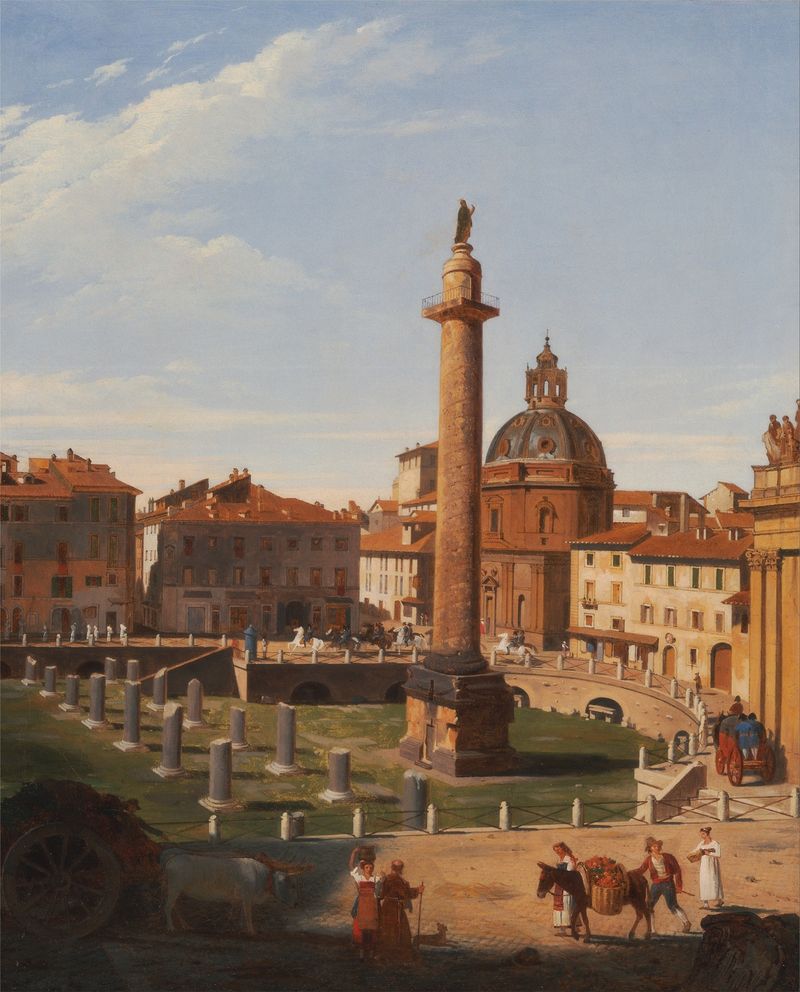
A View of Trajan’s Forum, Rome
Charles Lock Eastlake
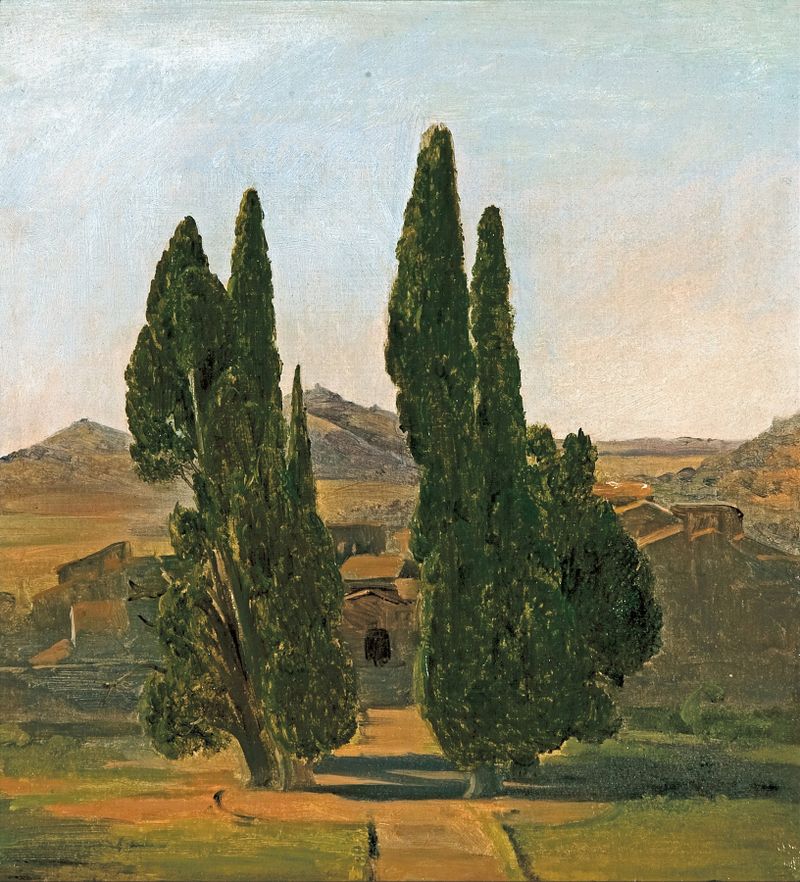
Cypress trees at the Villa d’Este
Charles Lock Eastlake
More Architecture Art
Browse all →
The statue of Liberty
Frédéric Auguste Bartholdi

View of Houses in Delft, Known as ‘The Little Street’
Johannes Vermeer

View of Houses in Delft, Known as ‘The Little Street’
Johannes Vermeer

The Cathedral in Rouen. The portal, Grey Weather
Claude Monet

The yellow house
Vincent van Gogh

The Church in Auvers-sur-Oise, View from the Chevet
Vincent van Gogh