
Classical landscape — History & Facts
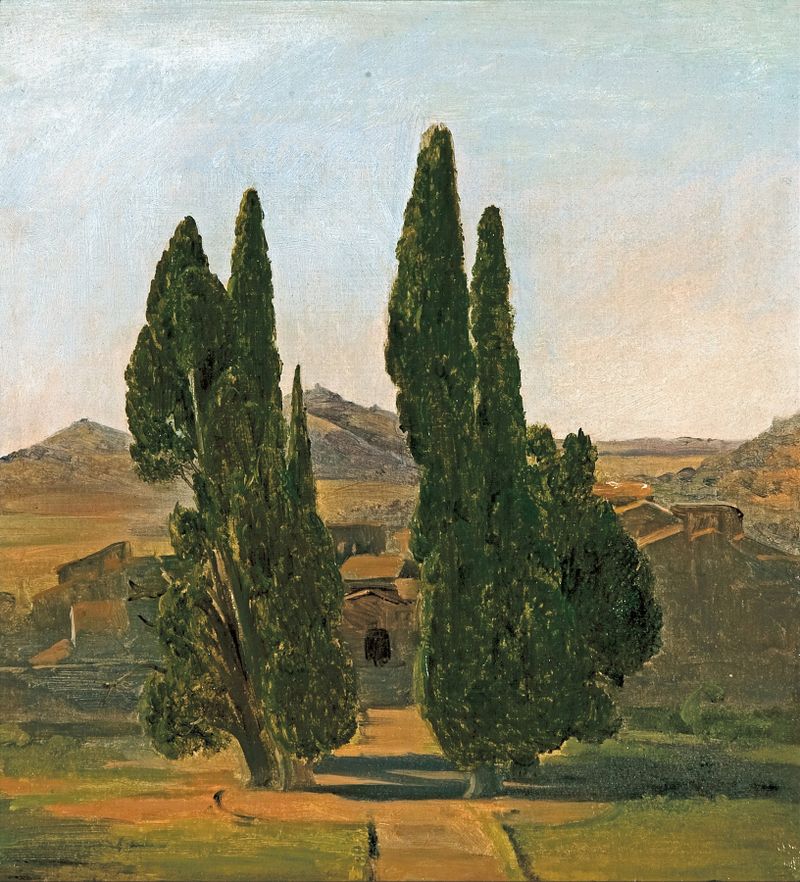
In moments of beauty, we grasp the fragile threads of life, as ephemeral as the clouds that drift across a tranquil sky. Look to the left at the delicate interplay of greens and browns, where the lush landscape unfolds beneath a vast expanse of soft, serene blue. The gentle strokes create a sense of movement, echoing the whispers of a breeze that caresses the trees. Notice how the light falls upon the distant hills, illuminating the peaks while casting shadows that evoke a sense of mystery.
Each detail, from the quietly flowing river to the grazing cattle, invites you to breathe in the serenity of a moment suspended in time. Yet beneath this idyllic surface lies a contrast between permanence and transience. The sturdy trunk of a towering oak stands resolute against the backdrop, symbolizing endurance, while the wisps of clouds above hint at the impermanence of nature's beauty. The subtle tension between these elements reflects the fragility of existence; moments of peace are fleeting, yet they linger in memory, encapsulated by the artist’s brush.
The harmony of the landscape serves as a reminder of what is often lost to time. During the years 1825-1830, the artist developed Classical Landscape in England, a period marked by a profound exploration of Romanticism. Eastlake was influenced by his travels and the growing admiration for nature's beauty within the art community. His endeavors during this time were characterized by a shift toward capturing emotional resonance, as he endeavored to reconcile the beauty of the landscape with the inevitable decline of time itself.
More Artworks by Charles Lock Eastlake
Browse all →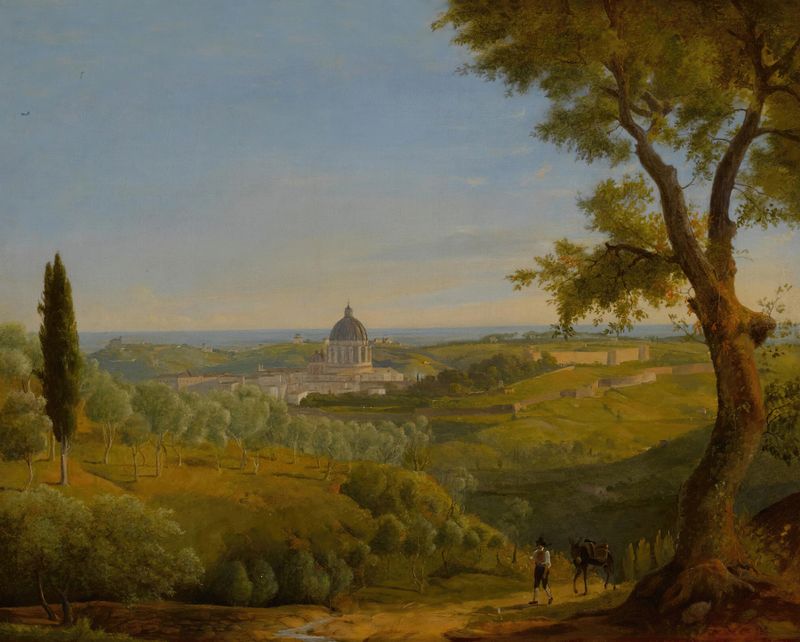
Rome, a view of Saint Peter’s from Monte Mario
Charles Lock Eastlake
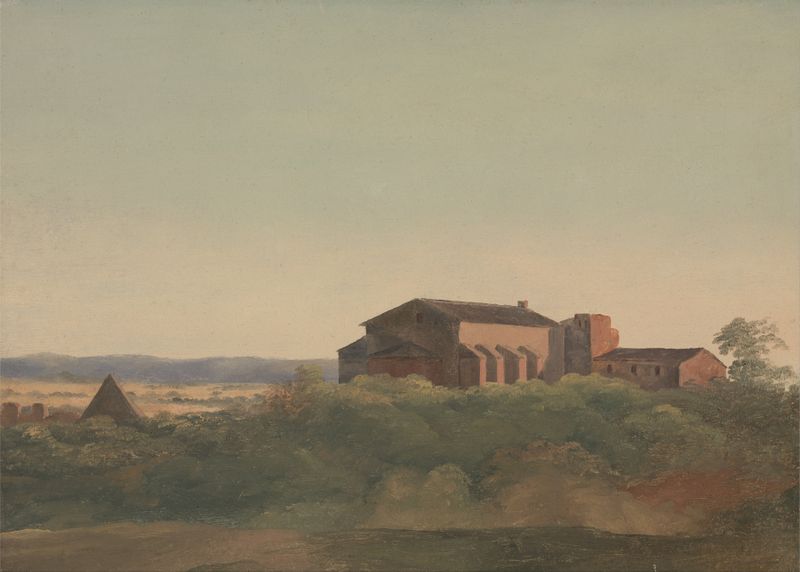
A View of the Church of S. Sabina and the Pyramid of Cestius, Rome
Charles Lock Eastlake
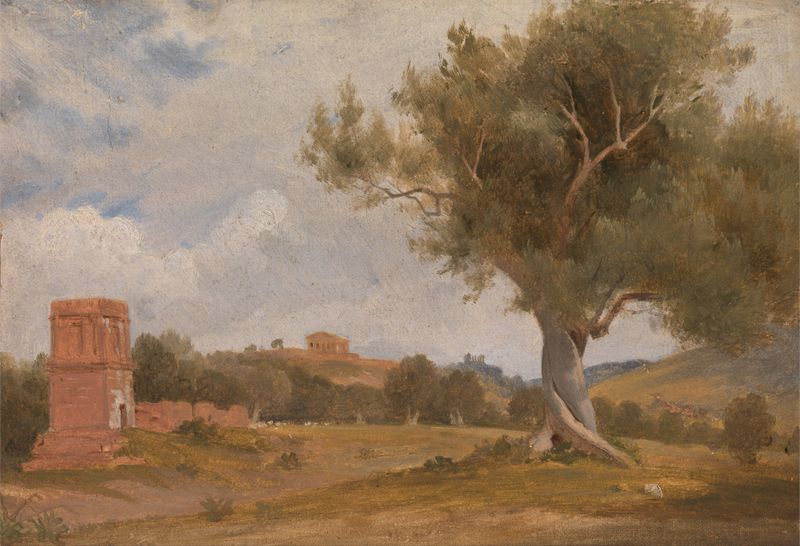
A View at Girgenti in Sicily with the Temple of Concord and Juno
Charles Lock Eastlake

The Erechtheum, Athens, with Figures in the Foreground
Charles Lock Eastlake
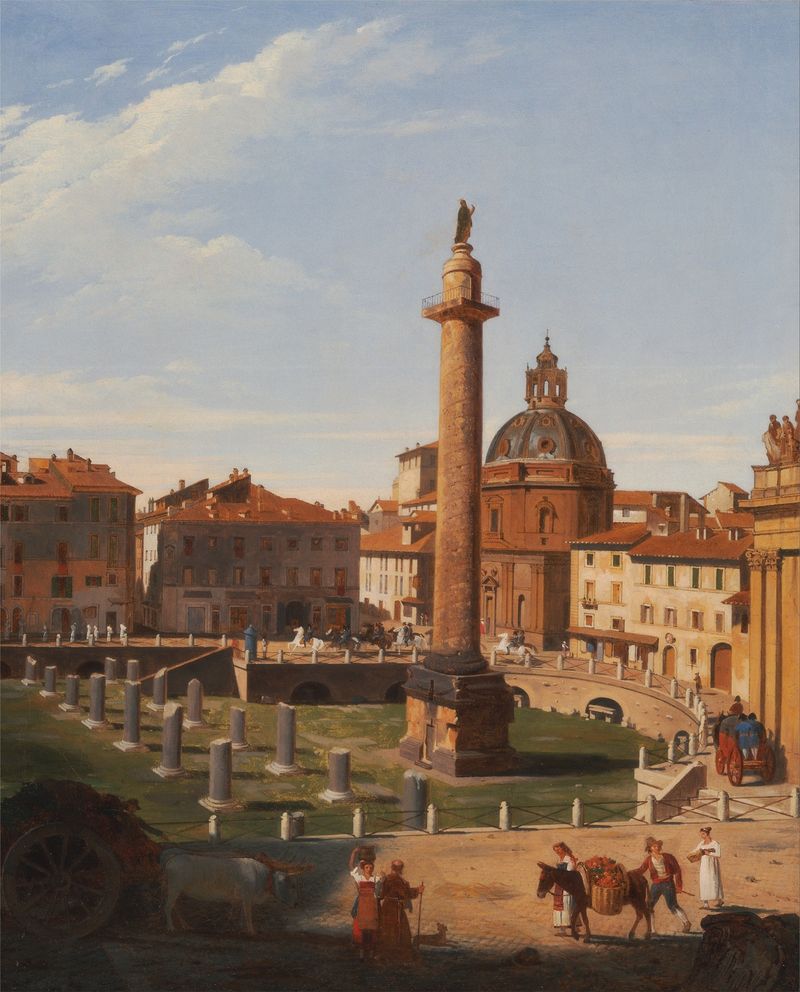
A View of Trajan’s Forum, Rome
Charles Lock Eastlake
Cypress trees at the Villa d’Este
Charles Lock Eastlake





