
A view of The Hague, with Prince William V and Duke Louis Ernest of Brunswick-Lüneburg leaving the Buitenhof — History & Facts
Could a single brushstroke hold eternity? In A view of The Hague, with Prince William V and Duke Louis Ernest of Brunswick-Lüneburg leaving the Buitenhof, the answer resonates through the vibrant interplay of figures and landscape, capturing an exhilarating moment of history infused with regal elegance. Look to the center of the composition, where the dignified figures of Prince William V and Duke Louis Ernest emerge, their grand attire rich with texture and detail. The artist masterfully captures the sunlight filtering through soft clouds, casting a gentle glow on the scene and creating a sense of warmth. The muted earth tones of the surrounding architecture contrast with the vivid colors of their garments, drawing the viewer’s eye to the focal point of their departure, hinting at both continuity and change. As you explore further, notice the subtle tension between the figures and their environment.
The majestic backdrop of The Hague’s historical edifices stands as a testament to power and tradition, while the lightness in the figures’ stance seems to celebrate the fleeting ecstasy of a moment just before transition. There is an unspoken connection between the onlookers in the foreground and the departing dignitaries, suggesting the weight of expectation and the thrill of new beginnings. Haag painted this scene during a time when the Netherlands was navigating both political stability and artistic flourishing in the late 18th century. While little is known about the exact date of this work, it reflects an era when the artist was deeply engaged with the cultural life of The Hague, capturing its grandeur and complexity amidst the evolving landscape of European art.
More Artworks by Tethart Philip Christian Haag
Browse all →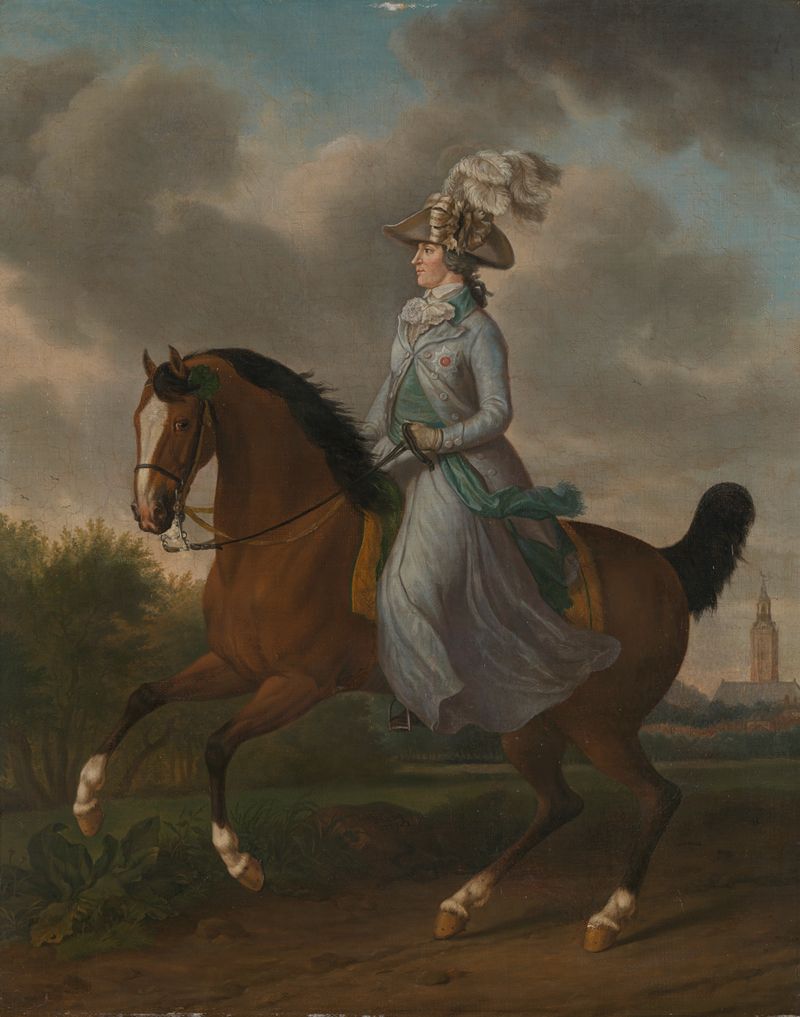
More Historical Art
Browse all →
The Night Watch Militia Company of District II under the Command of Captain Frans Banninck Cocq
Rembrandt van Rijn

Lincoln Memorial
Henry Bacon

The Third of May 1808
Francisco de Goya

Isaac and Rebecca, Known as ‘The Jewish Bride’
Rembrandt van Rijn

The Charge of the Mamelukes (1814)
Francisco de Goya

De vier ruiters van de apocalyps
Albrecht Dürer