A View of the Inn, Laytown, County Meath — History & Facts
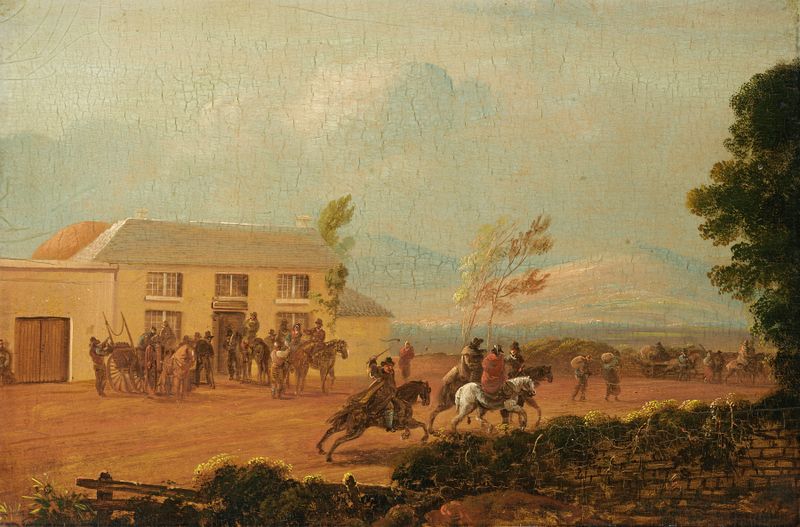
In the quiet expanse of Laytown, the inn stands as a solitary testament to the weight of solitude. Its weathered facade tells stories of those who once sought refuge within, yet now the doors remain closed, echoing the unspoken longings of the past. Focus on the inn at the center of the canvas, its muted colors reflecting a melancholic stillness. Notice how the soft hues of blue and gray envelop the structure, while the scattered light filters through the clouds above, casting an ethereal glow on the surroundings.
The distant shoreline lingers, inviting yet unreachable, creating a stark contrast between the inviting land and the desolate atmosphere. Each brushstroke reveals a complexity of emotion, as the artist captures the essence of this forgotten place. Delve deeper into the details: the overgrown grass framing the inn suggests neglect and abandonment, while the absence of human presence amplifies the solitude. The calm water, mirroring the sky, evokes a sense of yearning—longing for connection in an isolated world.
This tension between beauty and loneliness defines the scene, inviting viewers to reflect on their own experiences with solitude and the transient nature of life. William Sadler the Younger painted this piece during a time when the Irish landscape was undergoing transformations, shifting from pastoral tranquility to the stirrings of modernity. The exact date remains unclear, yet it reflects a moment in his career where he was increasingly drawn to capturing the nuanced emotional landscapes of his surroundings. The artwork embodies not just a view of Laytown but also the universal human experience of solitude in an ever-changing world.