
The French in Killala Bay — History & Facts
What if beauty was never meant to be finished? This question lingers as one gazes upon the serene landscape, a testament to the delicate interplay between nature and human endeavor. Look to the left at the gentle arch of the coastline, where the picturesque cliffs kiss the soft ripples of Killala Bay. The vibrant greens of the grasses blend seamlessly with the azure waters, while the clouds skitter across the horizon, capturing fleeting moments of light. The brushwork is meticulous, revealing a harmonious balance between detailed representation and impressionistic whispers.
Each stroke invites the viewer to traverse this tranquil scene, evoking a sense of peace and nostalgia. Yet beneath the surface lies a tension between the raw power of nature and the fragility of human existence. The ships anchored in the bay stand as silent sentinels, symbols of both exploration and the unknown. Look closely at the figures on shore; their gestures suggest a blend of hope and uncertainty as they navigate their relationship with the sea.
The contrast between the bustling activity of humanity and the stillness of the landscape hints at the ephemeral nature of life and the relentless pursuit of creation. William Sadler the Younger painted this work around 1810, during a period of transition in the world of art and society. Emerging from a backdrop of political upheaval and evolving artistic movements, he sought to capture both the beauty of the Irish landscape and the stories of its people. This piece not only reflects his technical prowess but also serves as a reminder of the profound connection between humanity and the natural world.
More Artworks by William Sadler the Younger
Browse all →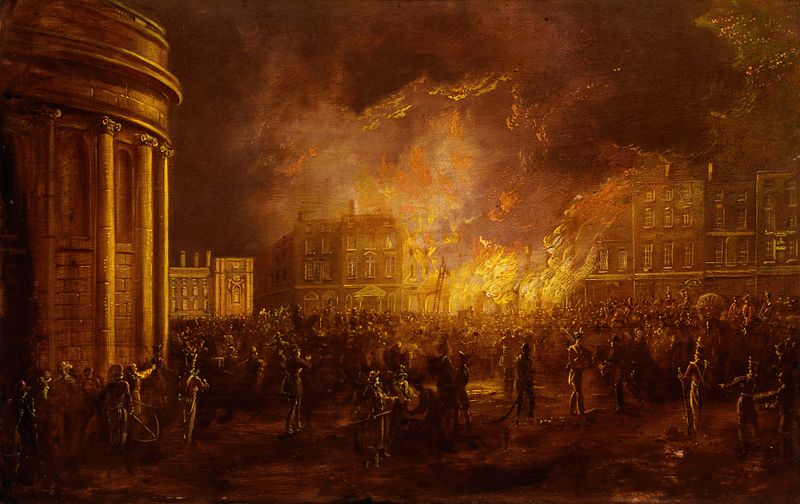
The Burning of the Arcade in College Green, Dublin
William Sadler the Younger
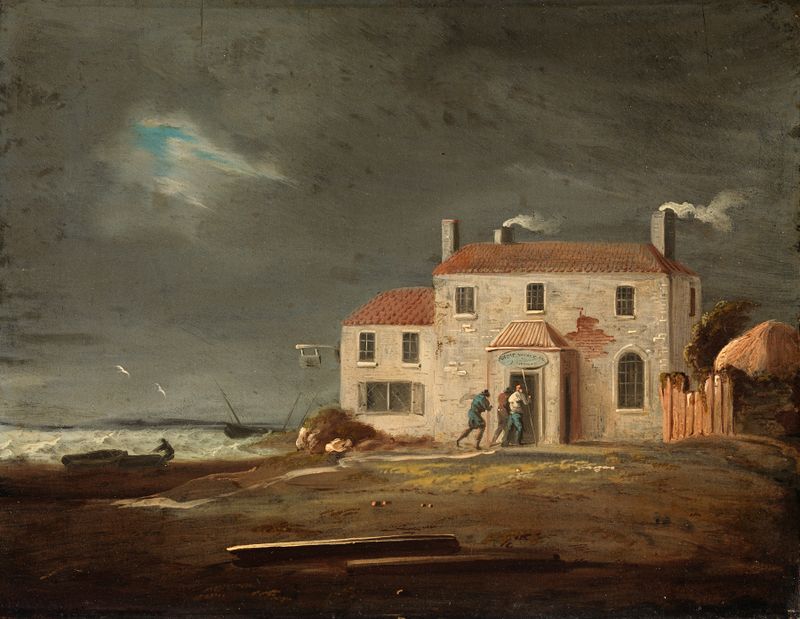
A View of the Inn, Laytown, County Meath
William Sadler the Younger
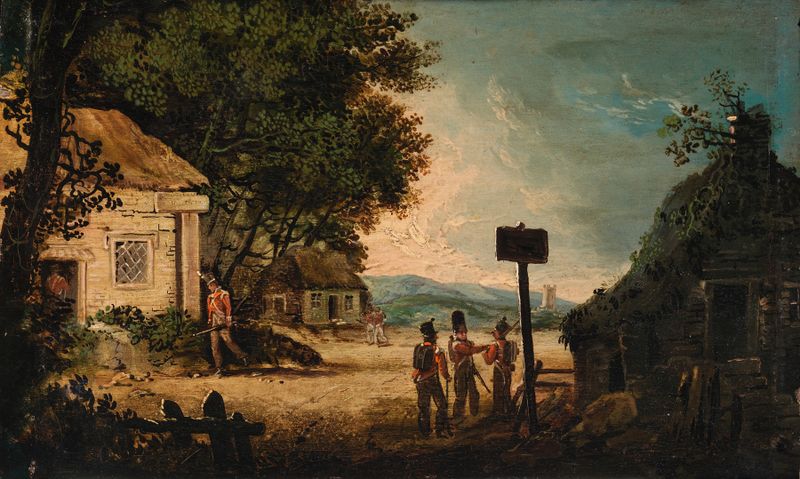
The Search for Michael Dwyer
William Sadler the Younger
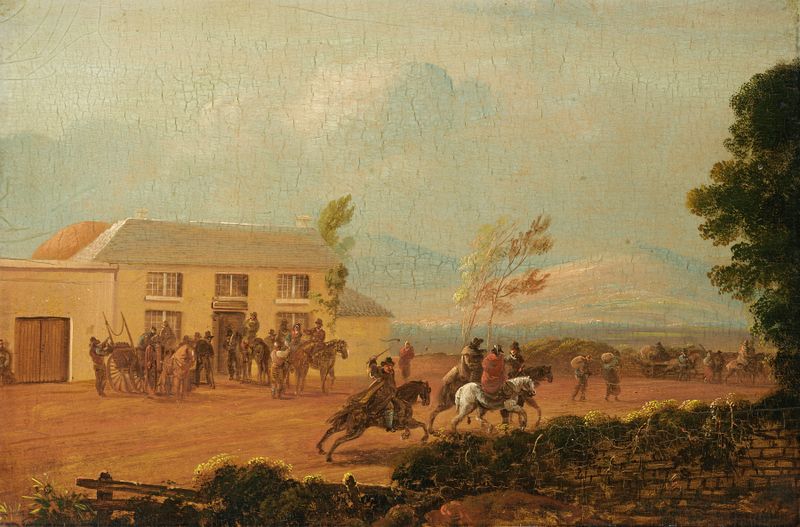
A View of the Inn, Baldoyle
William Sadler the Younger

A View of Poolbeg Lighthouse
William Sadler the Younger





