
The Search for Michael Dwyer — History & Facts
Could a single brushstroke hold eternity? In the delicate interplay of light and shadow, mortality finds its echo, and the search for truth persists beyond the canvas. Look toward the center of the composition, where the figure of a man stands resolute, his gaze piercing through the gloom. The muted palette of deep blues and earthy browns envelops him, contrasting sharply with the ethereal light that breaks through the surrounding darkness. Notice how the brushwork captures the texture of his clothing, each fold suggesting movement, a whisper of urgency that speaks to his quest.
The subtle play of light creates an almost intangible halo around him, hinting at a deeper significance to his journey. This artwork is steeped in emotional tension; the man's solitary stance suggests both determination and vulnerability, as if he is confronting an unrelenting fate. The obscured figures in the background, shrouded in shadows, symbolize the elusive nature of truth and the transient quality of life. Together, they evoke a sense of longing and the complex relationship between hope and despair, inviting the viewer to contemplate the fragility of existence. William Sadler the Younger created The Search for Michael Dwyer in 1803, during a period marked by political turmoil and shifting artistic landscapes.
Living in England at the time, he was grappling with the realities of the Napoleonic Wars, which profoundly influenced his artistic expression. This piece reflects his engagement with themes of identity and mortality, situating it within the broader context of early 19th-century Romanticism, where the struggles of the individual became a central focus.
More Artworks by William Sadler the Younger
Browse all →
The French in Killala Bay
William Sadler the Younger
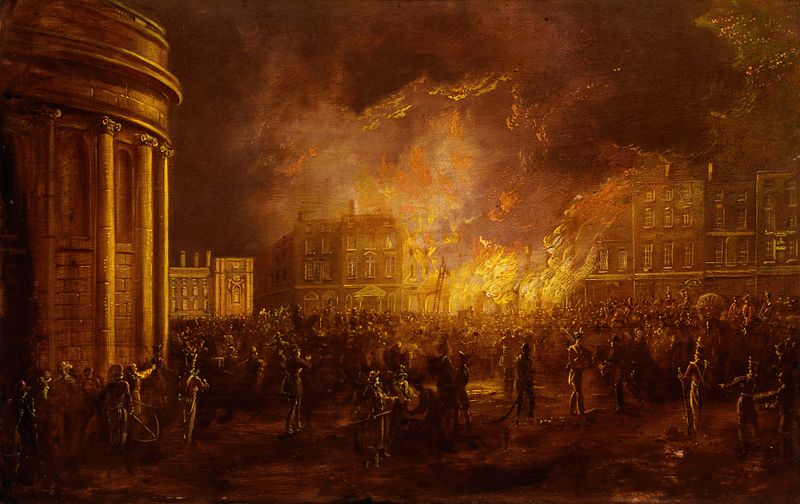
The Burning of the Arcade in College Green, Dublin
William Sadler the Younger
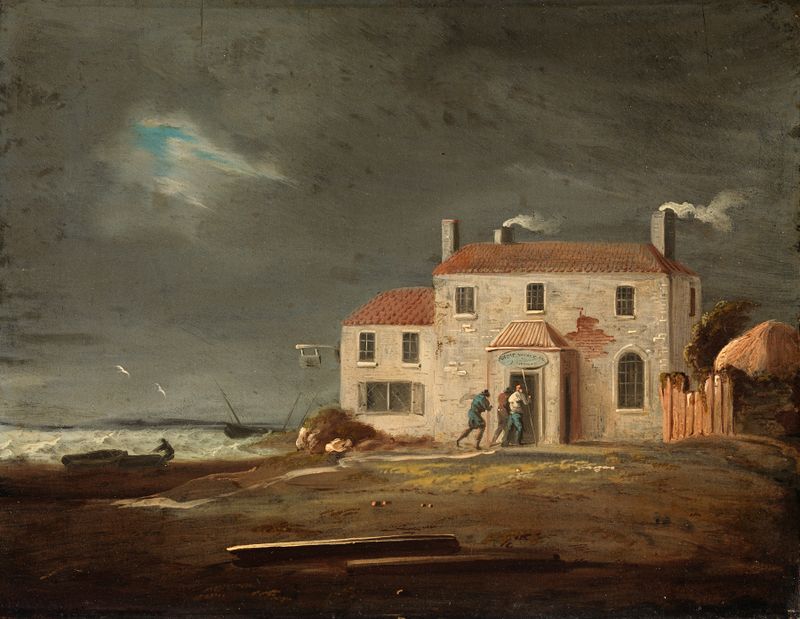
A View of the Inn, Laytown, County Meath
William Sadler the Younger
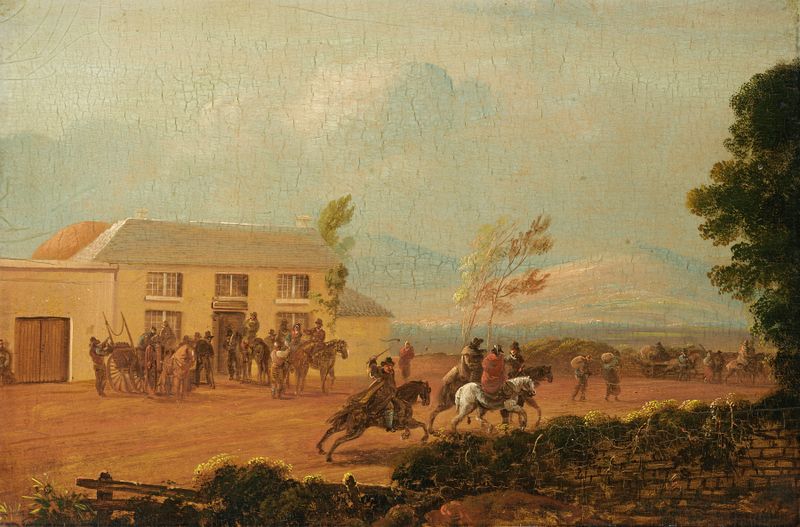
A View of the Inn, Baldoyle
William Sadler the Younger

A View of Poolbeg Lighthouse
William Sadler the Younger
More Historical Art
Browse all →
The Night Watch Militia Company of District II under the Command of Captain Frans Banninck Cocq
Rembrandt van Rijn

Lincoln Memorial
Henry Bacon

The Third of May 1808
Francisco de Goya

Isaac and Rebecca, Known as ‘The Jewish Bride’
Rembrandt van Rijn

The Charge of the Mamelukes (1814)
Francisco de Goya

De vier ruiters van de apocalyps
Albrecht Dürer