A View of the Old Town of Prague with the Church of Our Lady before Týn and the Astronomical Clock — History & Facts
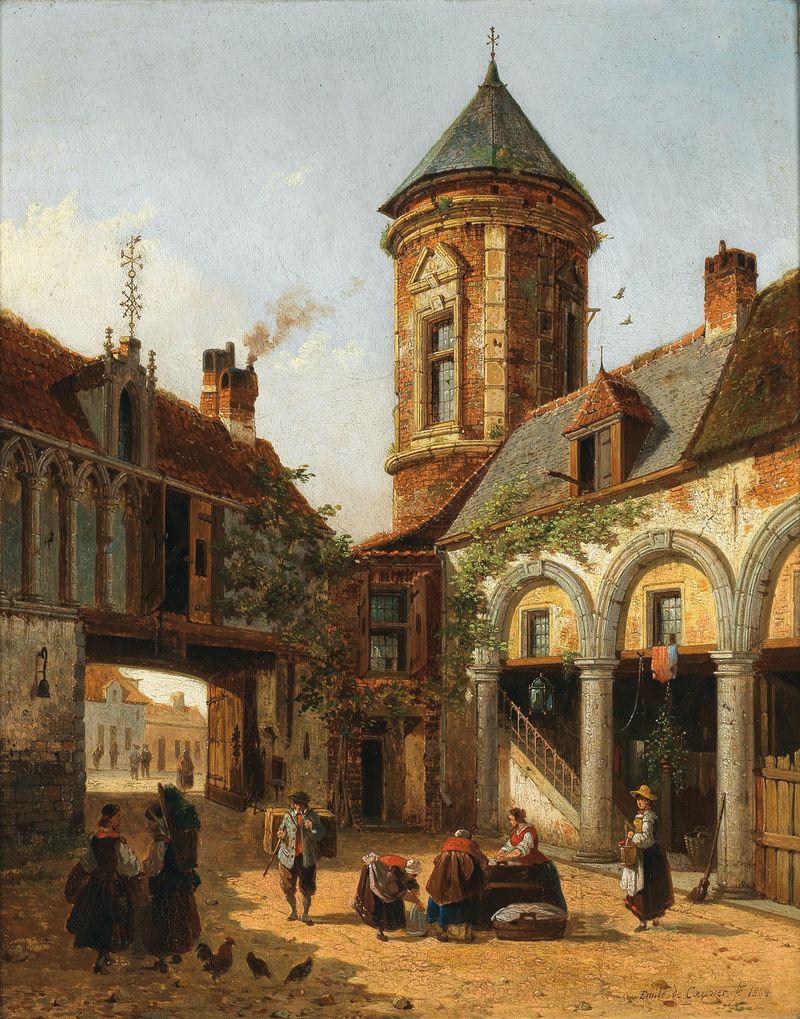
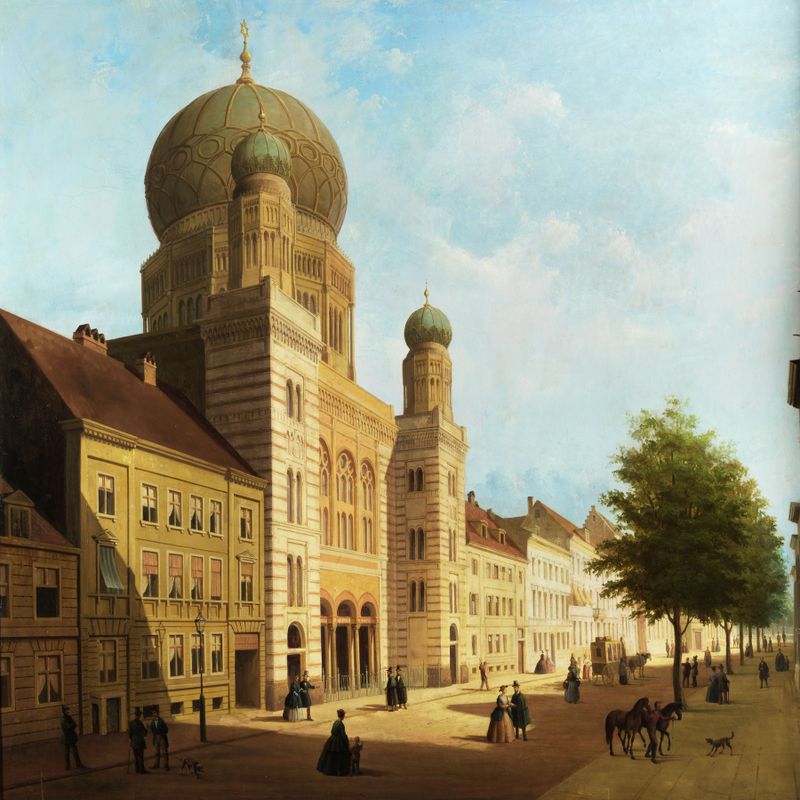
Who listens when art speaks of silence? In the delicate stillness of Emile Pierre Joseph de Cauwer's work, serenity unfolds like a gentle breeze across the rooftops of Prague. Look closely at the lower left, where the cobblestone streets weave through the scene, guiding your eye toward the bustling marketplace. The warm ochres and muted greens blend harmoniously, while soft blues suggest the early morning sky. Notice how the vibrant details of the Astronomical Clock draw attention—a vivid centerpiece that contrasts with the surrounding architecture and invites a sense of wonder.
The careful brushwork captures both the texture of aged stone and the subtle play of light, perfectly encapsulating the lifeblood of this historic town. Beneath the surface, this painting reveals an intricate dance between tranquility and the passage of time. The serene portrayal of the church's towering spires stands tall against an ever-busy world, embodying both stability and change. The juxtaposition of the monumental clock against the timelessness of the church hints at the transient nature of existence, where moments are fleeting yet monumental.
It whispers of history, echoing the quiet conversations and laughter of those who have filled these streets over centuries. In 1862, Cauwer was deeply influenced by the rise of Impressionism, which emphasized capturing light and atmosphere over detailed realism. Painting during a period of transition in the art world, he crafted this piece while residing in Belgium, drawing inspiration from his travels. The blending of serene landscapes with architectural grandeur reflects a pivotal moment in his career, marking his growing affinity for the atmospheric qualities that define his later works.