
A View of the St Mark’s Square — History & Facts
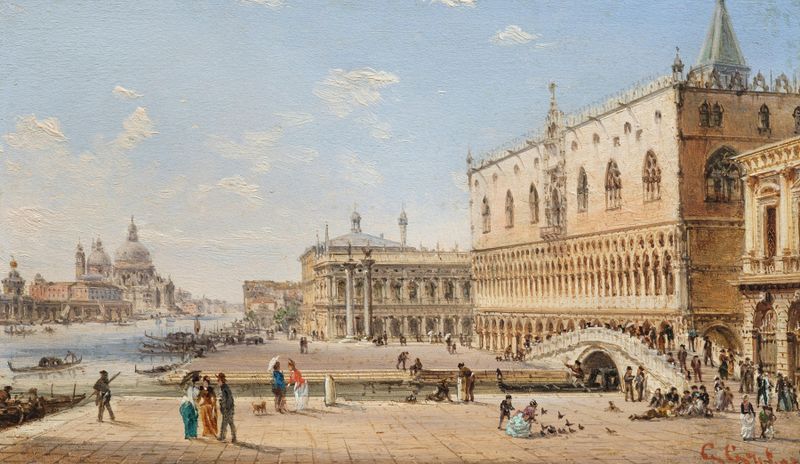
In the grandeur of A View of the St Mark’s Square, the artist captures both the vibrancy of life and the underlying shadows of fleeting moments. The canvas presents a breathtaking panorama but invites contemplation of the fear of impermanence, revealing a deeper emotional landscape. Look to the foreground, where figures bustle animatedly, their postures and gestures echoing lively conversation. The artist’s palette teems with warm ochres and deep blues, the sky a wash of azure that contrasts against the ornate architecture.
Notice how the shimmering reflections of light dance across the cobblestones, each brushstroke meticulously placed to create a sense of depth and motion. The interplay of light and shadow not only constructs the scene but also evokes a feeling of nostalgia, as if the moment captured is both alive and slipping away. Delve into the subtle details—the solitary figure on the left, perhaps lost in thought, embodies the quiet fear of anonymity amidst the throng. Nearby, a child’s laughter contrasts starkly with an elderly man's contemplative gaze; this juxtaposition speaks to the tension between youthful exuberance and the weight of time.
It’s a reminder that while life thrums with activity, there exists an undercurrent of anxiety surrounding what is ultimately ephemeral. Giovanni Grubas painted this piece in 1859, during a period of significant social and political change in Italy. As the nation moved toward unification, the artist captured not just the physical beauty of Venice but also the collective consciousness of a people longing for stability and identity. Living in this turbulent time, Grubas sought to memorialize fleeting moments, a reflection of his own understanding of the fears that accompany change and the unending passage of time.
More Artworks by Giovanni Grubas
Browse all →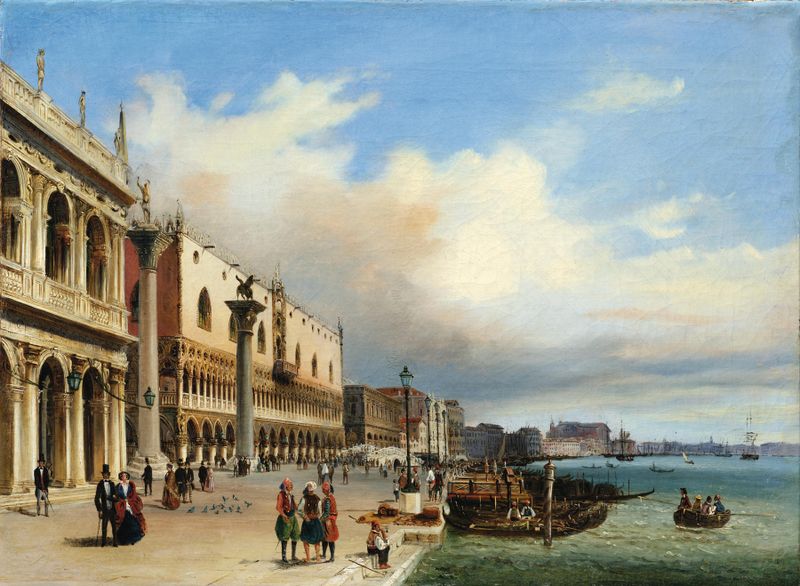
Venice, A View of the Riva degli Schiavoni with the Doge’s Palace
Giovanni Grubas

View of the Molo with the Palazzo Ducale and Santa Maria della Salute
Giovanni Grubas
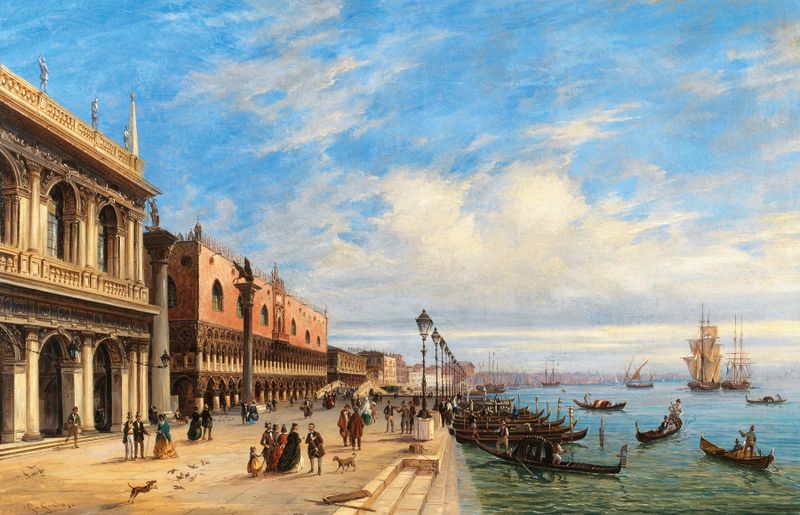
Venice, View of the Molo with the Libreria and the Doge’s Palace
Giovanni Grubas
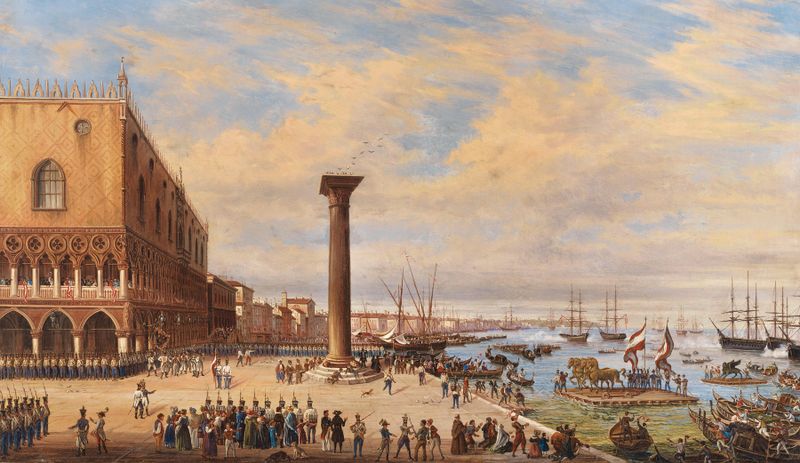
Venice, the Return of the Quadriga of St. Mark and the the Winged Lion
Giovanni Grubas

The Repatriation of the Body of Emperor Maximilian of Mexico to Trieste on 15 January 1868
Giovanni Grubas
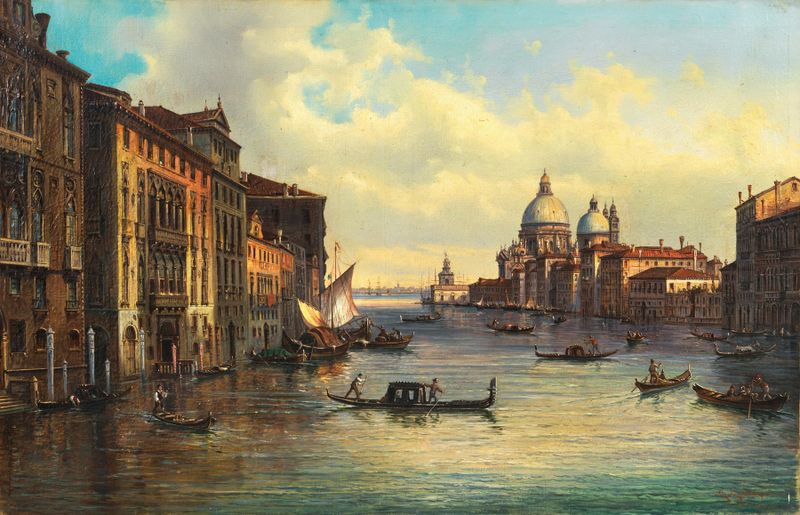
Venice, the Grand Canal with Santa Maria della Salute and Punta della Dogana in the Distance
Giovanni Grubas
Venice, a View of St Mark’s Square
Giovanni Grubas





