
A Watercourse near Abcoude — History & Facts
When did color learn to lie? In the quiet embrace of a rural landscape, emptiness whispers through every brushstroke, revealing the haunting essence of solitude. Look to the lower left at the shimmering waters of the watercourse, where soft ripples dance beneath the dappled light. Notice how the artist captures the interplay of greens and browns, with the vibrant foliage framing the scene, contrasting the serene stillness of the water. The gentle blues reflect the sky above, inviting you to trace the horizon where land meets air.
This careful arrangement speaks to a harmonious yet melancholic balance, almost as if the landscape itself breathes in the absence of human presence. Delve deeper to discover the emotional undercurrents hidden within the scene. The sparse, open composition feels vast, evoking a sense of desolation that challenges the viewer's perception of tranquility. There is a subtle tension between the lushness of the vegetation and the stark emptiness that permeates the foreground; it suggests an unspoken longing, a narrative of what once was or might have been.
Each element, from the solitary tree to the winding waterway, seems to carry the weight of stories left untold. Gabriël painted this piece in 1878, a time marked by personal and artistic transition. Living in the Netherlands, he was influenced by the Dutch landscape tradition while seeking to infuse his work with new emotional depth. This period witnessed a growing interest in realism and naturalism, as artists sought to convey not just beauty but the profound complexities of existence through their depictions of the landscape.
More Artworks by Paul Joseph Constantin Gabriël
Browse all →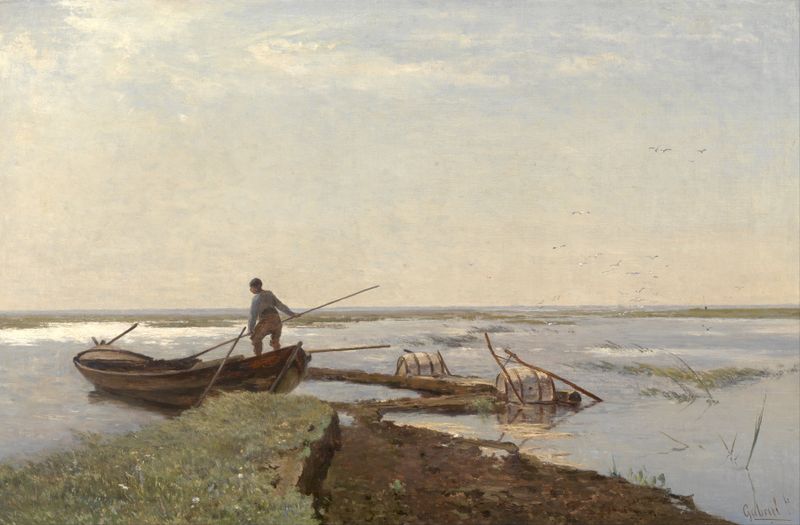
Polder Landscape (in the Kamperpolder)
Paul Joseph Constantin Gabriël

Polderlandschap met molens
Paul Joseph Constantin Gabriël
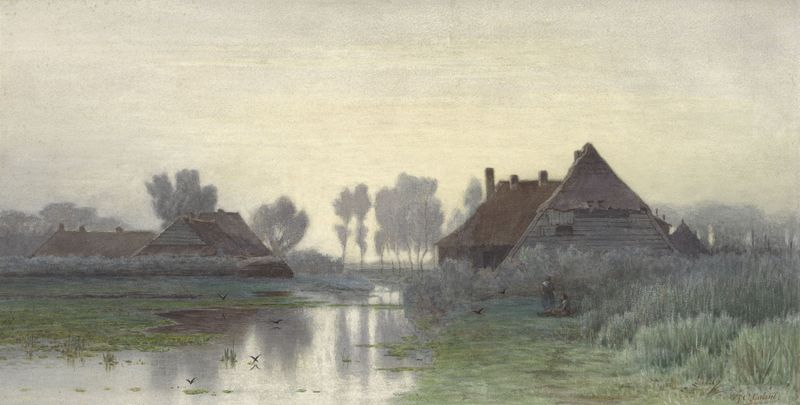
Boerenwoningen aan het water bij ochtendnevel
Paul Joseph Constantin Gabriël

Polder landscape
Paul Joseph Constantin Gabriël

Dutch Landscape
Paul Joseph Constantin Gabriël
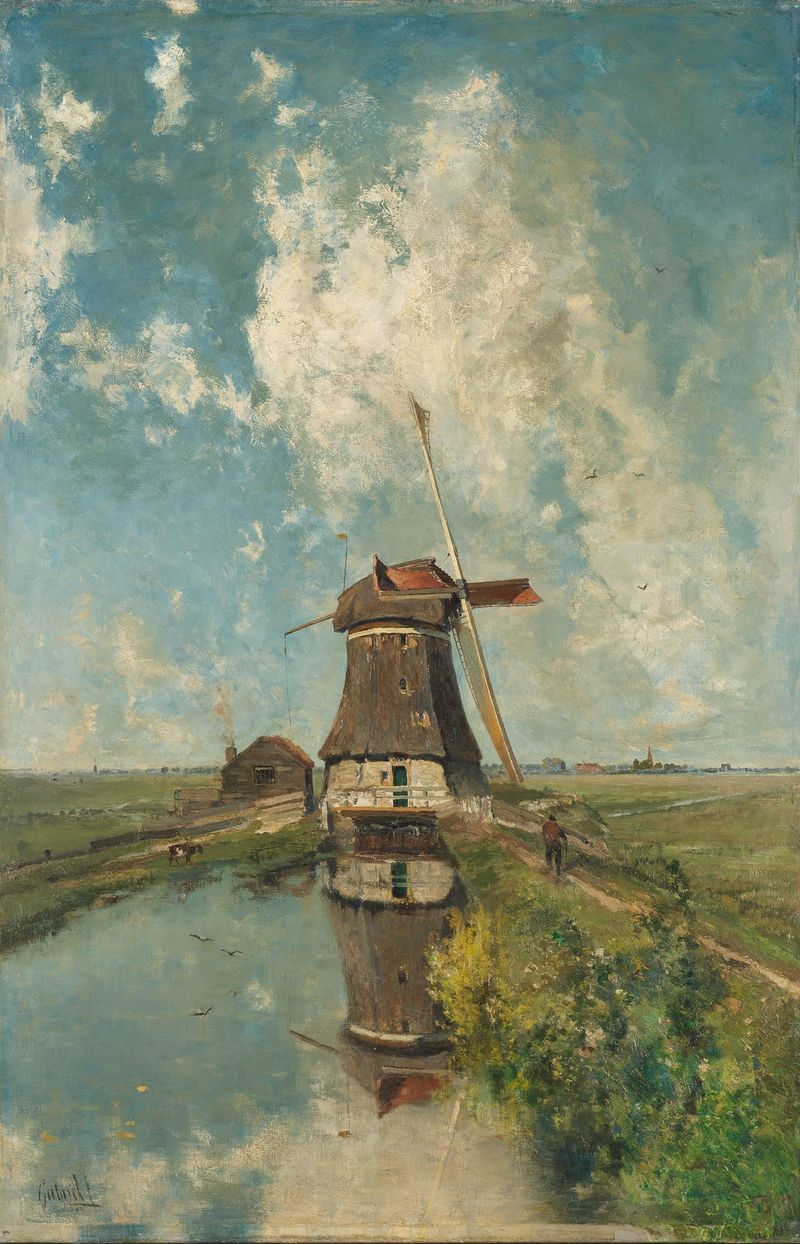
A Windmill on a Polder Waterway, Known as ‘In the Month of July’
Paul Joseph Constantin Gabriël

Landscape near Kortenhoef
Paul Joseph Constantin Gabriël

Landscape near Abcoude
Paul Joseph Constantin Gabriël
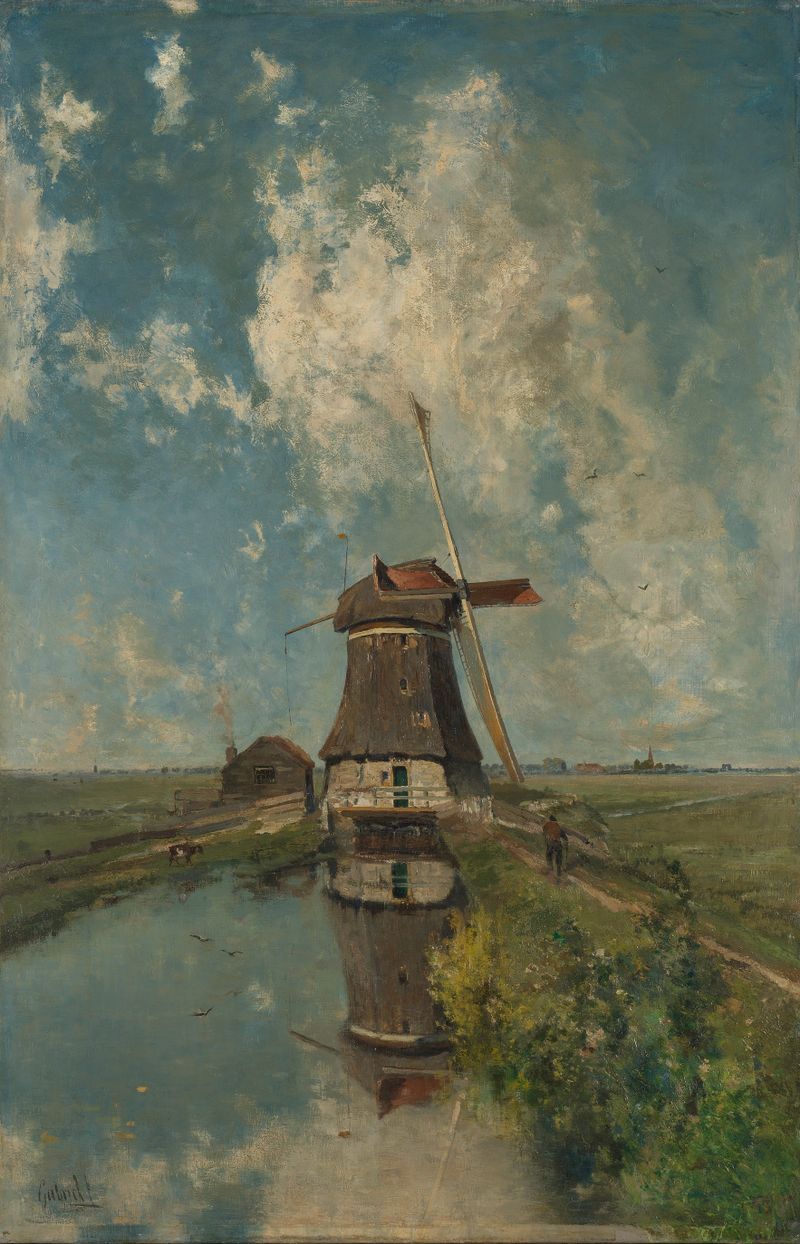
A Windmill on a Polder Waterway, Known as ‘In the Month of July’
Paul Joseph Constantin Gabriël

Windmill on a Pond
Paul Joseph Constantin Gabriël





