A wayside cross under storm clouds — History & Facts
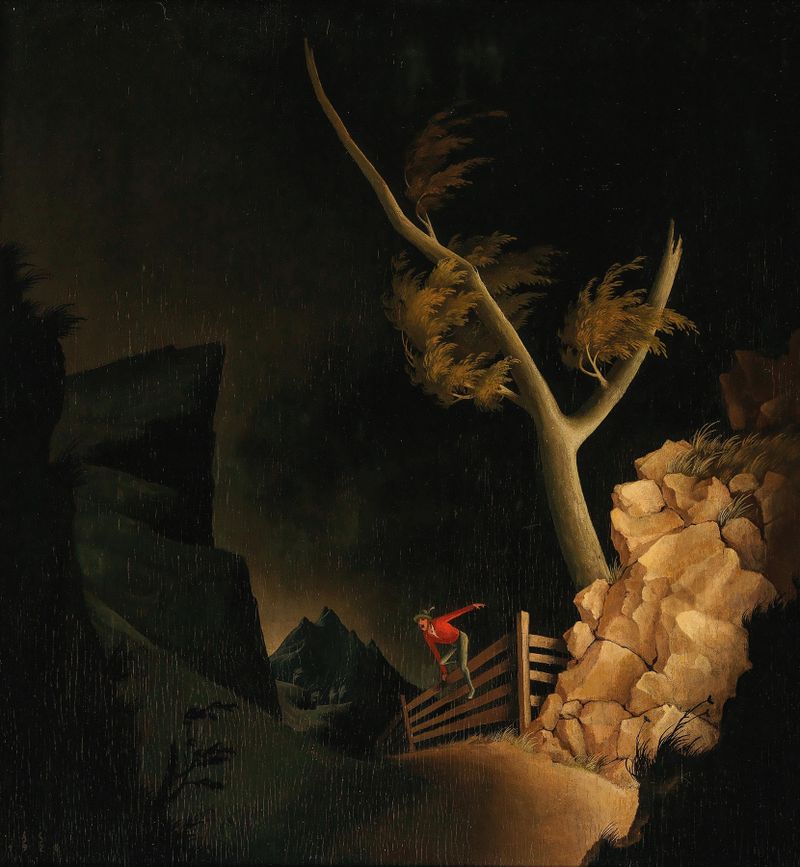
What if silence could speak through light? In A Wayside Cross Under Storm Clouds, the interplay of shadow and illumination whispers the stories hidden in the heart of nature's tumult. Focus your gaze on the cross, standing resolute against the looming storm. Notice how the dark clouds swirl ominously above, casting a thick veil of shadow that envelops the scene. The rich, earthy tones of the landscape contrast starkly with the fleeting glimmers of sunlight breaking through—a visual testament to hope amidst despair.
The cross, though a mere silhouette, commands attention as it bravely faces the encroaching tempest, a symbol of faith and endurance. Beneath the surface lies a deeper emotional tension. The juxtaposition of light and shadow suggests a struggle between faith and uncertainty, where the storm clouds signify turmoil and doubt, while the brief rays of light represent moments of clarity and solace. The cross, though solitary, can be seen as a connection point between the turbulent skies and the earth, embodying the fragility of belief in the face of overwhelming odds. Franz Sedlacek painted this piece in 1909, during a time when his artistic style was influenced by symbolism and the romanticism of the natural world.
Living in Vienna, he was surrounded by a vibrant art scene and the echoes of existentialist thought, which likely informed his examination of themes like isolation, perseverance, and the human spirit's struggle against nature's capricious moods.