Sturm — History & Facts
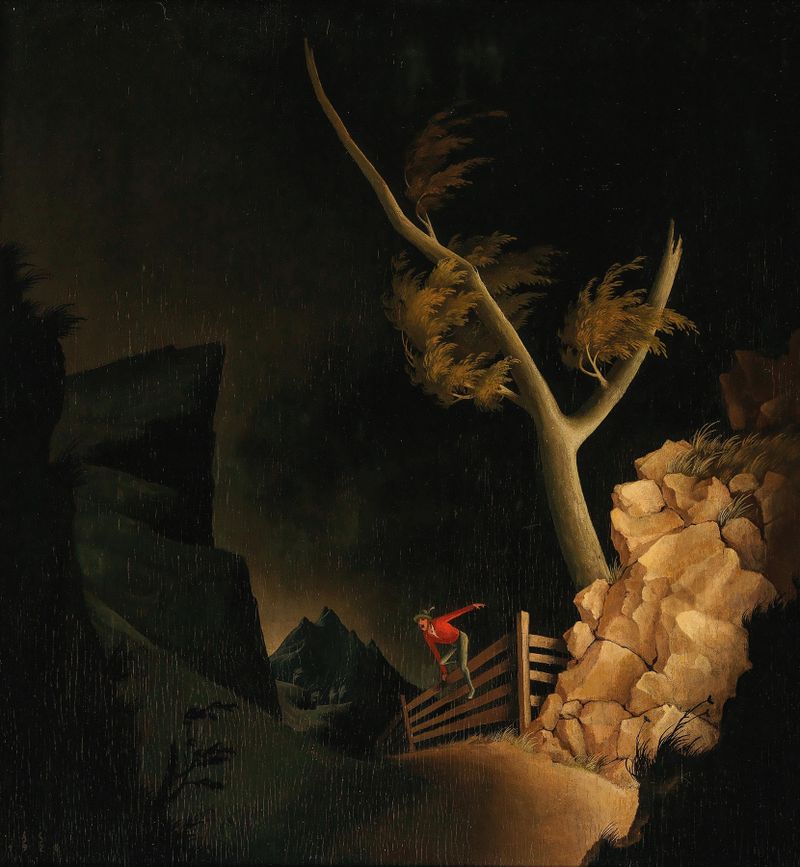
In the realm of obsession, our minds are prisons filled with fleeting thoughts that beg to be captured. What drives a painter to revisit haunting memories, transforming them into visual symphonies that resonate long after the brush is set down? Look closely at the center of Sturm, where turbulence swells in shades of deep gray and muted ochre. The chaotic brushwork, sweeping like gusts of wind, draws the eye into a vortex of emotion, while sharp, jagged lines create a sense of unease.
Surrounding this central turmoil are softer tones, intertwining to form a contrast that suggests both harmony and discord. The interplay of light and shadow encourages the viewer to explore the depths of the scene, revealing layers of complexity beneath the surface. Beneath the raw energy lies a reflection of the inner turmoil that often accompanies obsession. Each brushstroke reveals the artist’s struggle to externalize his thoughts, as if the very canvas were a battleground for his psyche.
The tension between the violent storm and the surrounding calm mirrors the conflict inherent in the obsessive mind—feeling both trapped and liberated by one’s own fixation. Subtle details, like the hints of green peeking through the chaos, suggest the possibility of growth amidst destruction. In 1932, Sedlacek was navigating the tensions of a world embroiled in uncertainty, reflecting his own internal conflicts. Living in Vienna, he was influenced by the rising currents of Surrealism and Expressionism, which sought to break away from traditional representation.
At that time, the artist was grappling with personal challenges, and Sturm serves not only as a visual eruption but also as a testament to his evolving identity within the tumultuous landscape of the early 20th century.