Der Flüchtling — History & Facts
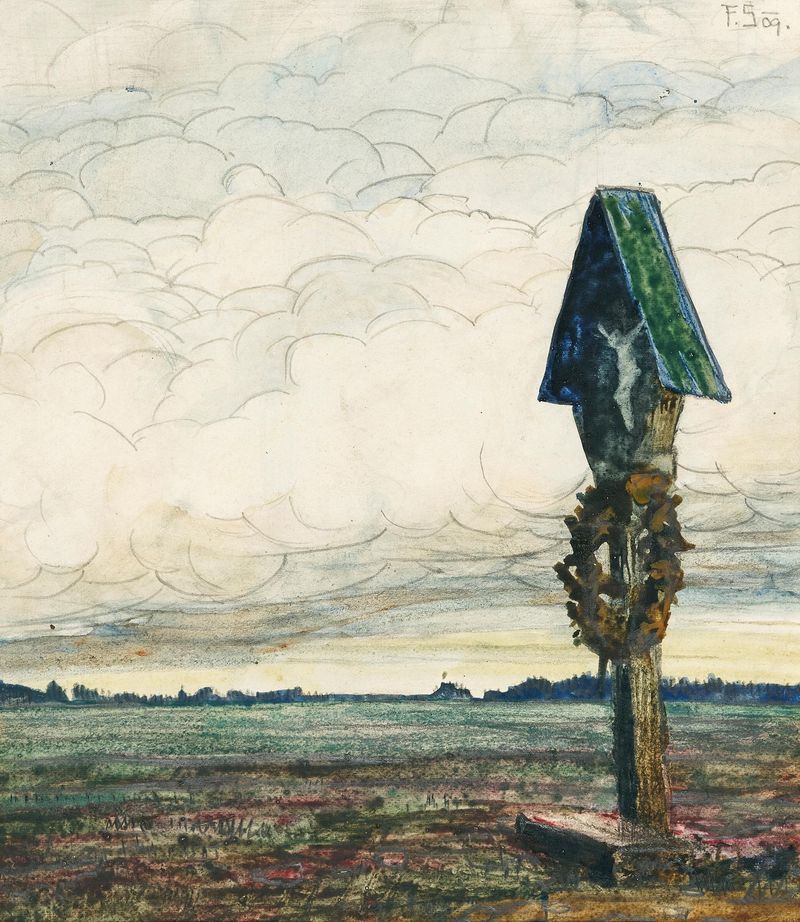
In a fleeting moment, the artist captures the essence of time—an echo of humanity’s struggles and hopes against the backdrop of despair. Focus first on the figure in the foreground, a solitary refugee who stands amidst a swirl of shadow and light. Notice how the muted palette of grays and browns envelops him, contrasting sharply with the bright sky above, which hints at the possibility of renewal. The fluid lines of the background create a sense of movement that draws your eye toward the horizon, suggesting both an escape and the uncertainty that lies ahead. The tension in the painting is palpable; it speaks to the duality of abandonment and resilience.
The slumped posture of the figure reveals exhaustion, yet the slight upward tilt of his head hints at an unyielding spirit clinging to hope. Small details, like the tattered clothing and the distant, blurred figures, symbolize the collective suffering of countless others who share his fate, weaving a story of loss that resonates deeply across time. Franz Sedlacek created this poignant work in 1928, during a period marked by political upheaval and economic instability in Europe. As the world around him grappled with the aftermath of the First World War, Sedlacek's art emerged from a place of introspection and social commentary, reflecting the haunting realities faced by displaced individuals.
This painting stands as a testament to a moment in history, urging viewers to confront the enduring plight of refugees.