A Winter Day in the Black Forest — History & Facts
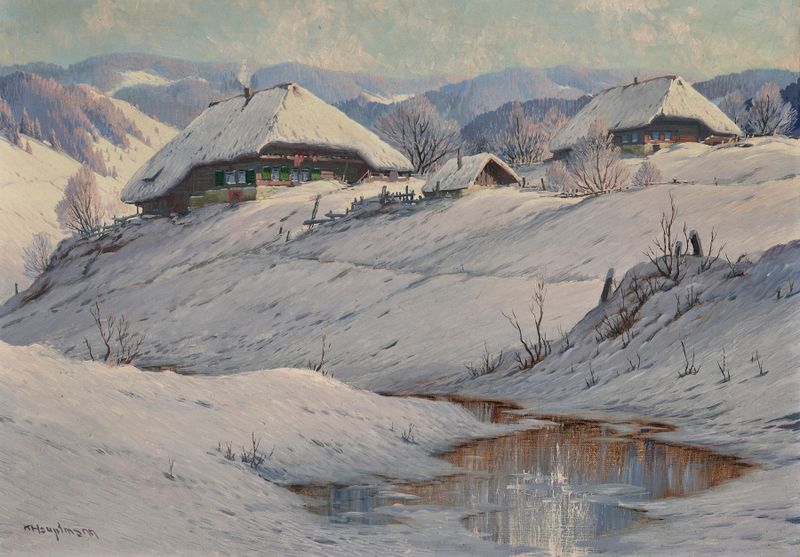
In the gripping embrace of winter, tranquility and violence coexist, each vying for dominance in the silence of a snow-covered forest. Look to the left at the delicate, crystalline trees, their branches weighed down by a heavy layer of snow, which sparkles under a pale, muted sun. The cool palette of whites and blues creates an icy serenity, while the dark trunks peek through, hinting at the struggle for survival in this harsh landscape. Notice how the artist employs soft brushstrokes to convey the weight of the snow, contrasting sharply with the harsh lines of the pines, symbolizing nature's quiet ferocity. Beneath this beautiful yet ominous surface lies the tension between beauty and brutality.
The very snow, which appears soothing, acts as a shroud over the chaos of life beneath. Hints of movement — a distant shadow or a slight break in the trees — suggest that nature is alive, teetering between death and renewal. This duality evokes a sense of foreboding, reminding us that beneath the serene surface, violence is always lurking. In 1932, while creating this piece in Germany, the artist found himself in a tumultuous period marked by political unrest and societal shifts.
The rise of authoritarian regimes cast dark shadows over Europe, influencing the content and emotional depth of his work. Hauptmann, deeply aware of this backdrop, infused his landscapes with a sense of urgency that mirrored the era's upheaval, making A Winter Day in the Black Forest not just a depiction of nature, but a reflection of human frailty in a world poised on the brink of chaos.