
A Winter Landscape — History & Facts
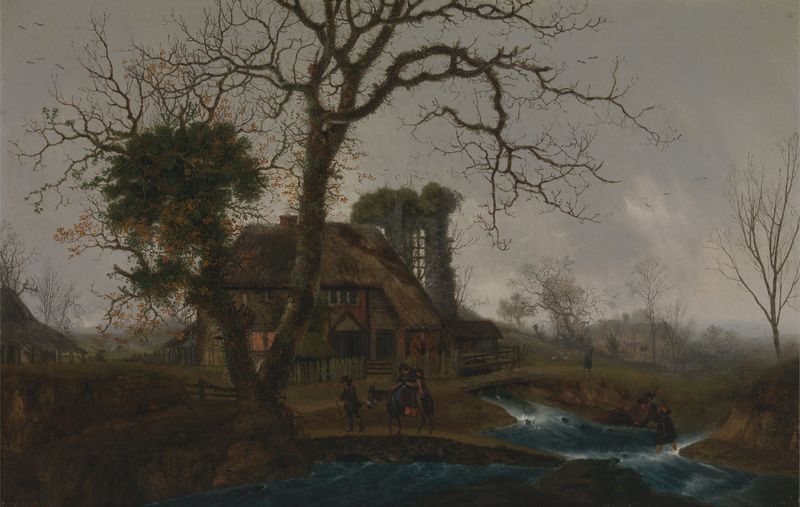
Could a single brushstroke hold eternity? In the quiet expanse of A Winter Landscape, frozen stillness reveals the passage of time, where light dances upon the snow, whispering tales untold. Look to the left at the soft, muted blues and whites that define the sky, hinting at the fleeting moments of dawn. The frosty hues gently bleed into the crisp white snow, creating a harmonious balance that captures the chill of winter. Notice how the delicate brushwork accentuates the texture of the snow-laden trees, each stroke deliberate yet seemingly effortless, inviting you to feel the cold air that envelops the scene. Beneath the surface, the painting holds a paradox of warmth amidst the chill.
The warm tones peeking through the landscape suggest a hidden vitality, contrasting the starkness of winter. The lonely figure in the distance, shrouded in a muted cloak, evokes both isolation and contemplation, a representation of human resilience against nature's indifferent beauty. Created in 1770, this artwork emerged during a time when George Smith was gaining recognition for his landscapes. Living in England, he was part of an artistic movement that embraced the natural world, reflecting the Romantic ideals of the era.
The serene yet poignant atmosphere of this piece mirrors the transitional period in art, where nature began to be celebrated not just as a backdrop, but as a central character in the narrative of human experience.
More Artworks by George Smith
Browse all →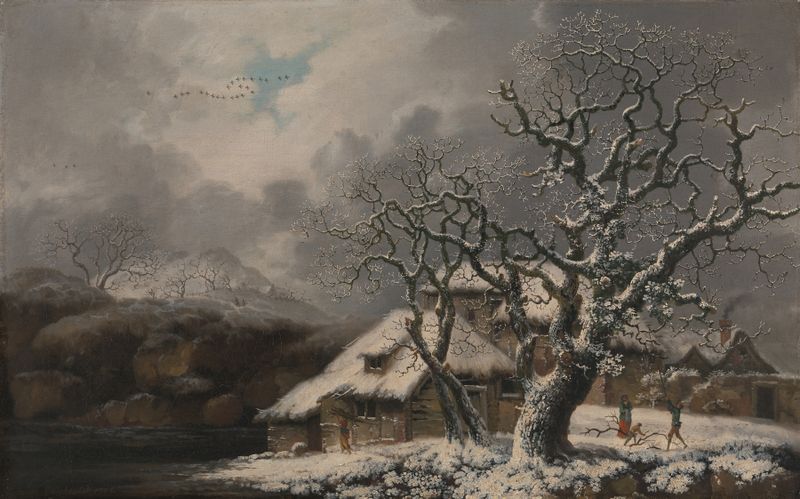
A Winter Landscape
George Smith

A wooded landscape with fishermen and shepherds by a pond, a ruined castle beyond
George Smith

Hop Pickers Outside a Cottage
George Smith
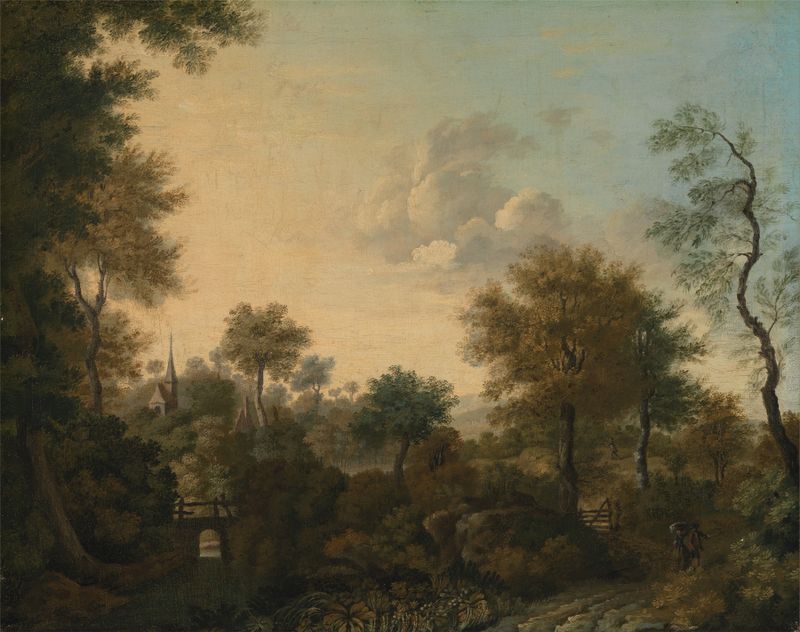
A View Supposedly Near Arundel, Sussex, with Figures in a Lane
George Smith
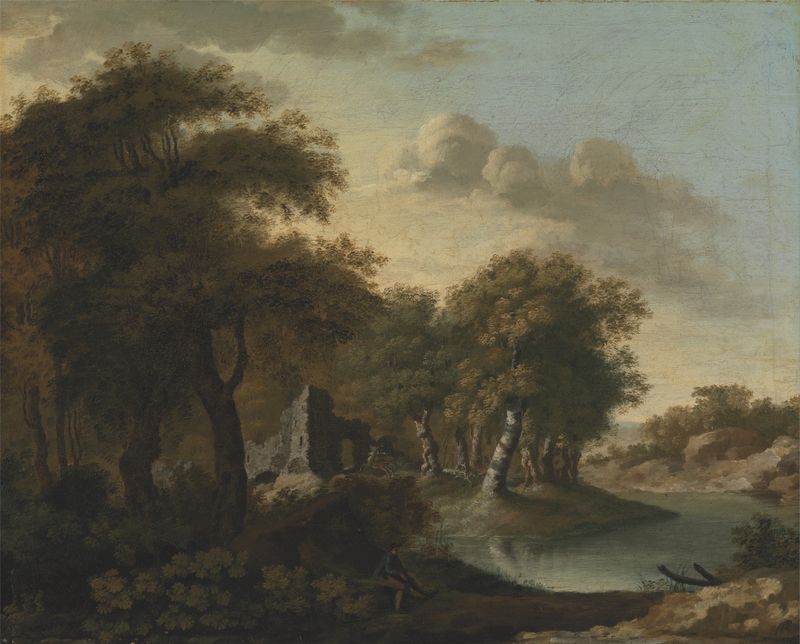
A View Near Arundel, Sussex, with Ruins by Water
George Smith
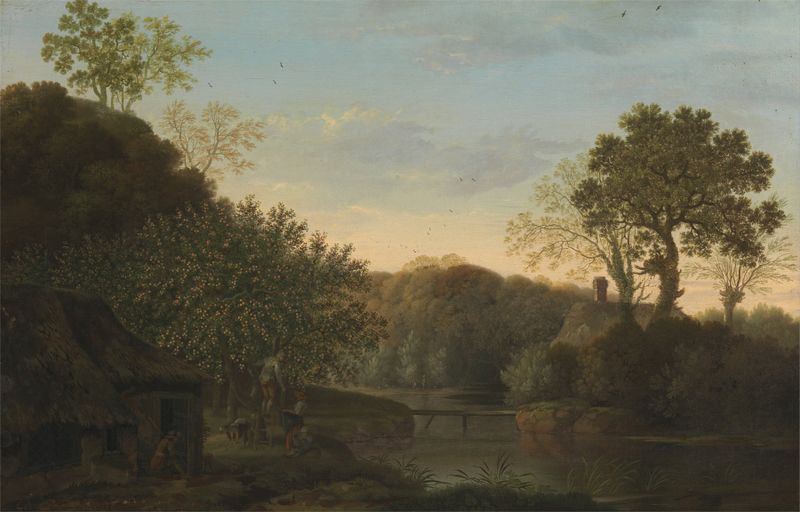
An Autumn Landscape with Apple Pickers
George Smith
Winter landscape
George Smith





