
Winter landscape — History & Facts
What if beauty was never meant to be finished? In Winter Landscape, silence envelops a world draped in the quietude of winter, inviting contemplation and stillness. Look to the foreground where delicate snowflakes rest upon the ground, each one a unique gem whispering tales of the season. Notice how the light glimmers softly across the snow-covered fields, casting a gentle glow that contrasts with the muted greys of the sky. The horizon stretches wide, drawing your eyes toward the distant trees, their branches stark and bare, yet painted with care, hinting at resilience beneath the frost. In the midst of this serene scene lies an emotional tension, caught between the harshness of winter and the beauty it conceals.
The bare trees symbolize loss and longing, while the pristine snow suggests hope and renewal. Small details, such as the faint tracks leading into the woods, evoke a sense of mystery, prompting viewers to ponder who may have crossed this tranquil expanse and what stories lie hidden beneath the surface. George Smith painted this masterpiece in 1750 during a period marked by a growing appreciation for landscape art in England. As the genre evolved, artists began to explore the emotional resonance of nature, moving away from mere representation.
Smith, active in the early 18th century, contributed significantly to this movement, capturing the haunting beauty of winter while reflecting broader artistic shifts of his time.
More Artworks by George Smith
Browse all →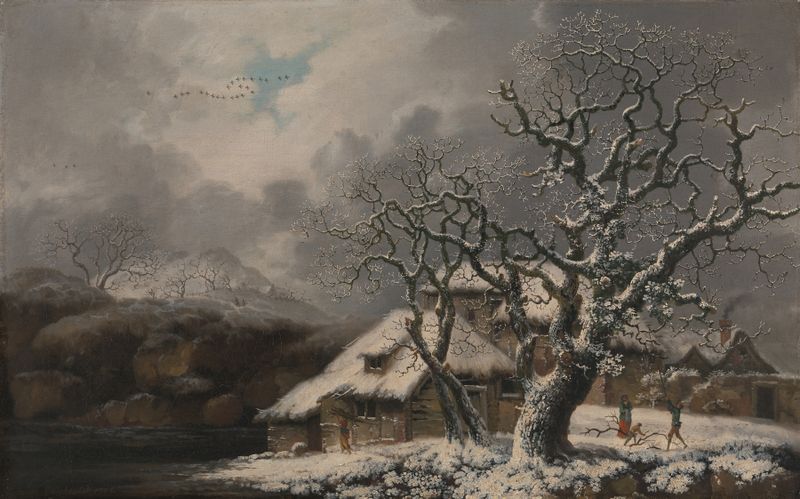
A Winter Landscape
George Smith

A wooded landscape with fishermen and shepherds by a pond, a ruined castle beyond
George Smith

Hop Pickers Outside a Cottage
George Smith
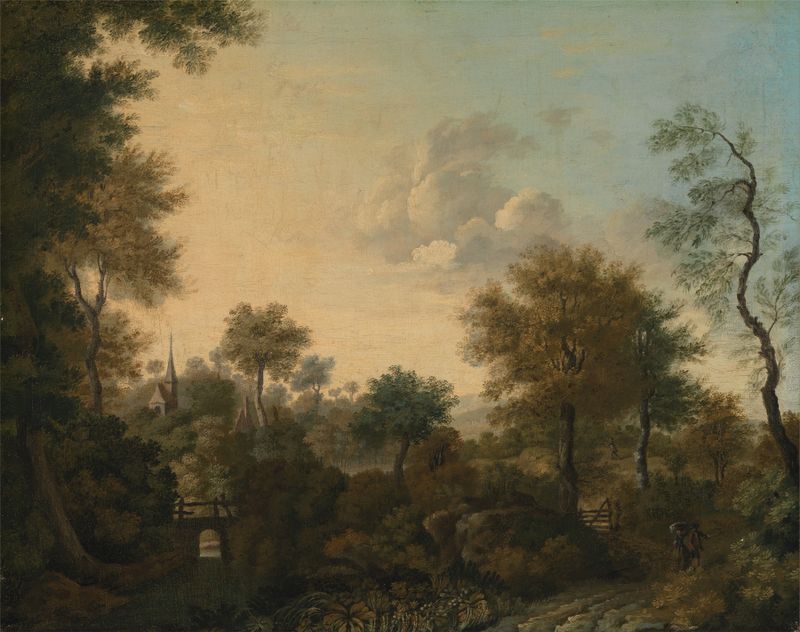
A View Supposedly Near Arundel, Sussex, with Figures in a Lane
George Smith
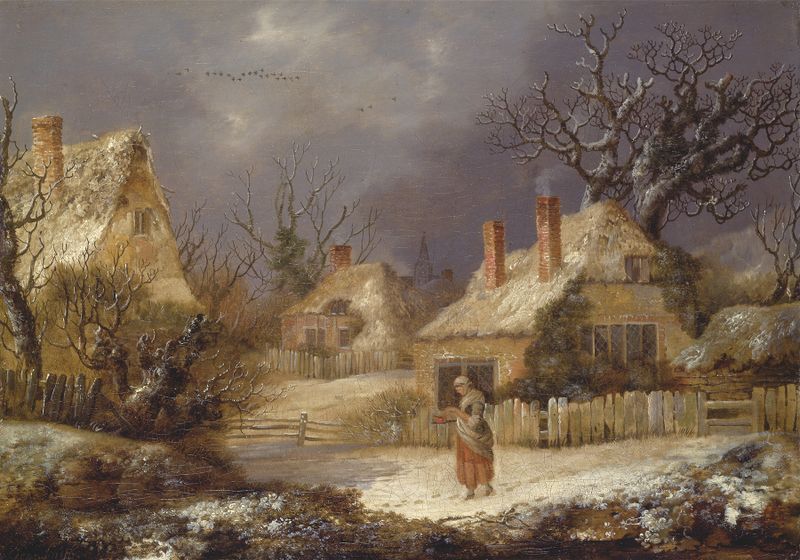
A Winter Landscape
George Smith
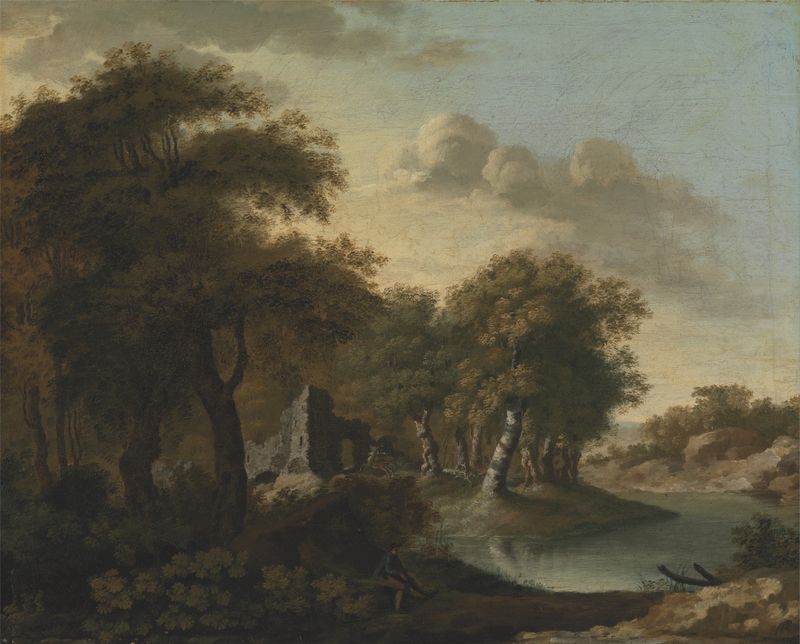
A View Near Arundel, Sussex, with Ruins by Water
George Smith

An Autumn Landscape with Apple Pickers
George Smith





