A Winter Scene. Motif from Southern Stockholm — History & Facts
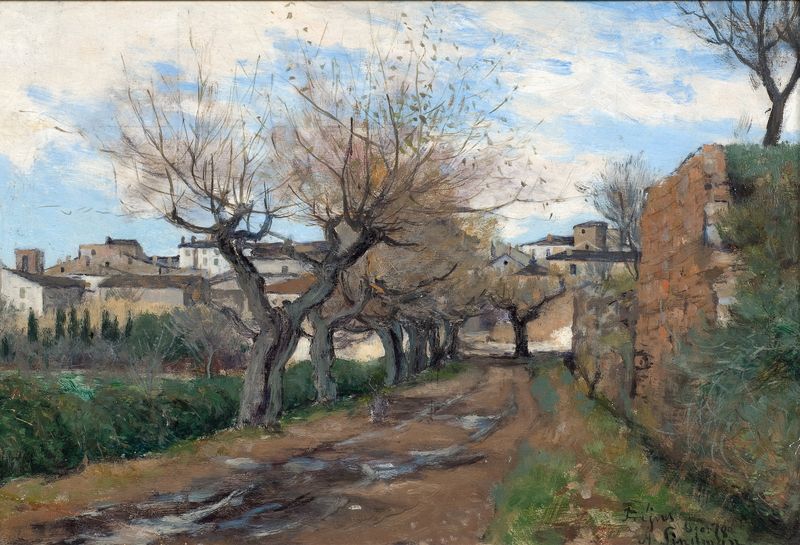
What if silence could speak through light? In A Winter Scene, every glimmer of snow captures a whisper of longing, inviting contemplation of stillness and solitude. Look to the foreground, where a pristine blanket of snow stretches out beneath a pale winter sun. The soft blues and whites contrast with the darker hues of the bare trees that stand like silent sentinels against the horizon. Notice how the light falls upon the icy branches, creating a delicate interplay of shadow and illumination that draws your eye deeper into the scene.
The distant rooftops offer a glimpse of warmth amidst the cold, hinting at life beyond this frozen landscape. The emotional tension lies in the juxtaposition of serenity and isolation. While the ethereal gleam of the snow invites you to immerse yourself in its beauty, the bare trees and quiet atmosphere evoke a sense of longing for connection. This delicate balance captures the essence of winter, where the landscape is both a refuge and a reminder of what is absent.
Each brushstroke carries a weight that resonates with the viewer, compelling one to ponder the stories behind the windows of the distant homes. In 1886, the artist was immersed in the Naturalism movement, seeking to capture the essence of everyday life and the nuances of the natural world. Working in Southern Stockholm, he reflected the unique light and atmosphere of the region during winter, a time when the stark beauty of nature often evokes introspection. Lindman’s attention to detail and emotional resonance in this piece aligns with the broader artistic trends of his era, carving a space for personal expression within the confines of realism.