Scene from Visby — History & Facts
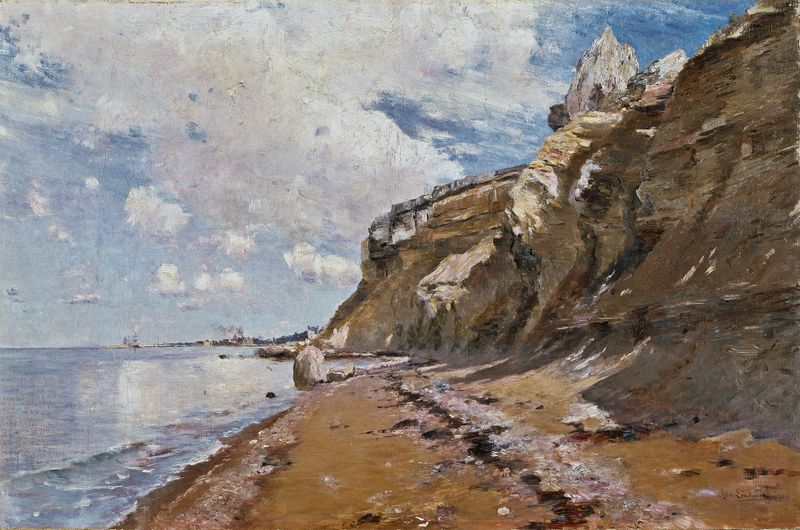
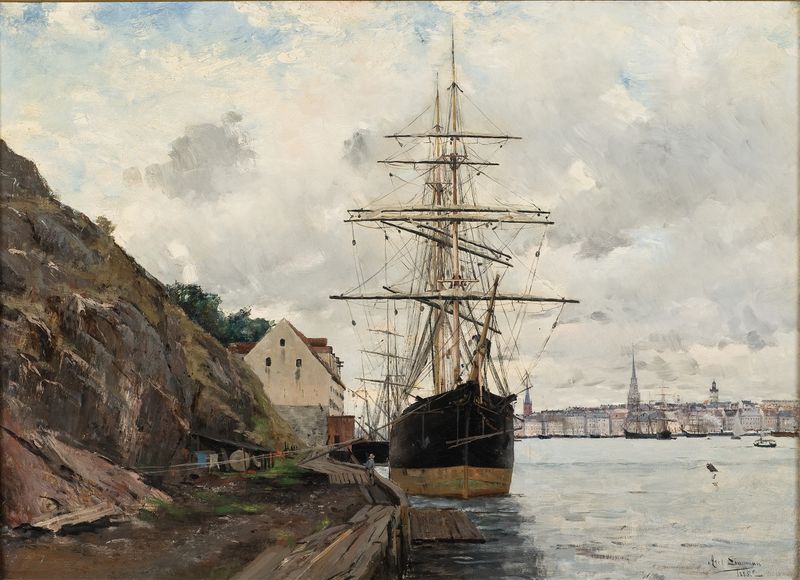
Is this a mirror — or a memory? The soft dance of light across the water pulls the viewer into a moment suspended between reality and reflection. Look to the foreground, where gentle waves lapping against the shore reveal a delicate interplay of colors. The artist employs a palette of serene blues and warm ochres, capturing the essence of an afternoon sun that bathes everything in a golden glow. Notice how the shimmering surface invites your gaze to wander, while the distant silhouette of the coastal town emerges like a dream, both familiar and elusive. Dive deeper into the composition: the horizon line is low, suggesting expansiveness, while the clouds seem to drift lazily, hinting at the passage of time.
In the way the light fractures on the water, there’s a palpable tension between tranquility and transience, reflecting on how moments can be both vibrant and fleeting. The contrast between the static shoreline and the dynamic water evokes a sense of nostalgia, inviting contemplation of what remains and what is lost. In 1881, while residing in Sweden, the artist was immersed in a burgeoning national romanticism, exploring themes of identity and landscape. This work emerged during a time when artists sought to capture the essence of their homeland, reflecting the desire to forge a connection between personal experience and the broader cultural narrative of the time.
Lindman's Scene from Visby encapsulates this exploration, evoking the beauty of memory and place.