The Beach at Villerville, Normandy — History & Facts
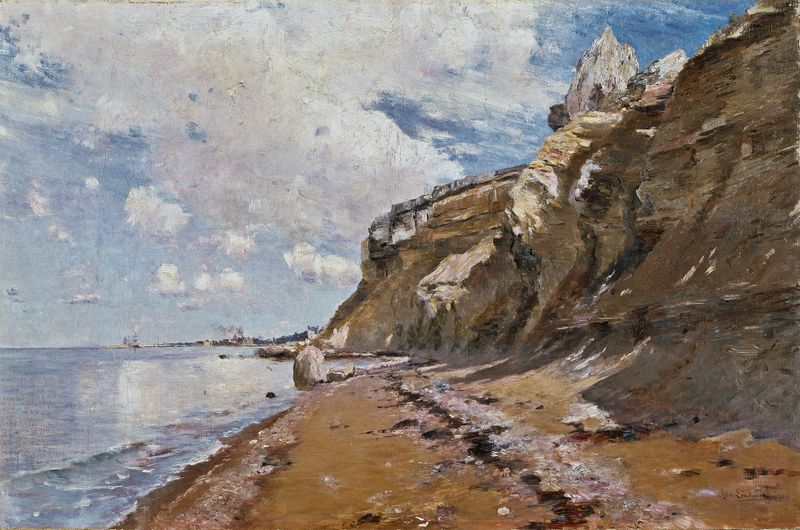
It is within this serene moment that nature’s beauty unfolds, echoing the tranquility we often seek but rarely find. Look to the foreground, where soft, undulating waves kiss the sandy shore, each brushstroke blending hues of azure and gold. The delicate play of light captures fleeting reflections, inviting your gaze to wander along the shoreline where figures leisurely stroll, their silhouettes outlined against a vast expanse of sky. The artist’s choice of pastel colors evokes a gentle warmth, a visual lullaby that envelops the viewer in calmness. Notice how the clouds gather in the distance, hinting at an impending shift in the atmosphere, yet the scene remains anchored in serene coexistence.
There’s a juxtaposition between the soft glow of the warm beach and the darker tones above, capturing both the bliss of a moment and the unpredictability of nature. It’s a reminder of life’s transient beauty, where fleeting waves of joy coexist with the shadows of uncertainty. Axel Lindman painted this piece in 1878 while residing in France, a period when he was refining his impressionist style. This was a time of exploring the effects of light and color, common among artists of the era, as they sought new ways to depict everyday scenes.
Lindman’s work reflects both the peacefulness of the Normand coast and the burgeoning artistic movements that would soon challenge traditional representation in art.