Abendstimmung — History & Facts
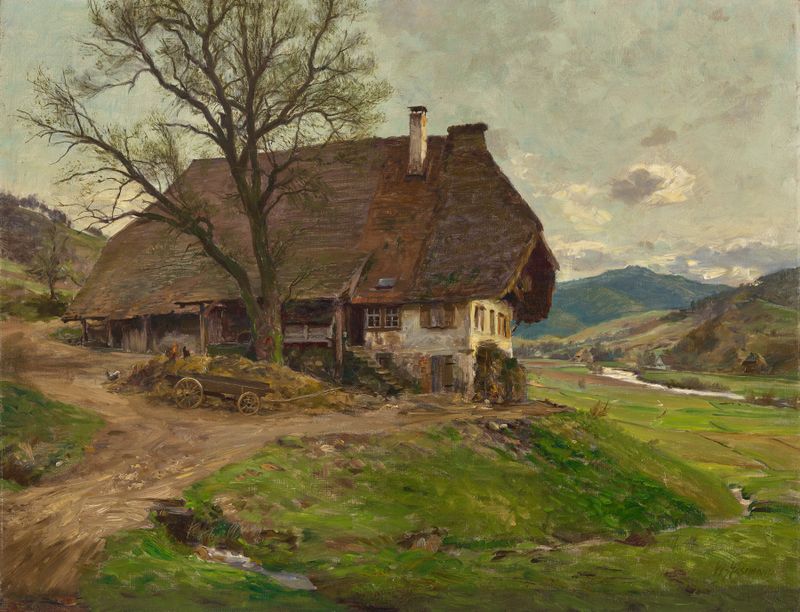
Is this a mirror — or a memory? In Abendstimmung, light dances delicately across the canvas, revealing layers of truth that invite contemplation. Focus first on the soft hues that envelop the painting; look to the warm, amber tones that radiate from the horizon, merging with cooler, muted blues above. Notice how the artist employs gentle brushstrokes to create a serene yet electric atmosphere, evoking a twilight that feels both inviting and elusive. The interplay of light and shadow draws your gaze toward the tranquil water below, where subtle ripples echo the colors of the sky, enhancing the sense of harmony within the scene. Deeper meanings shimmer beneath the surface.
The convergence of day and night symbolizes the transitory nature of existence, a fleeting moment captured that speaks to the truths we often overlook. The stillness of the water reflects not just the sky, but perhaps the viewer's own introspections, prompting a personal confrontation with one’s own memories and experiences. Here, time appears to stretch, blurring the lines between reality and reminiscence. In 1876, Wilhelm Gustav Friedrich Hasemann painted this piece while residing in Germany, amidst a burgeoning appreciation for Romantic landscapes.
This was a period when artists sought to capture the emotional essence of nature, exploring themes of nostalgia and introspection. Hasemann’s work emerges from a world in transition, where the industrial age began to encroach upon the tranquil beauty of the natural world, evoking a profound connection to both place and time.