Blooming Gorse — History & Facts
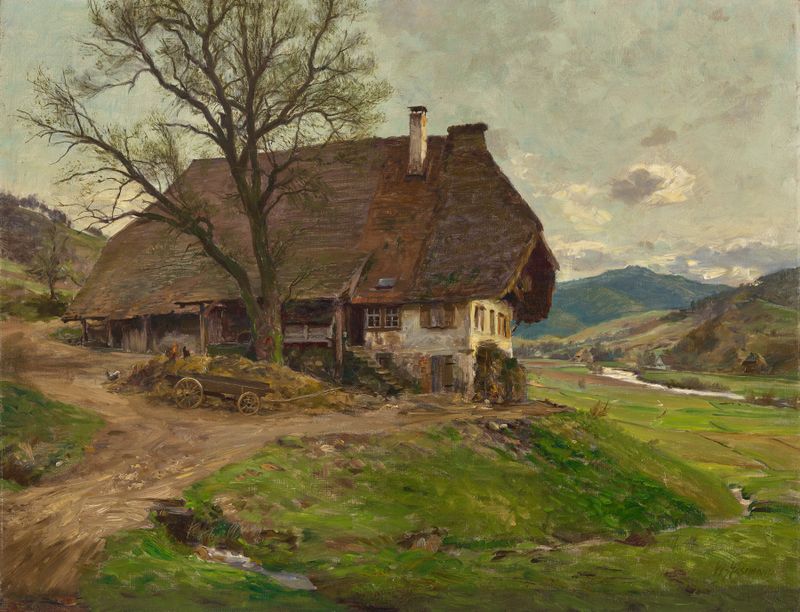
In the labyrinth of existence, destiny unfolds through the delicate interplay of color and form. The essence of life’s fleeting moments dances upon canvases, reminding us of the beauty and transience that surrounds us. Look to the lower left, where the bold yellow gorse blooms vibrantly against a backdrop of muted greens and browns. Notice how the artist employs a rich palette, each hue pulsating with energy, as if even the stillness of the frame is alive.
The wildflowers seem to sway in an unseen breeze, their forms defined by confident brushstrokes that create texture and depth, pulling the viewer into a space that feels both intimate and expansive. Within this landscape lies a juxtaposition of the wild and the cultivated, symbolizing the tension between nature's chaotic beauty and human endeavor. The gorse, with its spikes and softness, speaks to resilience in the face of adversity, suggesting the inevitability of change. The surrounding earth tones ground the vibrant blossoms, embodying the idea that our destinies are shaped by the world we inhabit, even as we strive to bloom in our own unique ways. Created in 1910, this work emerges from a period of introspection for Hasemann, who found solace in the natural world during a time of personal and artistic exploration.
Living in the burgeoning art scene of early 20th-century Germany, he was influenced by movements that celebrated both realism and impressionism. As the world was on the cusp of dramatic change, his work reflects a yearning for connection with nature and the profound narratives woven into our daily existence.