
Abendstimmung am Starnberger See — History & Facts
When did color learn to lie? In the soft embrace of twilight, hues whisper secrets and awaken dormant emotions, inviting the viewer into a world where reality bends and possibilities unfurl. Look to the row of trees along the horizon, their silhouettes etched against the melting pastel sky, where shades of pink and violet bleed into one another. Notice how the light dances upon the gentle ripples of Starnberger See, reflecting the sunset's vibrant palette, which serves as an ethereal curtain drawn over the day's end. Each stroke seemingly caresses the surface, creating a serene harmony—Morgenstern’s technique elevates the ordinary into the extraordinary, capturing an intimate moment in time. Beneath the beauty lies a tension between the tranquil scene and the weight of impending night.
The trees stand as guardians of a fleeting day, their shadows lengthening, hinting at the inevitable passage of time. This juxtaposition invites contemplation on life's ephemerality and the duality of light and darkness—an awakening to both nature's majesty and its fragility. In the 1850s, Morgenstern painted this piece during a period of personal reflection and artistic exploration in Germany. Following the Romantic movement, he sought to convey nature's emotional depth, using color to evoke feelings rather than merely document.
This era marked a significant transition in the art world, where artists like him began to challenge traditional forms and engage more deeply with their surroundings, echoing the sentiments of a rapidly changing landscape.
More Artworks by Christian Ernst Morgenstern
Browse all →
The River Elbe Downstream of Hamburg by Moonlight
Christian Ernst Morgenstern
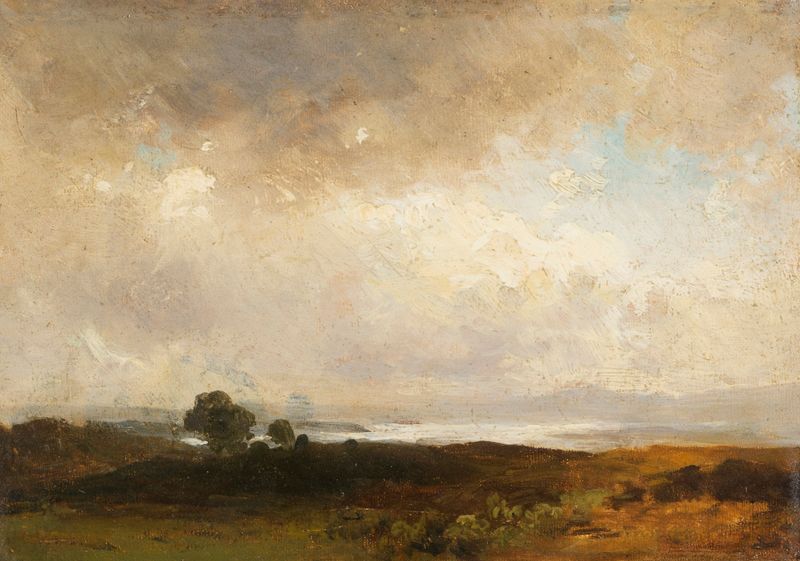
Landschaft am See mit aufziehenden Wolken
Christian Ernst Morgenstern

Landschaft mit Reisenden – Blick auf Ribeauvillé im Elsaß
Christian Ernst Morgenstern
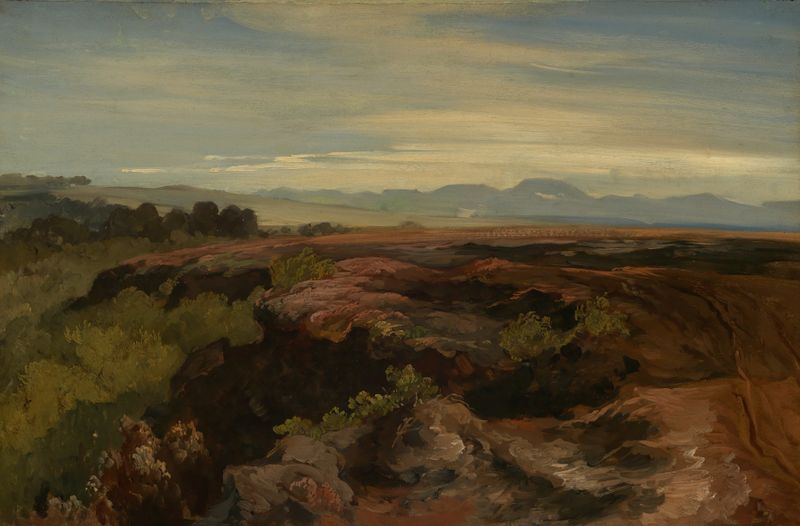
Oberbayerische Landschaft mit Blick auf eine Bergkette
Christian Ernst Morgenstern
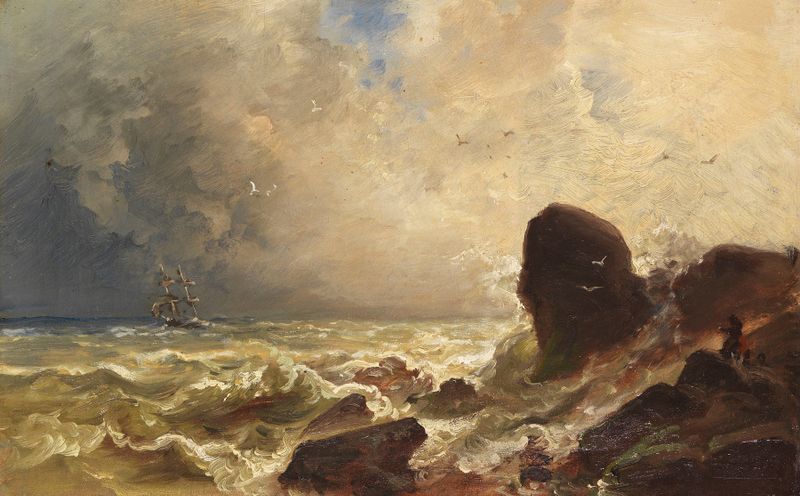
Brandende See
Christian Ernst Morgenstern





