
Abendwolken in Nervi — History & Facts
Can beauty exist without sorrow? In the delicate hues of twilight, we find an alluring tension that hints at the complexities of existence, as captured in Abendwolken in Nervi. Look to the left at the softly blended pastels of the sky, where vibrant pinks and oranges mingle with deepening blues. The clouds, billowing and layered, create a visual rhythm that draws the eye further into the expansive horizon. To the right, the silhouette of a distant coastline grounds the ethereal scene, representing both the beauty and the transience of nature.
The brushwork is gentle yet deliberate, a technique that speaks to the artist's understanding of light and emotion, revealing layers of depth and texture. Within this serene landscape, there lies a poignant contrast between the ephemeral beauty of the clouds and the enduring solidity of the land. The colors suggest both warmth and impending night, evoking a sense of longing and contemplation. This delicate balance allows viewers to feel the weight of time, where every moment is a fleeting treasure, shadowed by the inevitability of change.
Such emotional layers invite reflection on the relationship between joy and melancholy in the experience of nature. Created during a period of artistic exploration, this work was crafted by Karl Theodor Boehme in a time marked by revolutionary ideas and shifts in perception. The artist, influenced by the Romantic movement, painted in Nervi, Italy, where he sought to capture the essence of fleeting beauty against the backdrop of a changing world. In this moment, he embraced not just the external landscape, but also the internal landscapes of the heart and mind.
More Artworks by Karl Theodor Boehme
Browse all →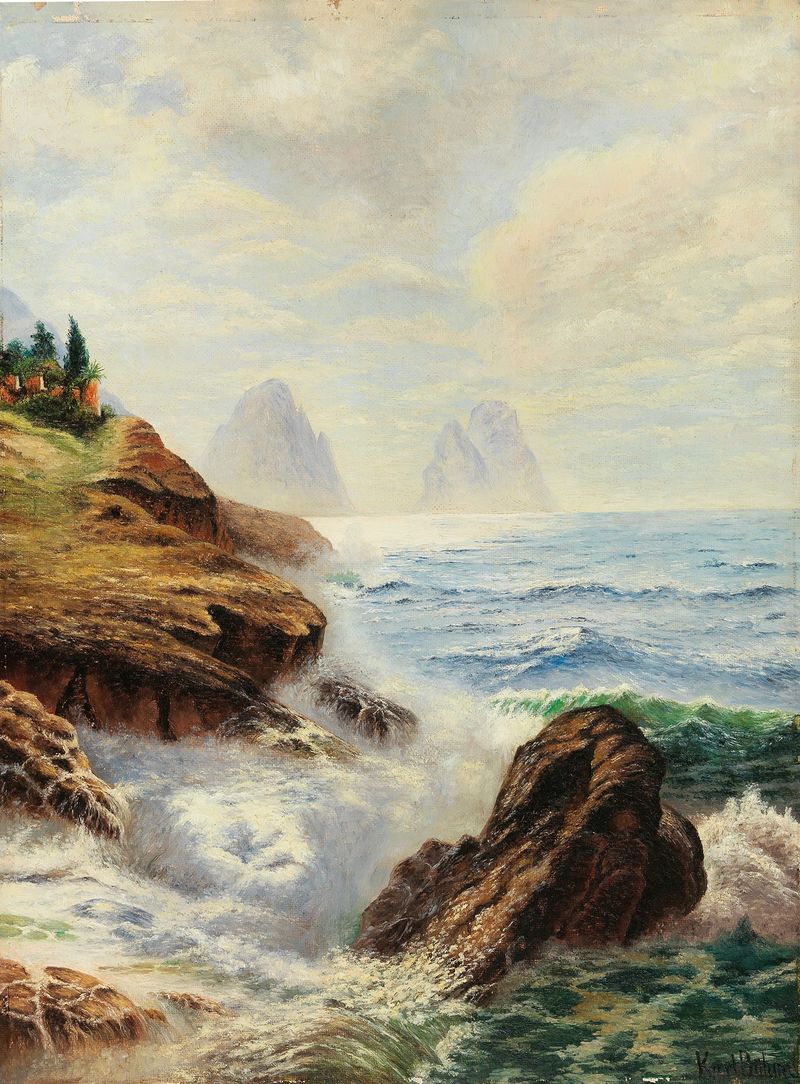
An der Küste von Ischia mit Blick auf die Faraglioni Felsen
Karl Theodor Boehme
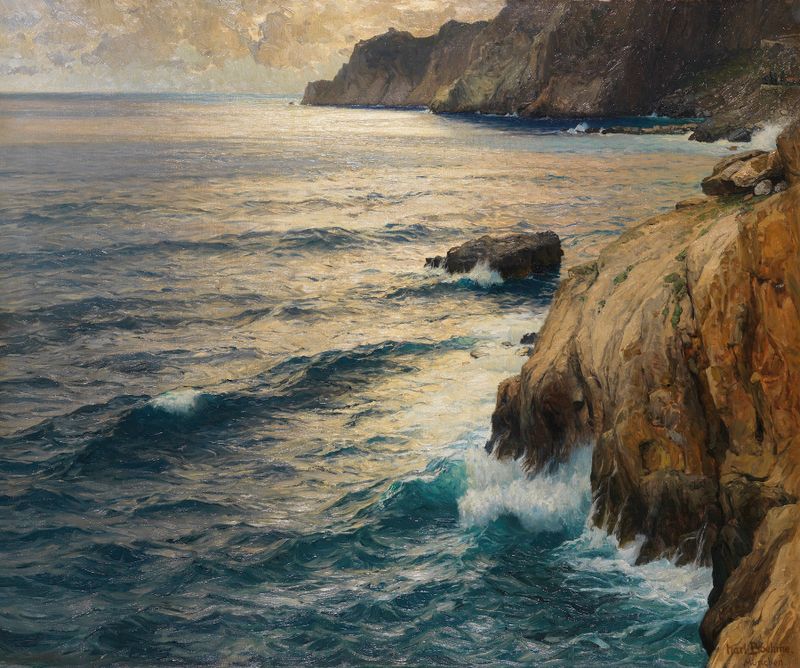
Die Sirenenbucht von Capri
Karl Theodor Boehme
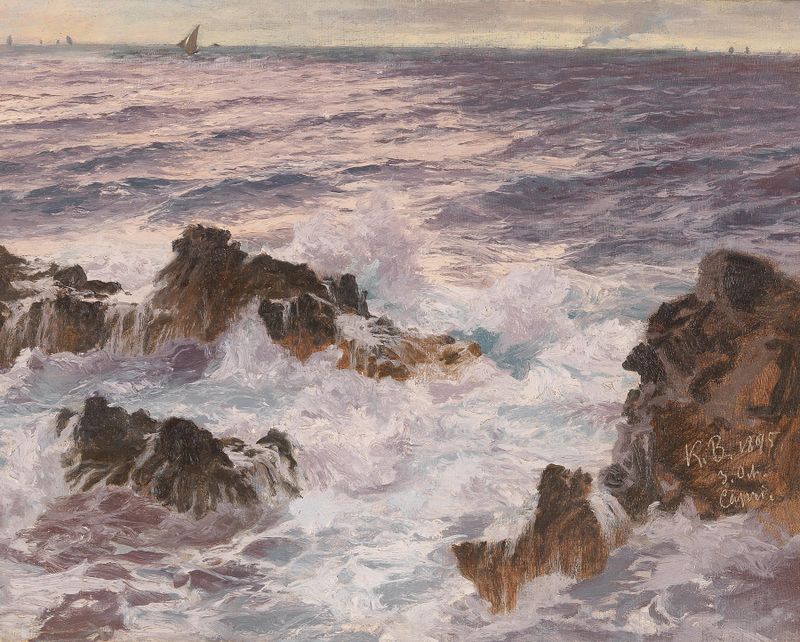
Heavy Seas off the Coast of Capri
Karl Theodor Boehme

Meeresbrandung
Karl Theodor Boehme
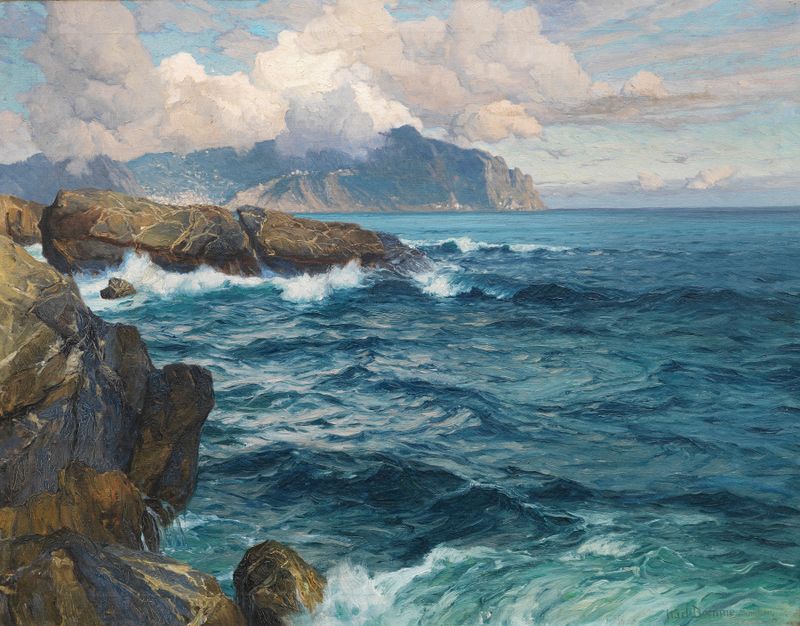
Abendstimmung in Nervi
Karl Theodor Boehme
Morgenstimmung am Strand von Capri
Karl Theodor Boehme





