
Meeresbrandung — History & Facts
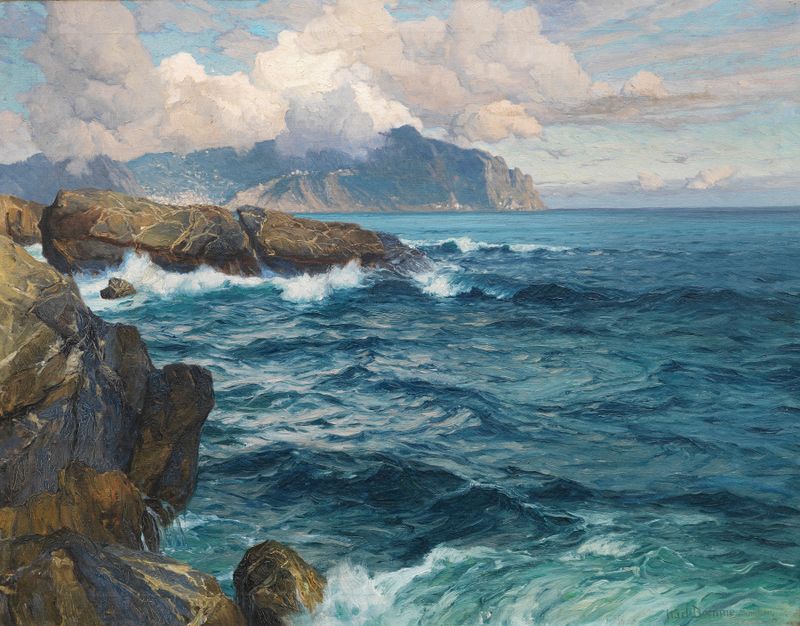
Could beauty survive in a century of chaos? In Meeresbrandung, the tumultuous waves beckon with an answer both poignant and haunting, as longing dances through the strokes of the brush. Look to the left where the azure waves crash against jagged rocks, their frothy white caps spilling over with a fervor that commands attention. The artist employs a rich palette of blues and greens, punctuated by the stark contrasts of deep browns and grays, immersing the viewer in a tempestuous sea. Notice how the interplay of light and shadow captures the moment just before the wave breaks, evoking a sense of anticipation and urgency in the composition. Beneath the surface, the painting communicates a struggle between serenity and tumult.
The rhythmic pulse of the waves reflects the artist's own emotional landscape, perhaps mirroring a longing for stability amidst the chaos of the world around him. The tumultuous sea embodies a broader commentary on the human condition—how the beauty of nature can evoke both peace and anxiety. The foamy edges symbolize fleeting moments of joy, cut short by the relentless power of the ocean, leaving a haunting reminder of impermanence. In 1914, Boehme created this work while Europe stood on the brink of World War I, a time marked by uncertainty and upheaval.
Living in Germany, he witnessed the rapid changes in society and artistic movements that influenced his own style, leaning towards post-impressionism. This backdrop of impending conflict perhaps fueled his exploration of the natural world, as he sought solace in the beauty of the sea amidst an era that threatened to engulf it.
More Artworks by Karl Theodor Boehme
Browse all →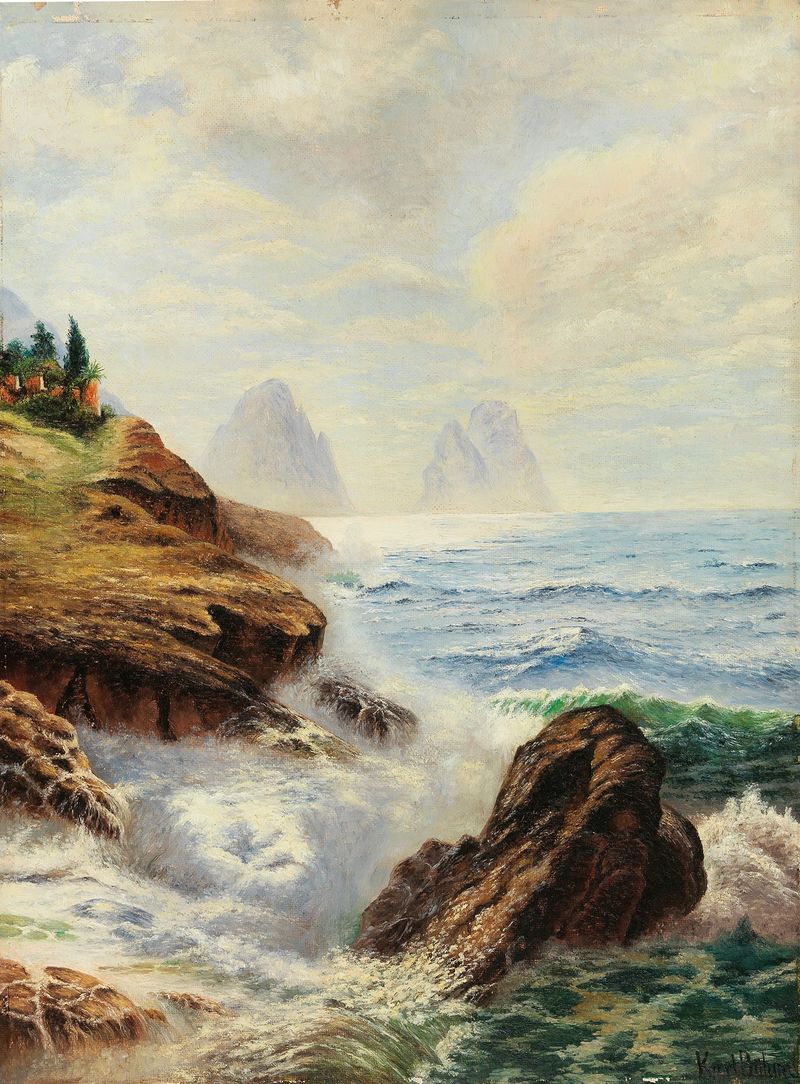
An der Küste von Ischia mit Blick auf die Faraglioni Felsen
Karl Theodor Boehme
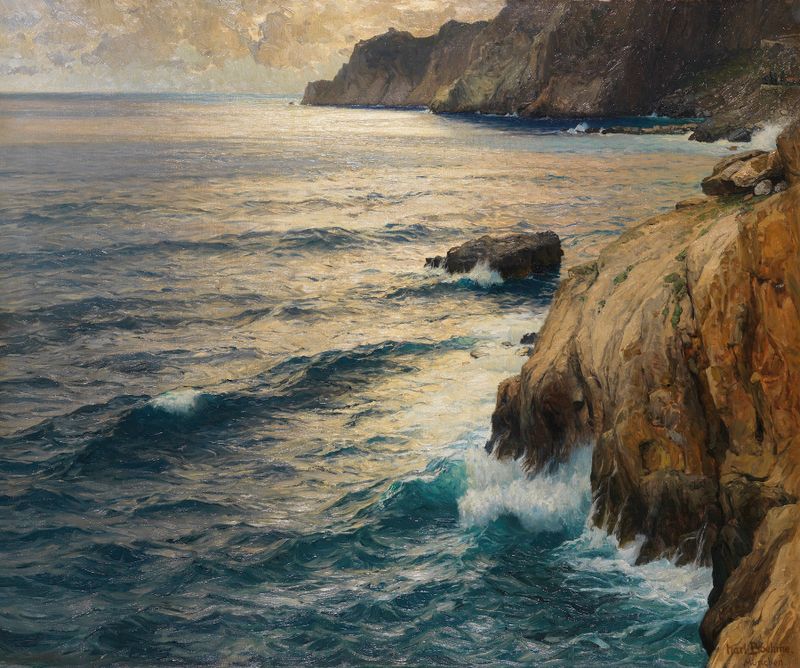
Die Sirenenbucht von Capri
Karl Theodor Boehme
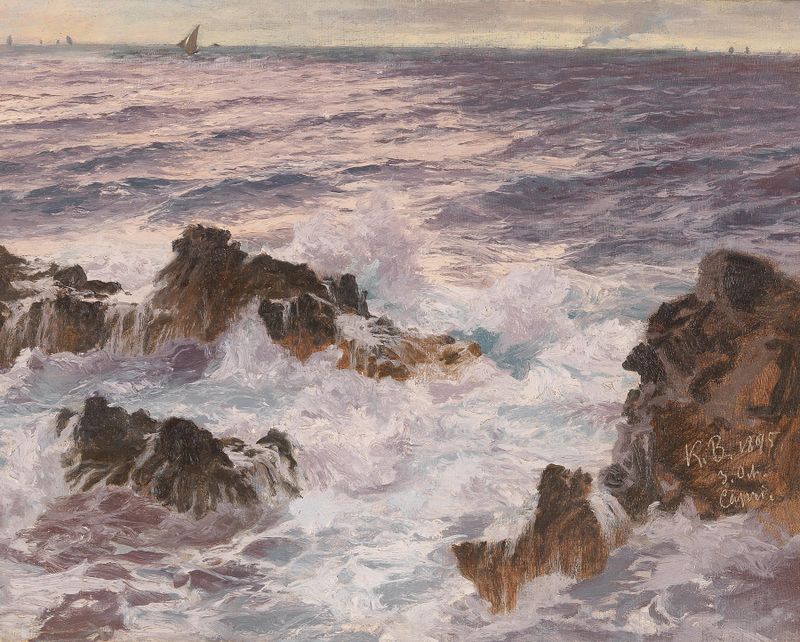
Heavy Seas off the Coast of Capri
Karl Theodor Boehme
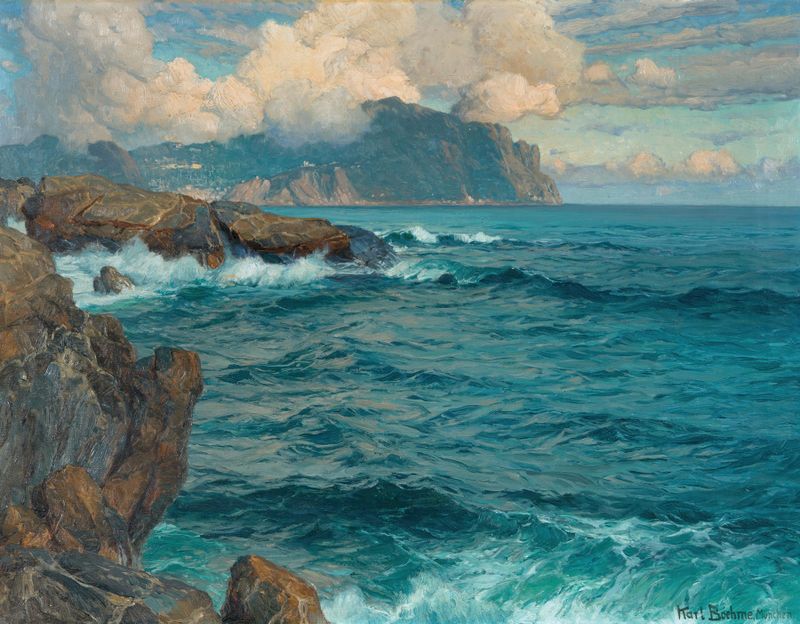
Abendwolken in Nervi
Karl Theodor Boehme
Abendstimmung in Nervi
Karl Theodor Boehme
Morgenstimmung am Strand von Capri
Karl Theodor Boehme





