Die Sirenenbucht von Capri — History & Facts
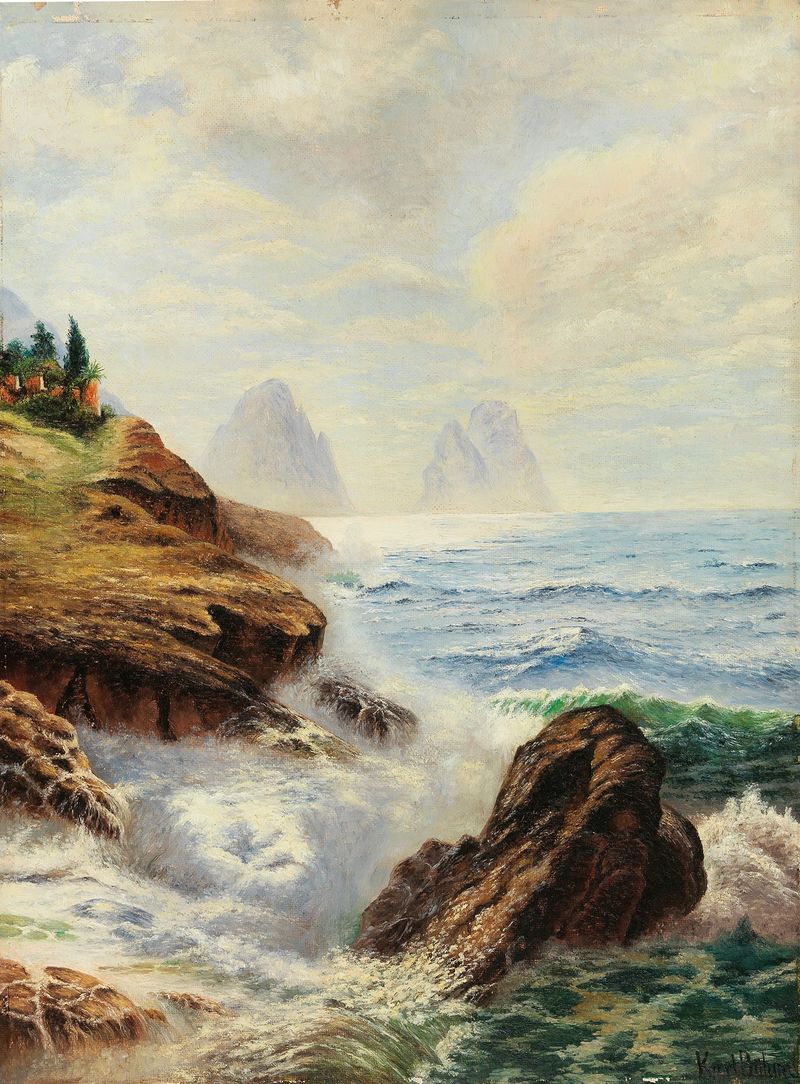
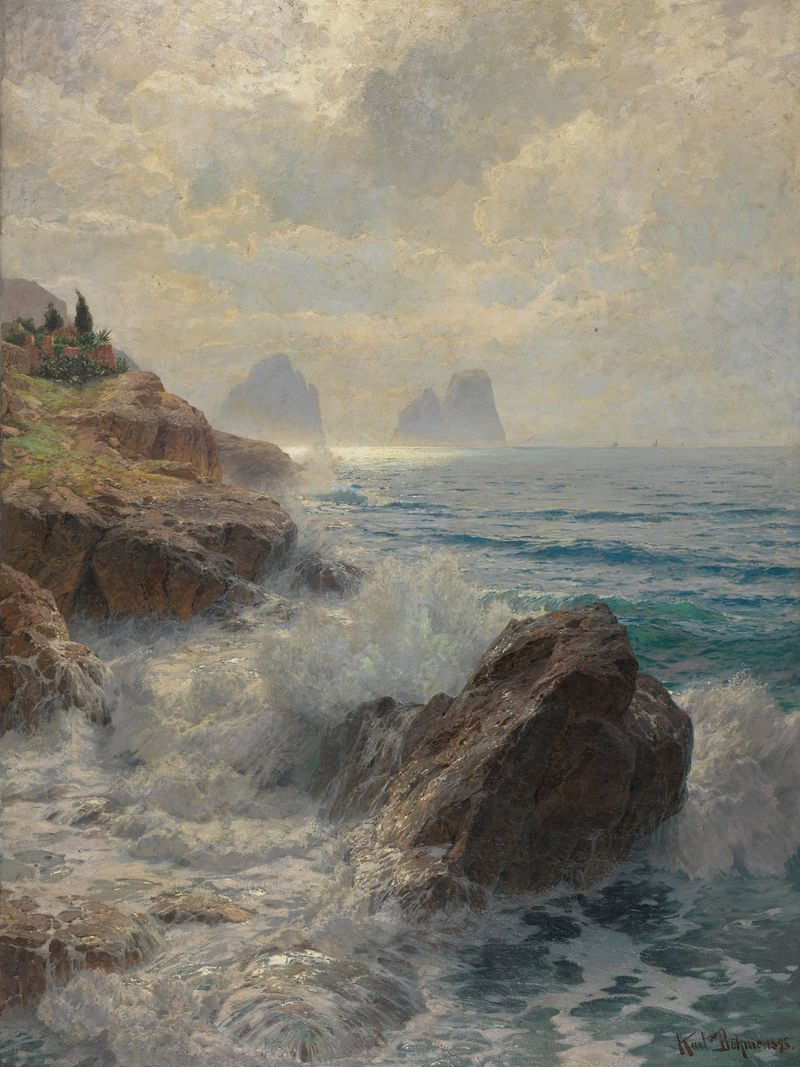
Who listens when art speaks of silence? In Die Sirenenbucht von Capri, the tranquil waters whisper secrets of the past, inviting contemplation and introspection. Focus on the serene expanse of blue that envelops the scene; the water glimmers under the soft caress of sunlight, casting reflections that dance like memories on the surface. To the left, the rugged cliffs rise majestically, a stark contrast to the fluidity of the sea, while delicate hints of green foliage frame the edges, offering a glimpse of nature's harmony. The artist employs a palette of gentle pastels, creating a dreamlike quality that encourages the viewer to linger within this idyllic landscape. Yet beneath this picturesque veneer lies a tension between the eternal and the ephemeral.
The stillness of the water contrasts with the rugged cliffs, a metaphor for the permanence of nature against the transient moments of life. The painting whispers stories through its quietude, urging observers to reflect on their own existence and the fleeting nature of beauty. The subtle brushstrokes evoke a sense of transcendence, beckoning viewers to seek deeper meanings in what may initially seem peaceful. Created in 1893 during a period of great personal upheaval for the artist, this work reflects a search for solace amid the chaos of the world.
Boehme was influenced by the Symbolist movement, which sought to convey emotional states through imagery rather than direct representation. His journey to Capri, a place steeped in myth and natural beauty, served as a refuge and inspiration, allowing him to express his feelings of longing and introspection through this serene coastal scene.