Achsbruch auf der Straße nach Rothenburg — History & Facts
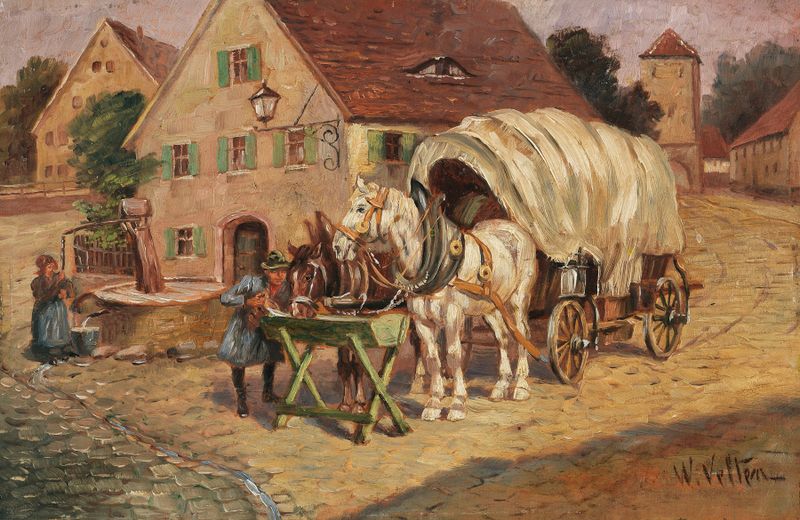
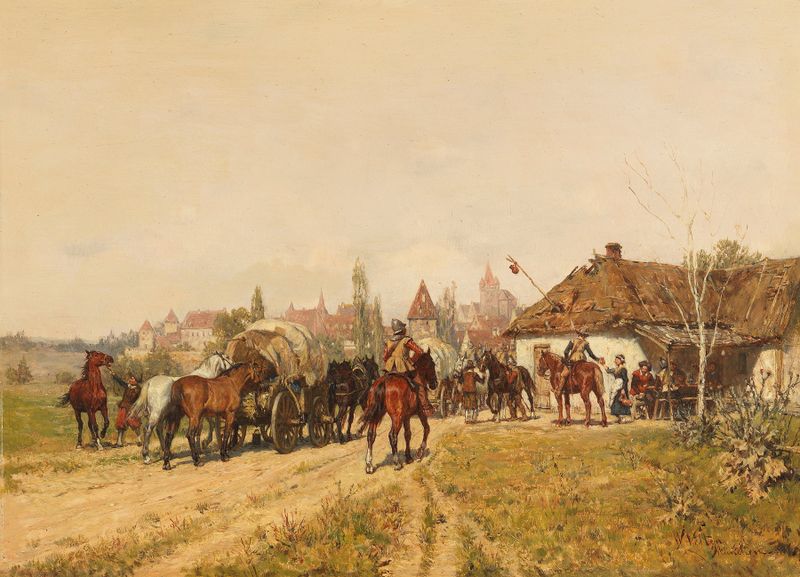
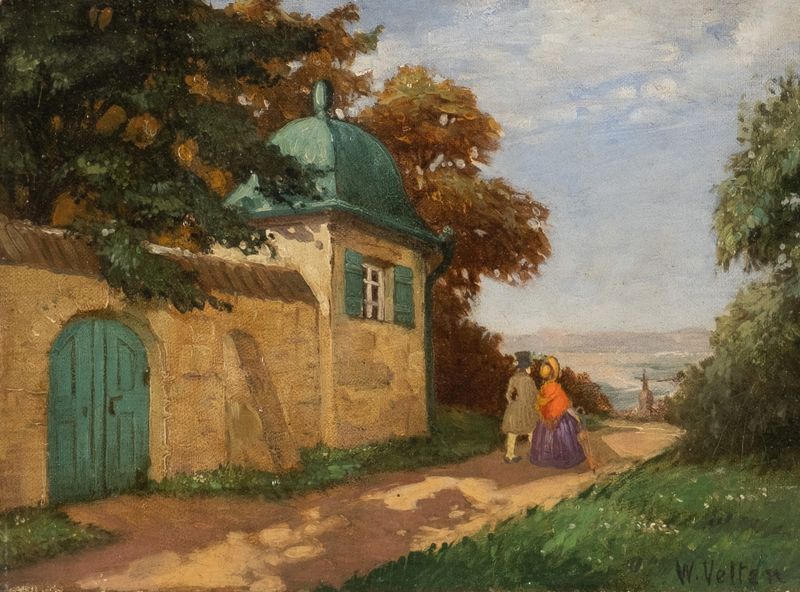
What if silence could speak through light? In Achsbruch auf der Straße nach Rothenburg, the interplay of tranquility and subtle drama invites the viewer to explore the depths of existence and transcendence. Look to the foreground, where the road winds gently, flanked by soft, muted greens that cradle the shadows of undulating hills. Notice how the pale light of the afternoon sun filters through the canopy of trees overhead, casting dappled patterns that dance across the ground. The contrast between the vibrant greens and the calming earth tones draws your eye toward the vanishing point in the distance, where the horizon meets the sky in a gentle embrace.
Each brushstroke whispers of nature's serenity, crafting a scene that feels both timeless and intimate. As you delve deeper, observe the figures on the road; their stillness suggests a moment of pause, a contemplation of the journey ahead. The soft gradient of colors elicits a feeling of melancholy intertwined with hope, embodying the tension between movement and stasis. The subtle shift in light not only reveals the passage of time but also hints at a greater spiritual awakening, as the landscape itself becomes a symbol for the quest of the soul seeking transcendence amid the mundanity of life. Wilhelm Velten created this piece during the late 19th century, a period marked by profound changes in both society and the art world.
Working in Germany, he engaged with the rising currents of Impressionism while maintaining a connection to the Romantic tradition. This era saw a growing fascination with nature and an exploration of emotional expression, influencing Velten's work as he sought to capture the essence of the human experience through landscapes that resonate on a deeper level.