Fuhrwerk am Dorfbrunnen — History & Facts
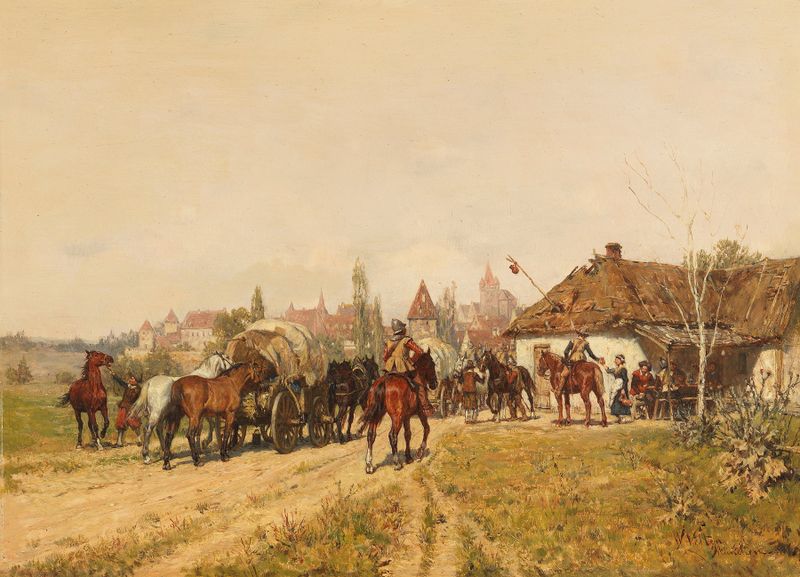
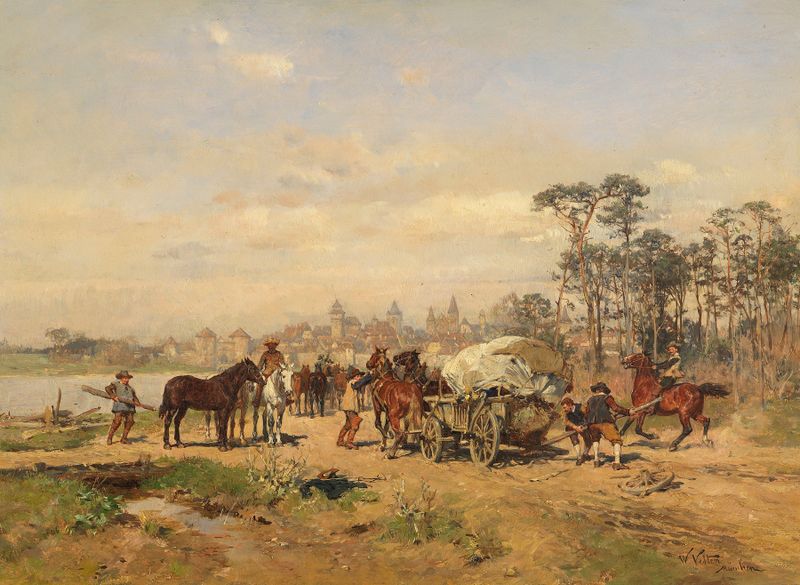
When did color learn to lie? In the delicate interplay of hues, there lies the revelation of truth masked within beauty. Focus your gaze on the vibrant greens and browns that seem to pulse with life, drawing you into the pastoral charm of this rural scene. Notice how the sunlight dances across the surface of the village well, illuminating the textures of the cobblestones and the weathered wooden cart. The juxtaposition of the simple, sturdy cart against the softly rendered background creates a sense of harmony, while the figures—captured in a moment of stillness—invite you to ponder their stories. Hidden in the simplicity are layers of meaning waiting to be uncovered.
The well, a central motif, represents not only a source of life but also a gathering point for the community, echoing themes of sustenance and togetherness. The cart, a symbol of labor, suggests the passage of time and the inevitability of change in a world that seems to linger in nostalgia. The gentle warmth of the colors juxtaposed with the stark reality of rural life unveils the tension between the ideal and the real, encapsulating a moment that is both serene and fleeting. Created between 1900 and 1920, this work emerged during a period of significant transformation for the artist, who was deeply influenced by the burgeoning movements in German art.
As societal shifts unfolded, Velten sought to capture the essence of everyday life, grounding his work in the rich textures of rural existence while reflecting a world on the brink of modernity. His artistry stands as a testament to a time when the simplicity of life was both cherished and challenged by the evolving landscape around him.