
Adam and Eve — History & Facts
Could beauty survive in a century of chaos? In Adam and Eve, the viewer is invited into a world where tranquility exists within the paradox of emptiness. The figures, draped in the softest hues, evoke both a sense of longing and a profound stillness that resonates through the ages. Look to the center, where the figures gracefully intertwine, their bodies forming a delicate balance of flesh and emotion. The play of light across their skin creates a lifelike quality, drawing the eye to the tender expressions that reveal vulnerability and curiosity.
Notice how the dark background contrasts with their luminescence, suggesting an impending drama that looms just outside the frame. The subtle details—the texture of the leaves, the gentle curvature of their forms—invite an intimate exploration of their existence. Yet beneath this serene surface lies a wellspring of tension. The absence of background activity highlights a profound solitude, suggesting a moment of pause in the unfolding of human experience.
The tension between beauty and despair resonates through their gaze, hinting at the inevitable fall from grace and the emptiness that follows. Each detail transforms the canvas into a dialogue about the impermanence of paradise, mirroring the precariousness of human existence. Rembrandt created Adam and Eve in 1638 while in Amsterdam, a city teeming with artistic innovation and rising prosperity. At this time, he was becoming increasingly recognized for his mastery of light and shadow.
The work encapsulates both the personal struggles of the artist, who was facing financial difficulties, and the broader existential questions of a society grappling with its own complexities. This piece is a testament to beauty's fragility amidst the chaos of life.
More Artworks by Rembrandt van Rijn
Browse all →
The Night Watch Militia Company of District II under the Command of Captain Frans Banninck Cocq
Rembrandt van Rijn

The Return of the Prodigal Son
Rembrandt van Rijn

The Hundred Guilder Print: the figures leaning on the wall in the centre left
Rembrandt van Rijn

The Hundred Guilder Print: the central piece with Christ preaching, the plate arched
Rembrandt van Rijn

Isaac and Rebecca, Known as ‘The Jewish Bride’
Rembrandt van Rijn
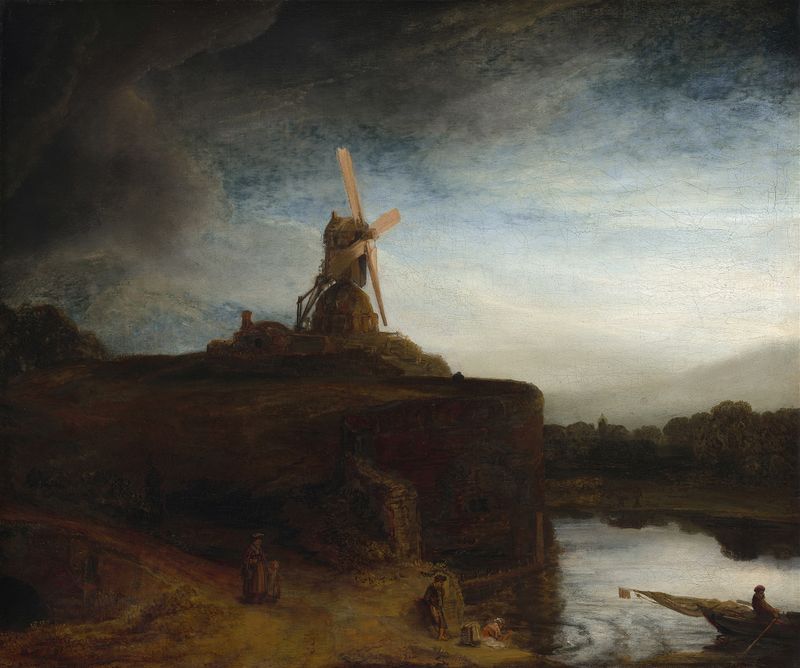
The Mill
Rembrandt van Rijn

The Sampling Officials of the Amsterdam Drapers’ Guild, Known as ‘The Syndics’
Rembrandt van Rijn

The return of the prodigal son
Rembrandt van Rijn
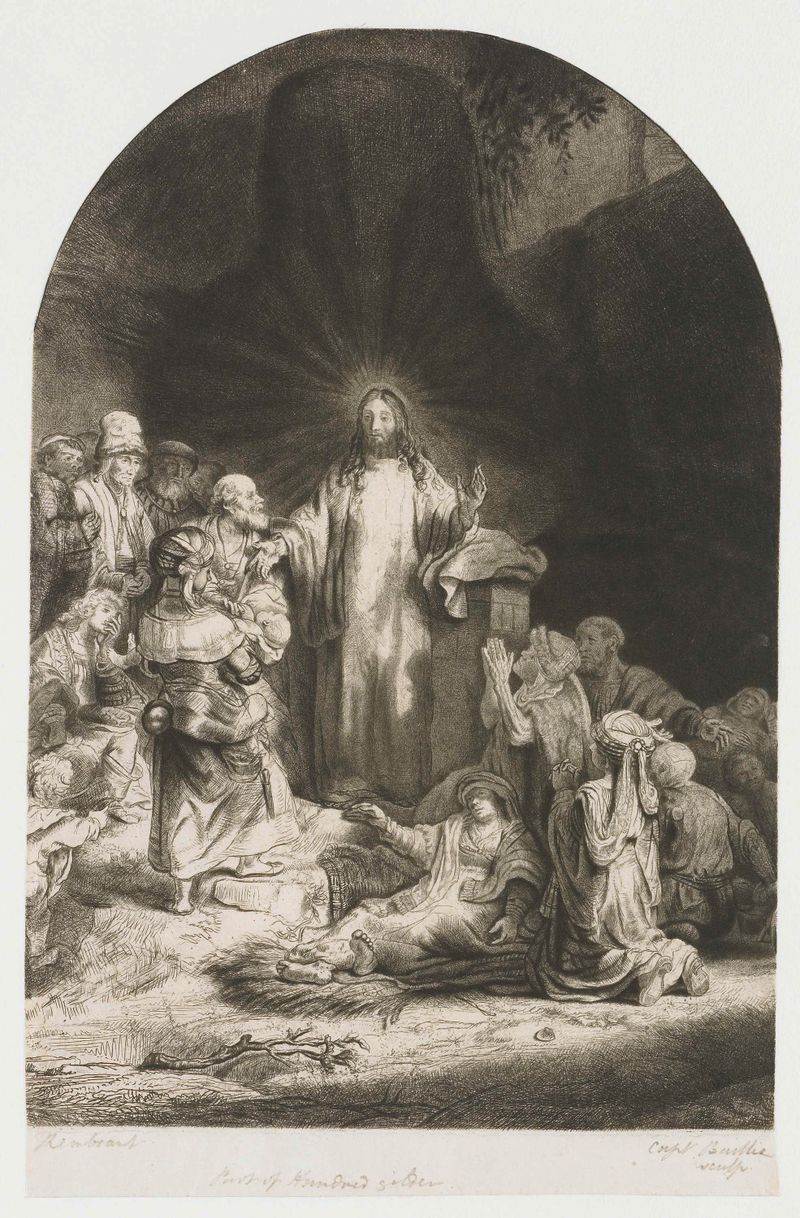
The Hundred Guilder Print: the central piece with Christ preaching, the plate arched
Rembrandt van Rijn

The Hundred Guilder Print: the man seen on the back in the lower left corner
Rembrandt van Rijn
More Religious Art
Browse all →The Return of the Prodigal Son
Rembrandt van Rijn

The Garden of Earthly Delights
El Bosco

Count Orgaz’ funeral
El Greco
The Hundred Guilder Print: the central piece with Christ preaching, the plate arched
Rembrandt van Rijn

The Descent from the Cross
Rogier van der Weyden
The return of the prodigal son
Rembrandt van Rijn