Adoration of the Magi — History & Facts
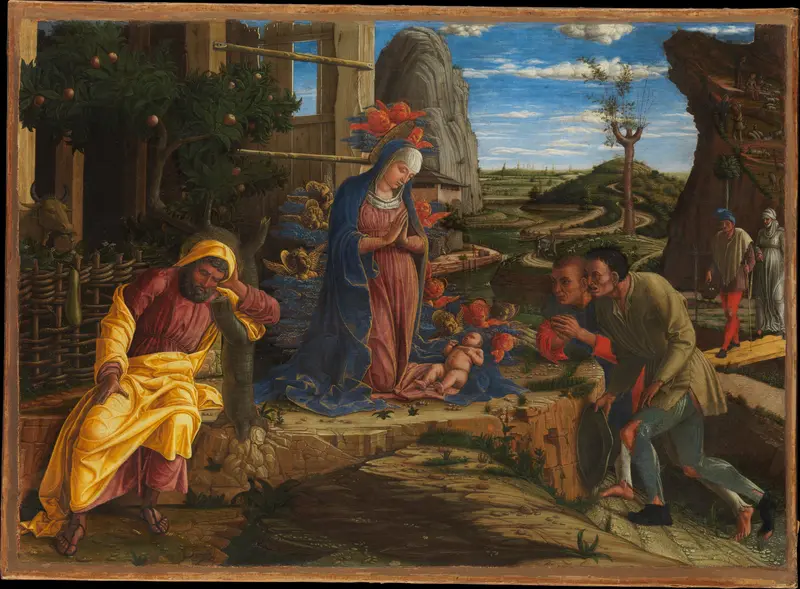
Adoration of the Magi by Andrea Mantegna, dated to around 1500, is a distemper painting on linen that depicts the biblical scene of the Magi presenting gifts to the Christ Child. Created in the later years of Mantegna’s career, this work reflects the artist’s mature style and was produced during his tenure in Mantua, where he served as court painter to the Gonzaga family. The painting is now held in the collection of the J.
Paul Getty Museum. The composition features the Virgin Mary holding the infant Jesus at the center, surrounded closely by the three Magi, each presenting their gifts of gold, frankincense, and myrrh. Mantegna arranges the figures in a tight semicircle, emphasizing their interaction and the intimacy of the moment. The artist employs a dark background to bring out the luminous flesh tones and the rich, varied textiles, including turbans and fur-lined garments.
The use of distemper on linen allows for a matte finish and subtle gradations of color, enhancing the sense of immediacy and realism in the depiction of faces and hands. The painting’s provenance is well documented, with its current location in the J. Paul Getty Museum. Adoration of the Magi is recognized as one of Mantegna’s most celebrated late works and has been widely studied for its innovative composition and psychological depth.
The work has been exhibited internationally and is frequently cited in scholarship on Renaissance painting and the representation of the Magi in European art.