After the Evening Storm — History & Facts
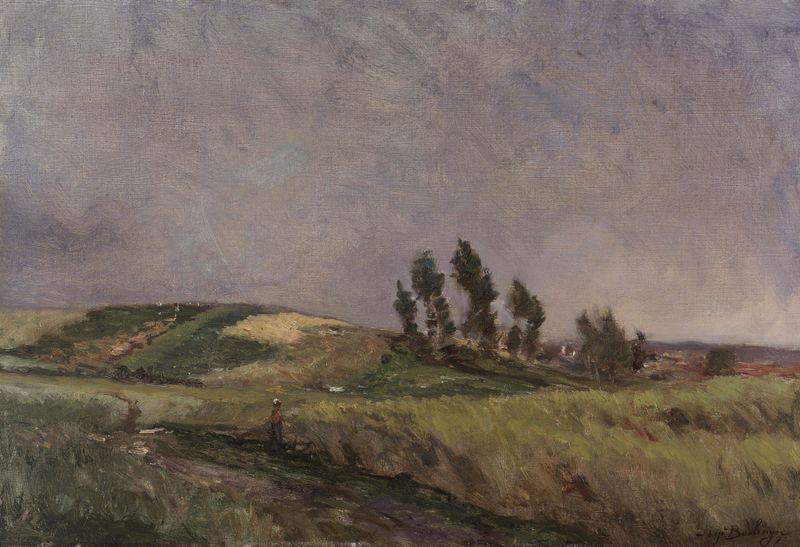
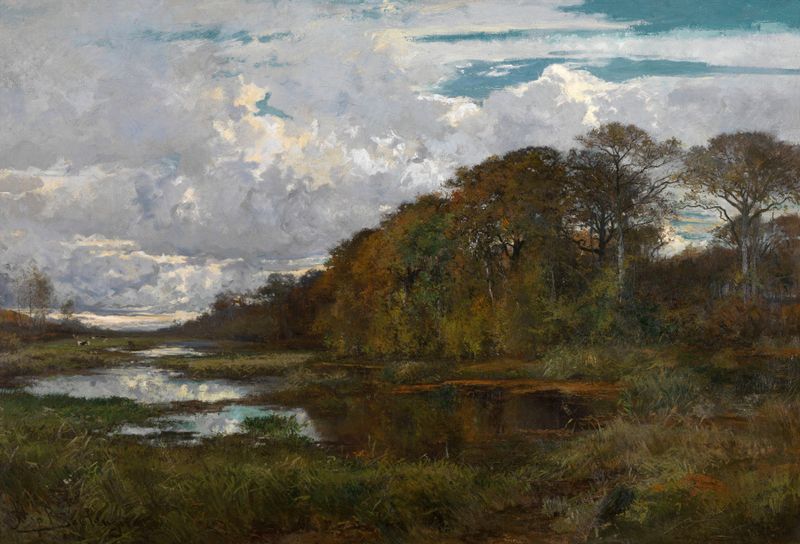
In After the Evening Storm, the interplay of light and shadow invites the viewer to ponder the legacy of nature’s fury and its aftermath. The painting embodies a moment suspended between chaos and calm, capturing how beauty can emerge from destruction. Look to the center, where the calm waters mirror the tumultuous sky, reflecting hues of deep indigo and delicate lavender. The horizon line is balanced with wispy clouds still heavy with moisture, suggesting the storm’s lingering presence.
Notice how the soft brushstrokes mimic the gentle ripples on the water's surface, while the vibrant colors evoke a sense of renewal — a promise of serenity following the tempest. Delve deeper into the details: the way the light breaks through the clouds hints at hope, suggesting that even the most turbulent experiences can lead to moments of clarity. The contrasting elements of the fierce storm and tranquil waters speak to the duality of existence — chaos intertwined with tranquility. As the viewer absorbs these layers, they come to understand that the painting is not just a landscape; it is a meditation on resilience and the enduring beauty of nature. Hippolyte Boulenger created this work between 1870 and 1871, during a time of significant change in the art world.
He was influenced by the Barbizon School, emphasizing the beauty of rural landscapes and the emotional resonance of natural scenes. This period saw a shift toward realism, and Boulenger's vibrant depiction reflects a desire to capture the sublime in nature, serving as both a personal and artistic legacy.