Gehucht in de duinen — History & Facts
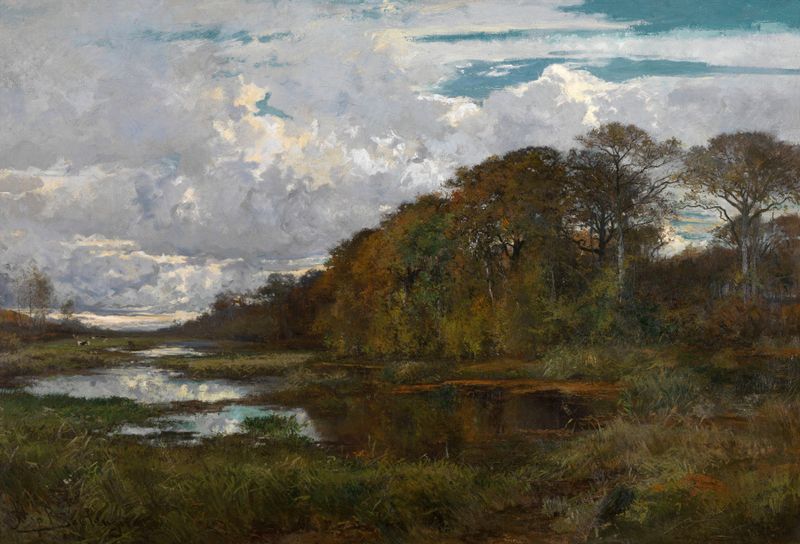
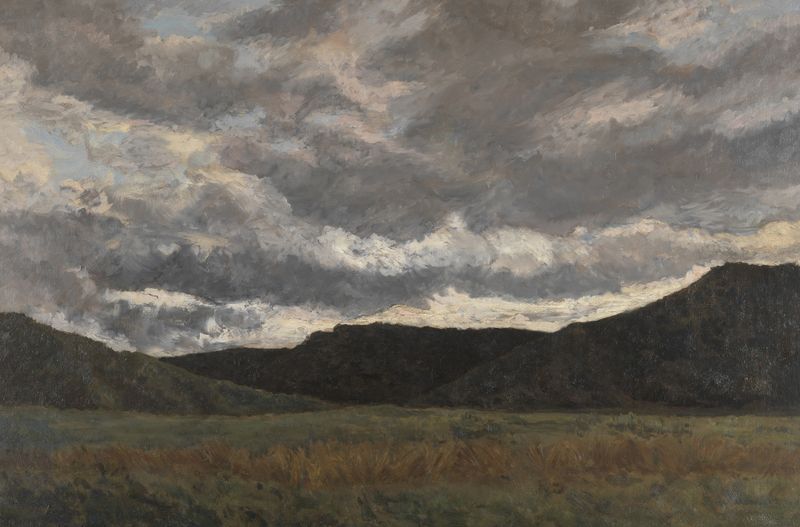
Could a single brushstroke hold eternity? In Gehucht in de duinen, the profound interplay of light and shadow whispers this very question, inviting viewers to ponder the delicate balance of existence. Look to the left at the gently sloping dunes, where soft, muted hues blend seamlessly. The light captures the texture of the sand, creating an ethereal warmth that contrasts with the cool shadows creeping in from the right. Notice how the figures of the villagers, depicted with understated grace, appear almost as silhouettes, merging into the landscape yet standing apart through the artist's careful delineation of form.
The composition draws the eye through the undulating curves of the dunes, leading to a horizon that feels both inviting and elusive. The artwork conveys a sense of isolation, yet there is an inherent comfort in the simplicity of rural life. The shadows stretch long, hinting at the passage of time and the transience of human endeavor against the backdrop of nature's permanence. Each shadow embodies the weight of silence and contemplation, inviting viewers to reflect on the lives lived in this secluded haven.
Boulenger captures not just a scene but the emotional depth of existence, where moments linger like the fading light of dusk. In 1870, Hippolyte Boulenger painted this scene amidst a period of artistic exploration, moving away from formulaic representations towards a more expressive depiction of the landscape. Working in France, he was influenced by the growing appreciation for realism, which sought to portray everyday life with authenticity. This context shaped his approach, allowing him to reveal the beauty and complexity nestled within seemingly simple moments.