Josaphat Valley at Schaarbeek — History & Facts
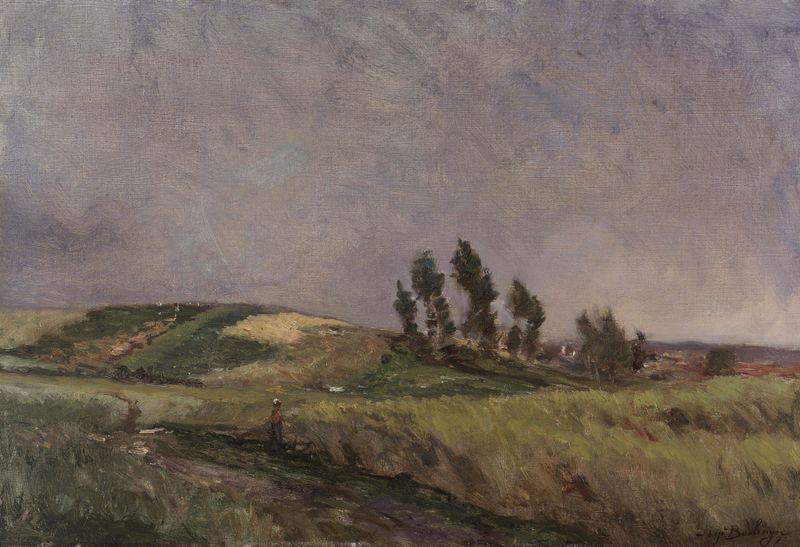
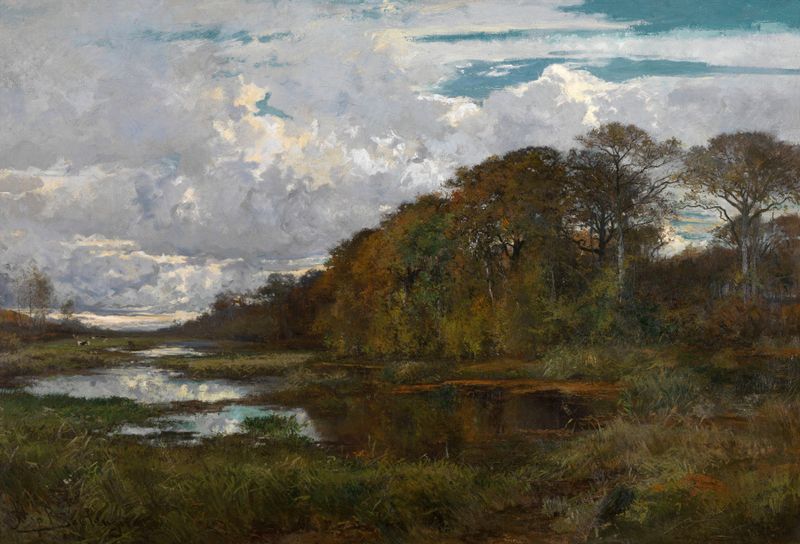
Could beauty survive in a century of chaos? In Josaphat Valley at Schaarbeek, the artist captures a tranquil moment where nature still flourishes amidst the looming shadows of decay. Look to the left at the serene waterway, its gentle curves guiding the eye toward lush greenery. Notice how the dappled sunlight filters through the leaves, creating a delicate interplay of light and shadow that brings the scene to life. The palette of soft greens and earthy browns evokes an atmosphere of calm, inviting the viewer to breathe in the freshness of the landscape.
Each brushstroke conveys a sense of harmony, encouraging a moment of reflection on nature's resilience. Yet, beneath the idyllic surface lies a tension between beauty and deterioration. The distant trees, though vibrant, bear the marks of time—a subtle contrast to the lively foreground. This duality hints at the ever-present cycle of life and decay, inviting contemplation on what is transient.
The delicate flowers and thriving foliage juxtapose against the ominous hints of decline, perhaps a reflection of the anxieties of an era grappling with industrial change. In 1868, Hippolyte Boulenger painted this work during a period marked by significant social and artistic transformation in Europe. Living in Belgium, a nation striving for its identity amid the tumult of modernization, the artist explored themes deeply rooted in nature, establishing a dialogue between the beauty of the landscape and the inevitable decline that shadows it. This piece stands as a poignant reminder of the fleeting nature of beauty in a rapidly changing world.