
After the Hunt — History & Facts
Who listens when art speaks of silence? Betrayal echoes in the stillness of the aftermath, weaving a complex narrative that lingers on the edges of perception. Focus on the somber tones that dominate the canvas, drawing your gaze to the figure of the hunter, cloaked in rich greens and browns, standing with a heavy, pensive demeanor. To the left, a slain stag lies motionless, its form rendered with an unsettling realism that invites examination. Notice how the light falls upon the hunter’s face, illuminating the stark contrast between the triumph of the hunt and the quiet sorrow that envelops him, a visual contradiction that amplifies the tension of the moment. Within this composition lies an exploration of duality—between the thrill of conquest and the weight of guilt, between nature's beauty and human transgression.
Each stroke breathes life into the tension, from the delicate shimmering of the stag’s fur to the haunting shadows that dance around the hunter’s figure. The silence depicted here feels heavy, as if the painting itself holds its breath, urging the viewer to reconcile the joy of victory with the quietude of loss. Created in an era where realism began to flourish, this work emerged from a period in which the artist sought to capture authentic experiences of the human condition. Camphuysen, likely painting in the early 17th century in the Netherlands, contributed to a genre that examined the relationship between man and nature, reflecting both the societal ideals of conquest and the emerging introspection of the era.
More Artworks by Govert Dircksz Camphuysen
Browse all →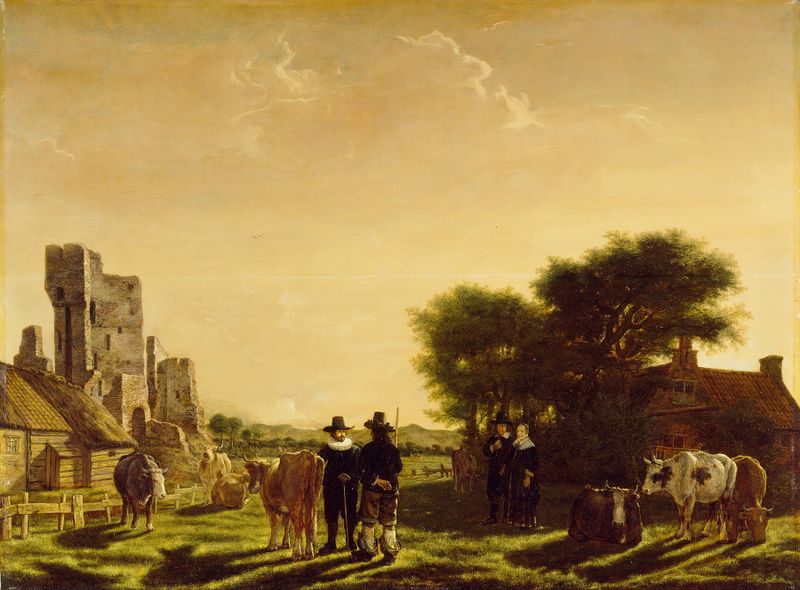
A Dutch Farm with the Ruins of the Huis te Kleef Netherlands
Govert Dircksz Camphuysen

Two Peasants with Cows
Govert Dircksz Camphuysen
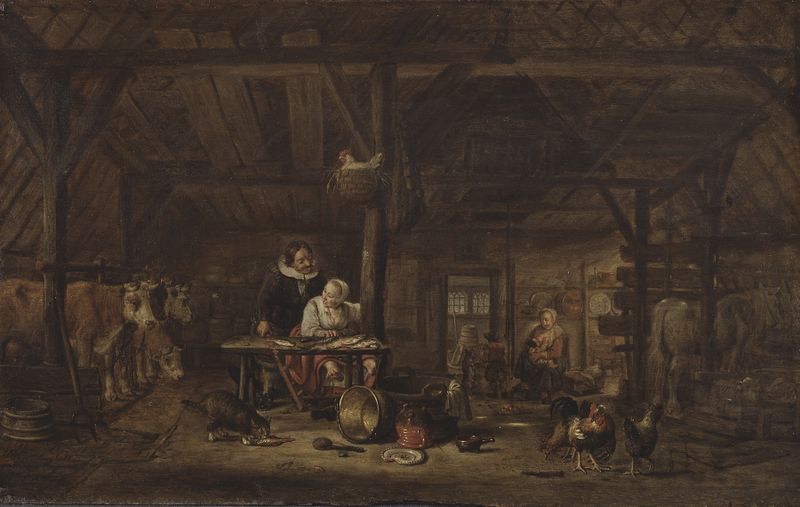
Interior of a Stable
Govert Dircksz Camphuysen

A Barn Interior With Four Cows, A Milk Maid Cleaning A Pot, And Earthenware Pots In The Foreground
Govert Dircksz Camphuysen





