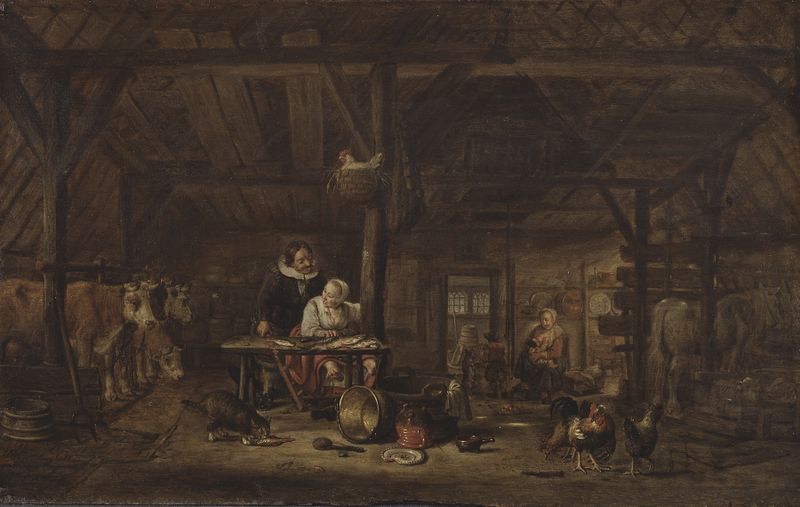
A Barn Interior With Four Cows, A Milk Maid Cleaning A Pot, And Earthenware Pots In The Foreground — History & Facts
In this moment of stillness, the mundane becomes extraordinary, a silent celebration of life in its simplest form. Through the humble act of cleaning, the milkmaid embodies a profound connection to her surroundings, inviting us to pause and savor the beauty of everyday tasks. Look closely at the milkmaid's focused hands; the way they cradle the pot draws your eye immediately. Notice how the soft, warm light filters through the barn, casting a gentle glow on the textured earthenware and illuminating the glossy coats of the cows.
The rich, earthy browns and deep greens harmonize with the subtle yellows, creating a cozy palette that encapsulates the essence of rural life. Each detail, from the glistening pots to the serene animals, is a testament to the artist’s meticulous attention. Yet within this bucolic scene lies a deeper tension — the coexistence of labor and tranquility. The cows, while still, seem to exude a sense of contentedness, contrasting with the diligent work of the milkmaid.
The earthenware pots are not mere objects; they symbolize sustenance and the cycle of life, suggesting that from this simple act of cleaning emerges nourishment and, ultimately, joy. The emotional gravity of such a scene lies in its celebration of hard work and the ecstasy found in routine. Created in 1645, the painting reflects a time when Govert Dircksz Camphuysen was immersed in the Dutch Golden Age, surrounded by a burgeoning art scene that celebrated domestic life and realism. Painting from his home in Amsterdam, he captured the essence of this quiet moment against a backdrop of cultural prosperity, where art served as both a reflection of society and an exploration of the human experience.