Two Peasants with Cows — History & Facts
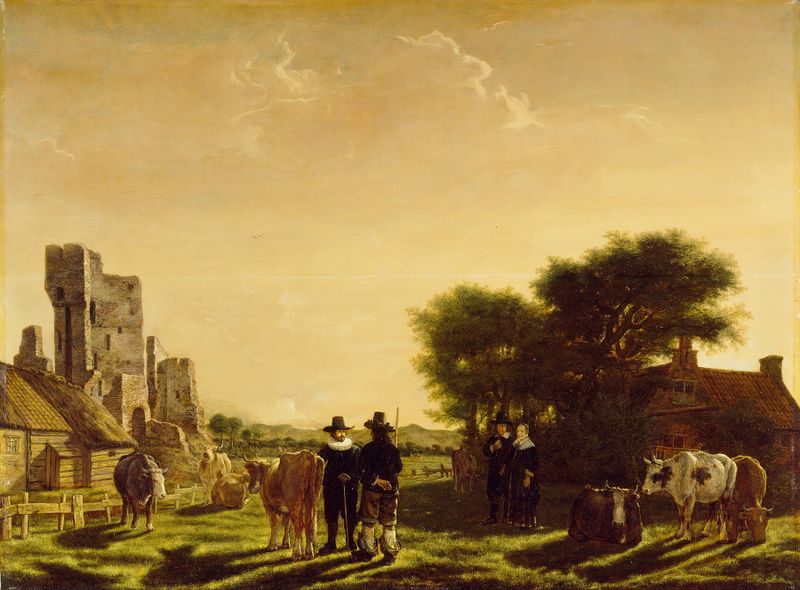
In the stillness of a rural landscape, two figures emerge from the earth’s embrace, embodying the beauty and simplicity of their existence. The quietude of their labor is palpable, inviting us to reflect on the unsung elegance of daily life. Focus first on the two peasants at the center of the composition. Their postures, slightly hunched and yet resolute, draw our attention.
Notice how the warm earth tones of their clothing blend seamlessly with the muted greens and browns of the surrounding landscape, creating an intimate connection between the figures and the land they till. The gentle play of light, soft yet illuminating, highlights the cows that stand beside them, their forms exuding a quiet strength, mirroring the steadfastness of their caretakers. Delve deeper into the emotional nuances embedded in the scene. The juxtaposition of the peasants’ worn faces against the soft bovine features suggests a shared resilience, a bond forged through toil.
The undercurrent of labor depicted here speaks to broader themes of human connection to nature, underscoring the dignity found in simplicity. The grazing cows, symbols of sustenance and labor, enhance the narrative of rural life, where beauty resides in the mundane. Camphuysen created this work during a period when Dutch painting was grappling with new artistic directions and societal shifts. In a time defined by the rise of genre scenes, he focused on the lives of ordinary people, capturing their dignity amidst the rapidly changing landscapes of 17th-century Holland.
This painting reflects both personal artistry and a cultural moment, where the beauty of everyday life began to receive its rightful recognition in the art world.