
Afterglow — History & Facts
In Joseph Henry Sharp's Afterglow, the haunting interplay of light and shadow invites us to explore the profound depths of grief nestled within beauty. Look to the center of the canvas, where warm hues of gold and amber swirl like wisps of a fading sunset. Notice how the light bathes the landscape—softly illuminating the jagged silhouettes of the mountains while casting deep shadows in the valleys below. The brushwork is both delicate and deliberate, evoking a sense of stillness that contrasts sharply with the vibrant colors, suggesting that warmth can coexist with sorrow. As you delve deeper, consider the juxtaposition between the luminous sky and the darkened terrain.
This contrast reflects a duality of emotions: the luminous afterglow signifies fleeting moments of joy, while the encroaching darkness suggests looming despair. Small details—the subtle wisps of clouds and the distant outlines of figures—add layers of narrative, hinting at stories of loss and remembrance that linger just beneath the surface of this serene vista. In 1895, Sharp, an American artist drawn to the landscapes of the West, found himself wrestling with his own experiences of transitional beauty. At this time, the art world was shifting towards Impressionism, with artists increasingly interested in capturing ephemeral moments—the very essence of what Afterglow embodies.
Sharp, deeply influenced by Native American culture and the natural world, poured his emotional landscape into this work, revealing a bittersweet testimony of time and memory.
More Artworks by Joseph Henry Sharp
Browse all →
Clearing After Storm, Taos
Joseph Henry Sharp
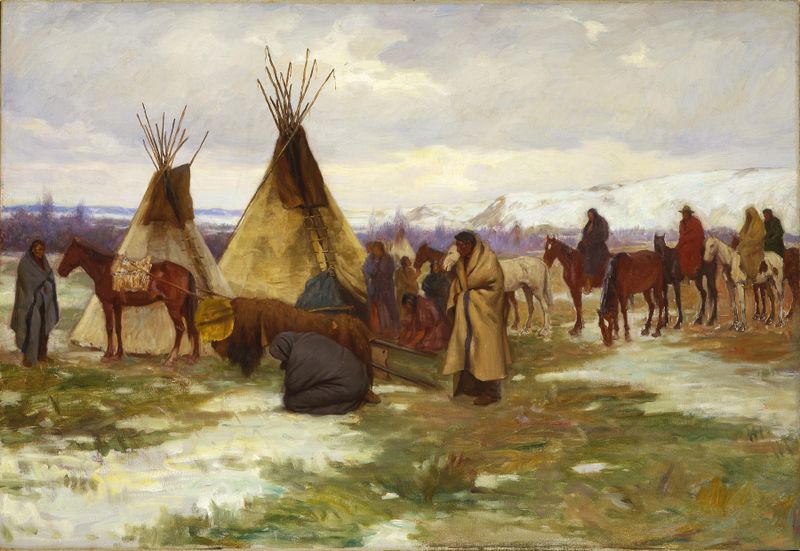
Burial Cortege of a Crow Chief
Joseph Henry Sharp
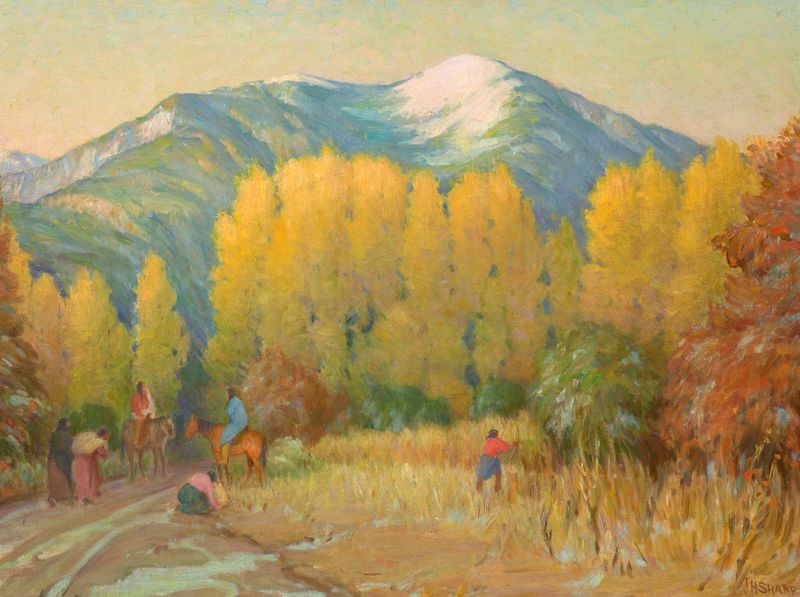
Old Road to the Pueblo of Taos—Afterglow
Joseph Henry Sharp
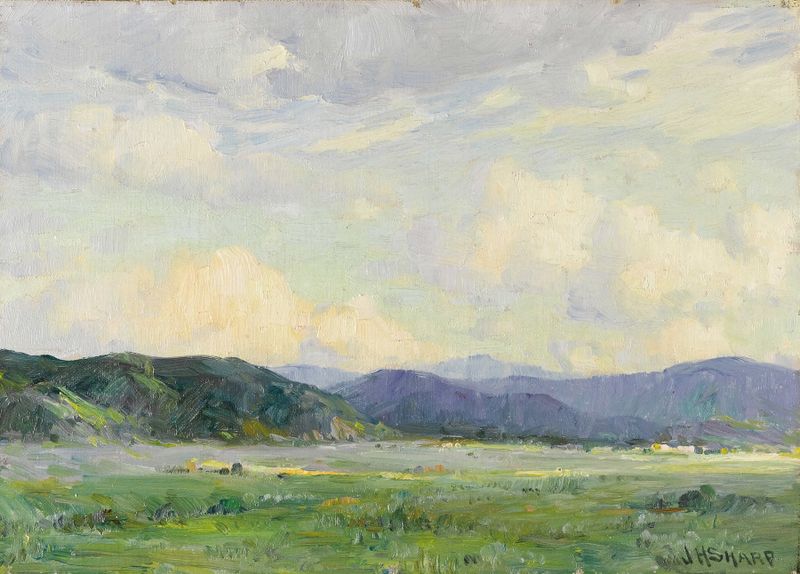
Taos Landscape
Joseph Henry Sharp
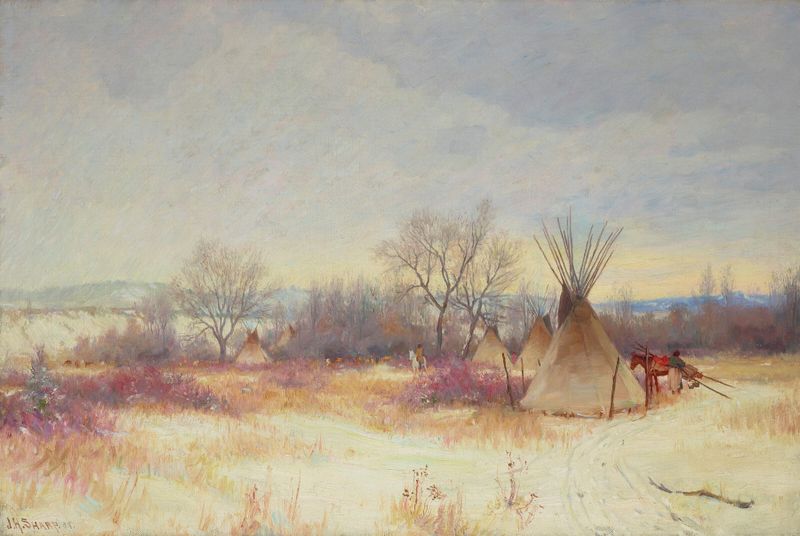
Indian Encampment
Joseph Henry Sharp

The Blue Tepee
Joseph Henry Sharp
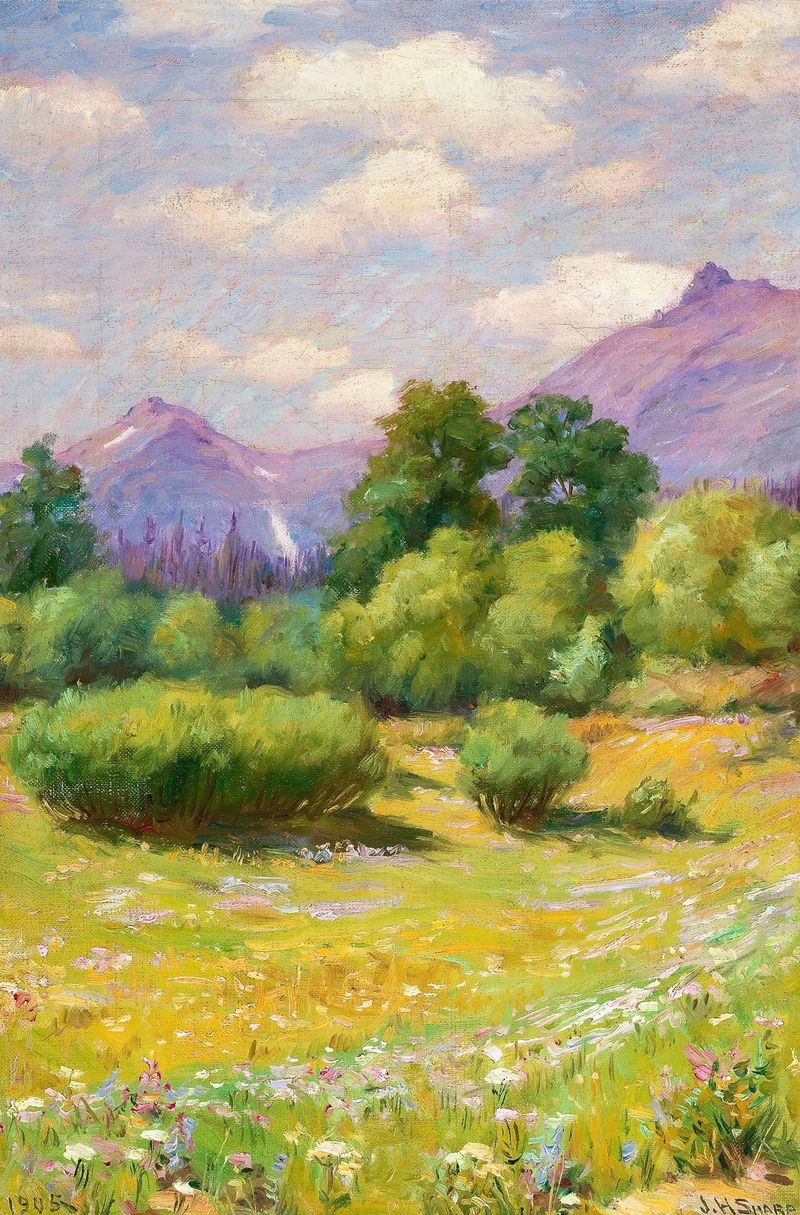
Landscape of Glacier Joseph Henry
Joseph Henry Sharp

Shadows in the Night
Joseph Henry Sharp

The Summer Camp
Joseph Henry Sharp

Preparing for the Medicine Sweat
Joseph Henry Sharp





