Afternoon In A French Village — History & Facts
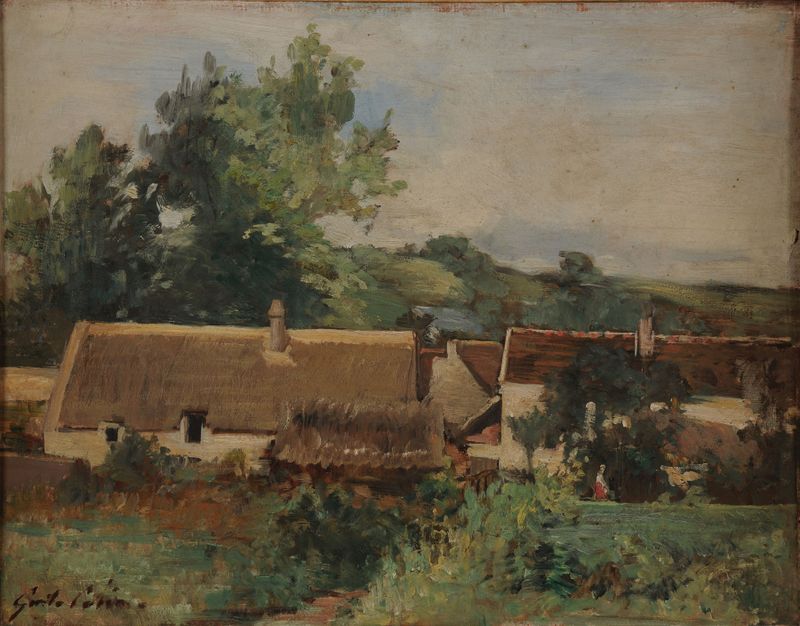
What secret hides in the quiet of the canvas? In Afternoon In A French Village, ecstasy dances between the sunlight and shadow, whispering the tales of a serene moment suspended in time. Look to the left at the soft contours of the rolling hills, where the delicate shades of green blend seamlessly with the warm, golden light. This harmony of color invites your gaze towards the thatched rooftops, their earthy tones harmonizing with the vibrant flora that flanks the pathways. Notice how the gentle brushstrokes evoke a sense of stillness, allowing the scene to breathe as though the air itself is infused with the scent of lavender and warm earth. Yet, amidst this idyllic setting, subtle tensions emerge.
The figures in the foreground seem blissfully engaged, yet their isolation hints at a deeper yearning for connection within the tranquility. The contrasting light and dark areas suggest both comfort and mystery, creating an emotional landscape that resonates with the bittersweet nature of human experience. Each small detail reveals the artist’s intent to capture not only a place but also a fleeting state of being. In 1876, while residing in France, the artist found himself amidst a burgeoning movement that sought to embrace the beauty of everyday life.
Influenced by the Impressionists, he painted this scene during a time when artists were increasingly exploring the interplay of light and atmosphere, departing from traditional representations. This work encapsulates that spirit, reflecting a moment of joy and introspection in an age characterized by both artistic innovation and societal change.