La Seine au Bas-Meudon — History & Facts
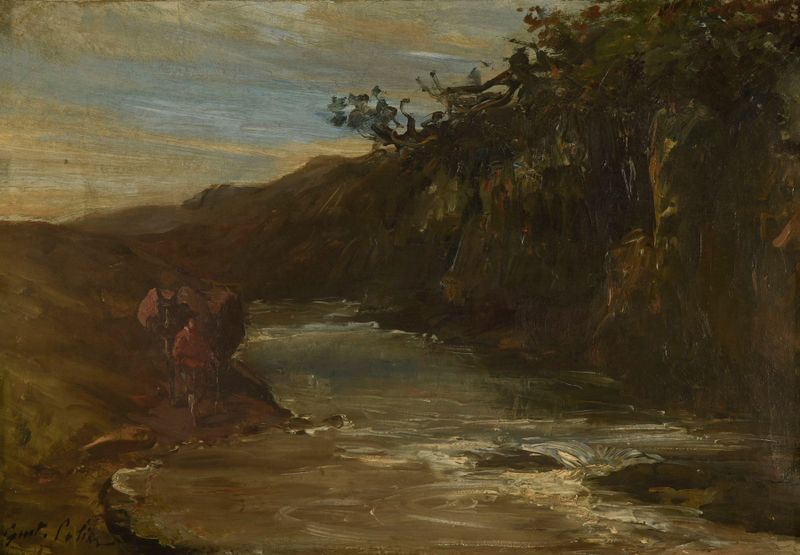
In every brushstroke lies a delicate tension between the fleeting essence of memory and the permanence of art. Focus first on the lower edge of the canvas, where the gentle ripples of the Seine invite your gaze. The water glimmers with dappled sunlight, each glint a fleeting moment captured in the artist's careful palette of blues and greens. Notice how the trees on the banks, with their soft, verdant hues, seem to bend and sway in an unseen breeze, forming a harmonious bridge between the tranquility of nature and the lively dance of light. As you delve deeper into the composition, the contrasts emerge: the serene surface of the river juxtaposed with the dynamic energy of the sky, painted in swirling strokes of white and gray.
These clouds, heavy yet ethereal, evoke a sense of impending change, a whisper of nostalgia that lingers just beyond reach. The scene encapsulates a moment where time stands still, yet the atmosphere teems with the promise of movement, echoing the artist’s exploration of memory itself. In 1889, while residing in the Bas-Meudon suburb of Paris, the artist captured this evocative scene, which resonated with the Impressionist movement that was redefining the art world. During this time, he navigated personal challenges, grappling with both his artistic identity and the vibrant, shifting perspectives of contemporary life.
This painting not only reflects a tranquil moment by the river but also a broader reflection on the passage of time and the memories we carry within.