Paysage (Le Gué) — History & Facts
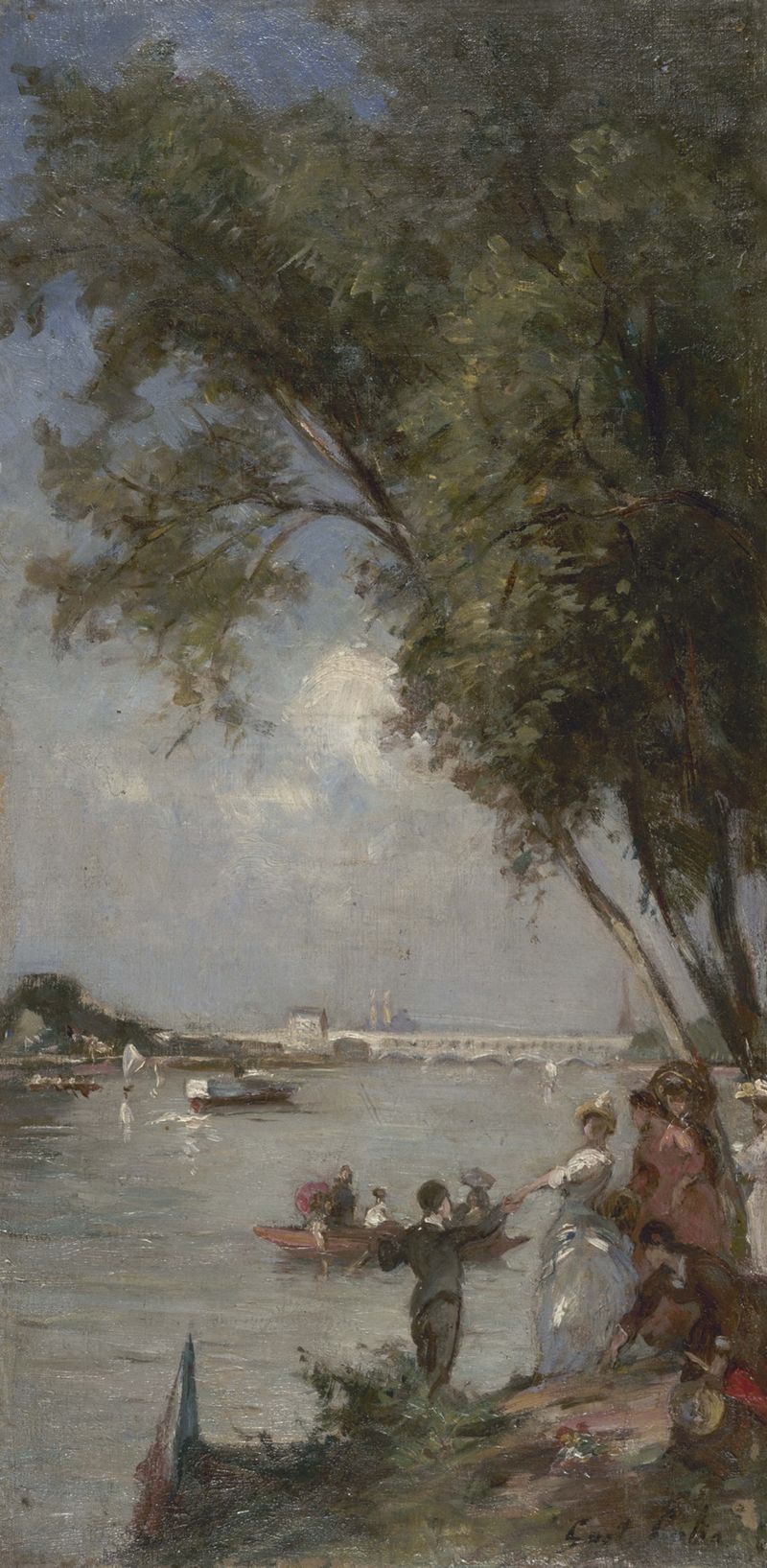
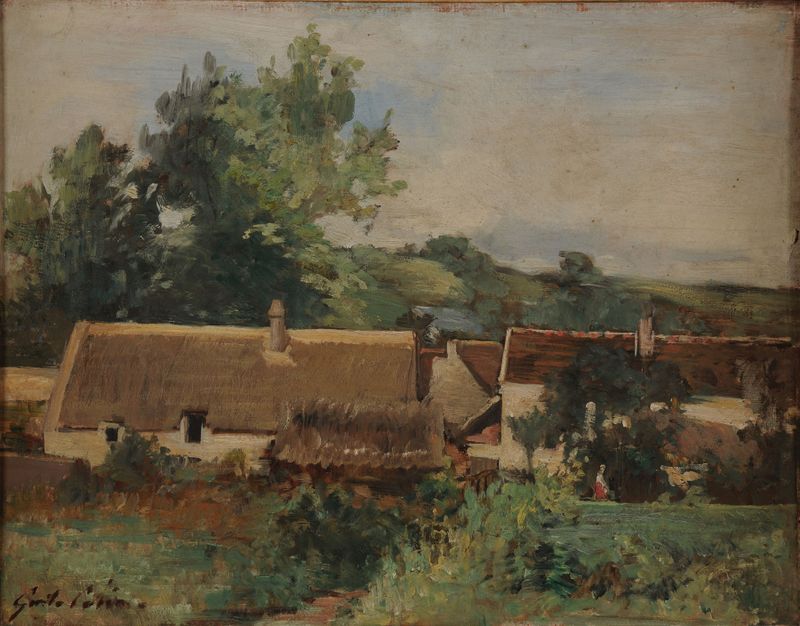
In a moment suspended in time, color becomes the language that speaks of deeper truths and unspoken emotions. Look to the left at the soft, verdant greens that beckon the eye, delicate strokes merging to form a lush landscape. Notice how the light dances across the surface of the water, a reflective azure punctuated by hints of shimmering gold. The horizon stretches languidly, inviting you to wander through the gentle gradient of earthy tones, where each brushstroke whispers secrets of the scene's vitality and tranquility. Delve deeper into the contrasts within this piece: the serene water juxtaposed with the vibrant foliage, harmonious yet alive with tension.
The stillness of the landscape invites contemplation, while the lively colors evoke a sense of joy and wonder. Each layer adds a complexity, suggesting not only the beauty of nature but also the intersection of tranquility and emotional depth, hinting at a world beyond mere observation. During the late 19th century, Colin painted Paysage (Le Gué), a reflection of his time in France, where the Impressionist movement was flourishing. This period was marked by a growing emphasis on color and light, as artists sought to capture fleeting moments of reality.
Colin, inspired by this movement, created a piece that embodies the emerging modernist sensibilities, merging his unique vision with the broader artistic innovations of his environment.