
Akasaka — History & Facts
It holds the weight of revolution, a moment poised between tradition and awakening. Within each brushstroke lies the tension of change, an invitation to witness the delicate balance of a shifting world. Look closely at the foreground, where vibrant cherry blossoms cascade in hues of pink. Notice how they contrast with the somber silhouettes of the distant mountains, their peaks hinting at an unyielding history.
The use of color serves as a metaphor, the blossoms representing fleeting beauty against the backdrop of a changing society. Hiroshige’s delicate lines and layered textures draw the eye, capturing the viewer in a serene yet charged atmosphere. The composition suggests a deeper narrative, a reflection on the impermanence of nature and the inevitability of progress. Each element, from the meticulous detail of the blossoms to the tranquil water beneath, hints at the dynamic interplay between the ephemeral and the enduring.
The light gently caresses the scene, revealing a dichotomy between the serenity of nature and the potential upheaval on the horizon. In 1855, Hiroshige painted this piece during a time of significant social transformation in Japan. The Edo period was drawing to a close, and the influence of Western art and culture was beginning to seep into the traditional fabric of Japanese life. The artist was not only capturing his surroundings but also documenting a pivotal moment in history, one that would resonate far beyond the borders of his homeland.
More Artworks by Utagawa Hiroshige
Browse all →
Sudden Shower over Shin Ohashi Bridge and Atake (Ohashi Atake no yudachi), from the series "One Hundred Famous Views of Edo (Meisho Edo hyakkei)"
Utagawa Hiroshige
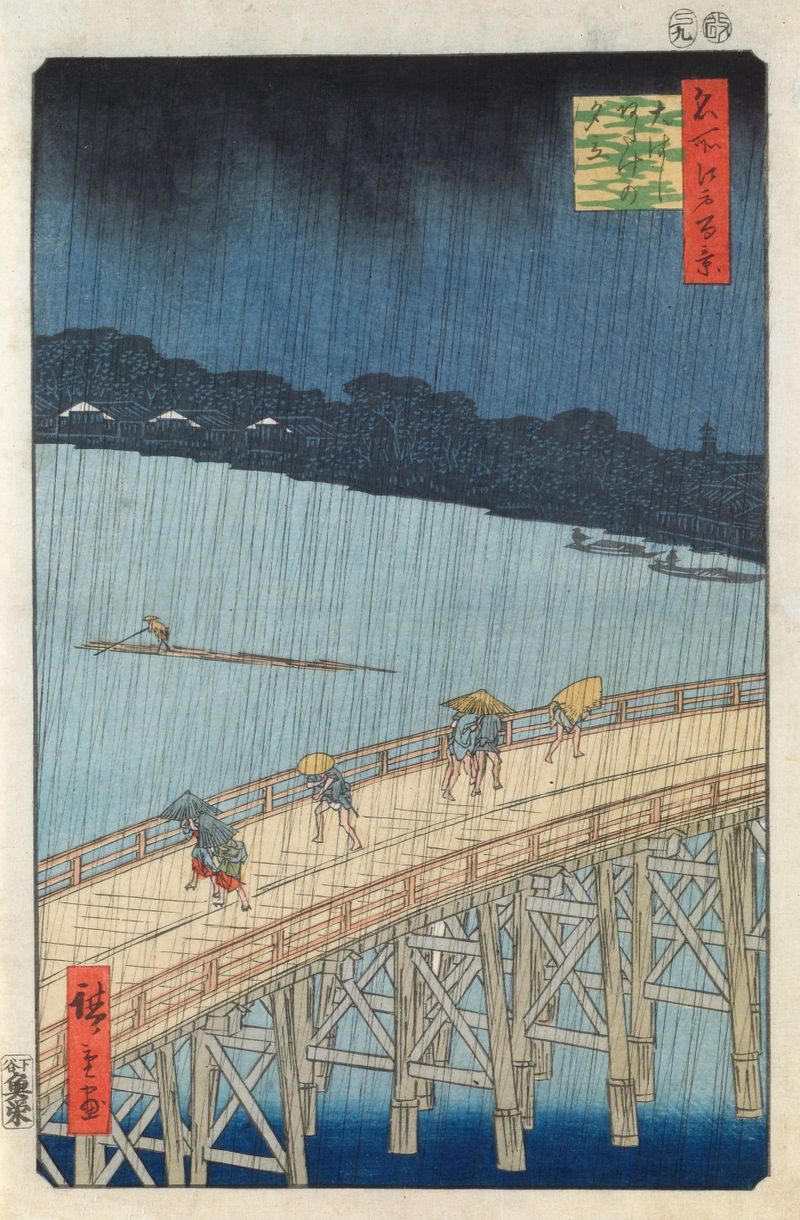
Sudden Shower Over Ohashi Bridge and Atake
Utagawa Hiroshige
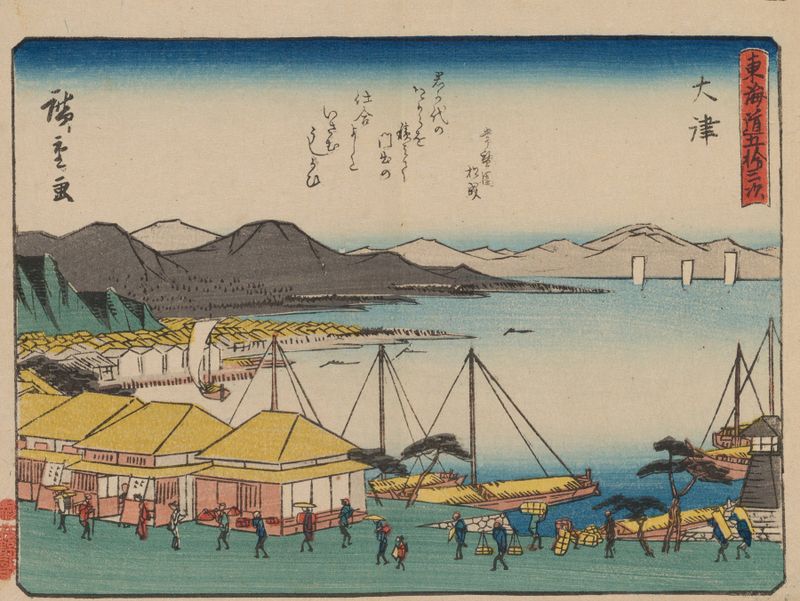
Tokaido gojusantsugi, Pl.54
Utagawa Hiroshige
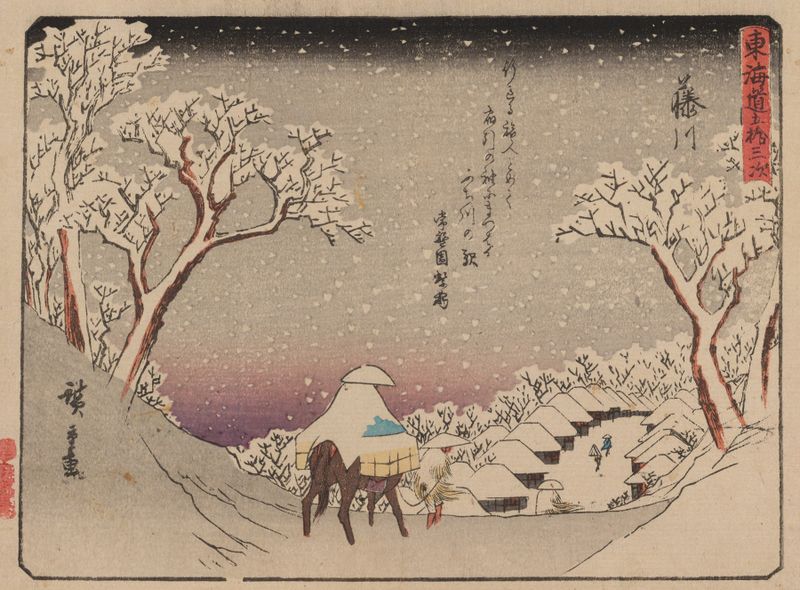
Tokaido gojusantsugi, Pl.38
Utagawa Hiroshige
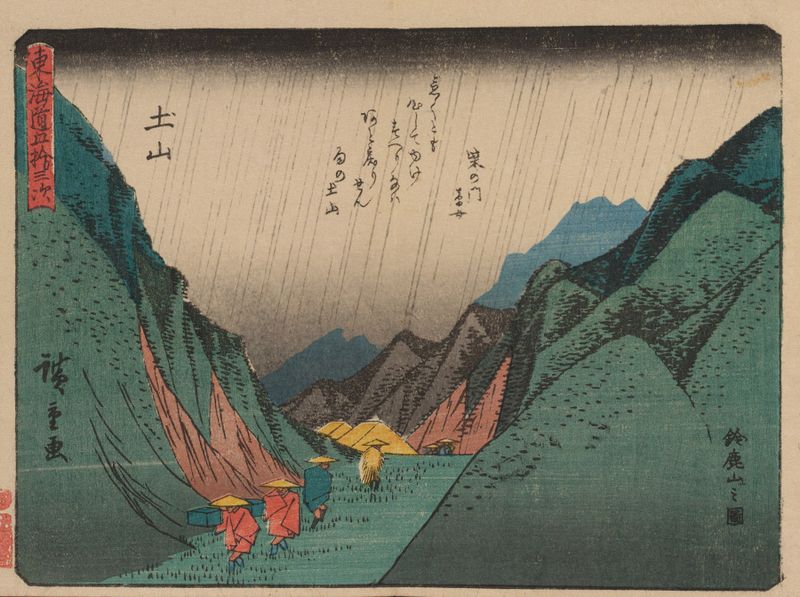
Tokaido gojusantsugi, Pl.50
Utagawa Hiroshige
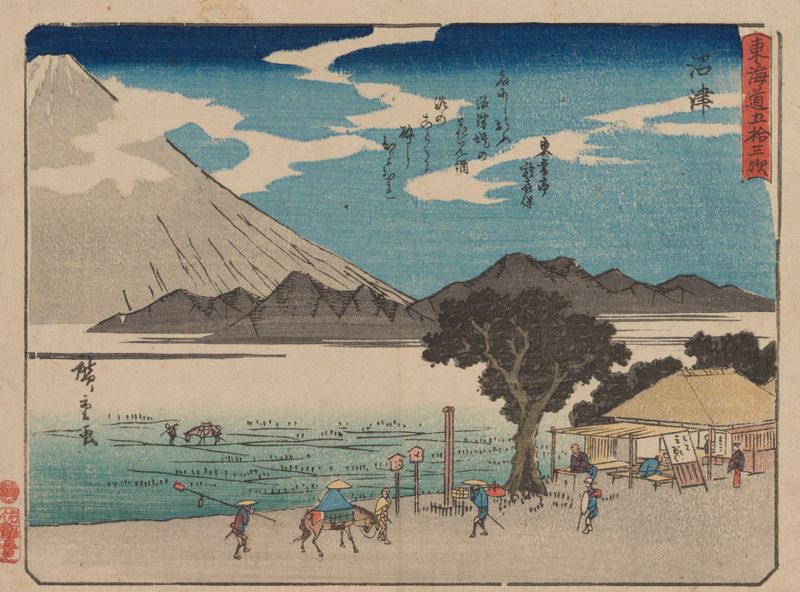
Tokaido gojusantsugi, Pl.13
Utagawa Hiroshige
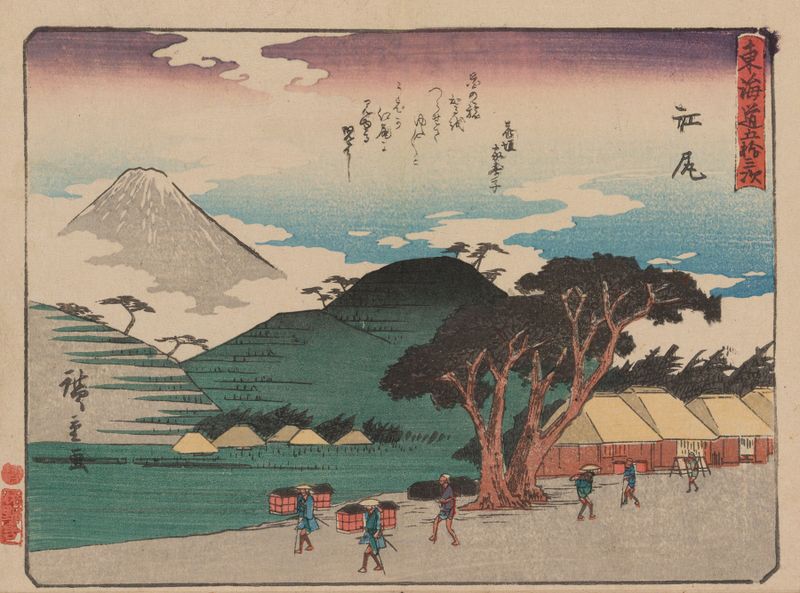
Tokaido gojusantsugi, Pl.19
Utagawa Hiroshige
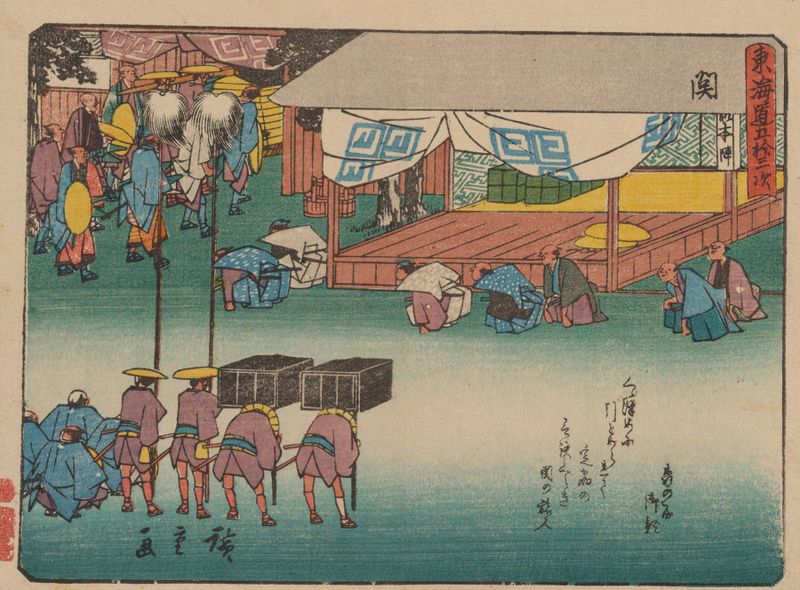
Tokaido gojusantsugi, Pl.48
Utagawa Hiroshige
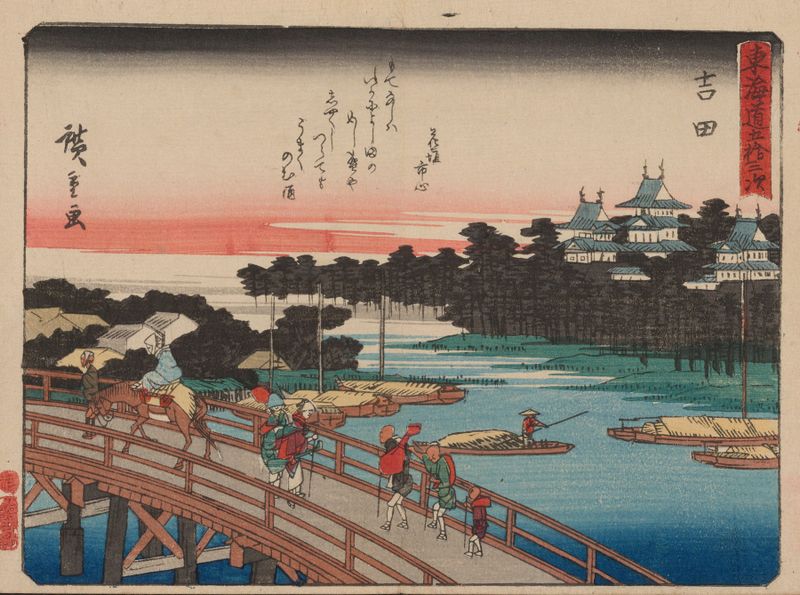
Tokaido gojusantsugi, Pl.35
Utagawa Hiroshige
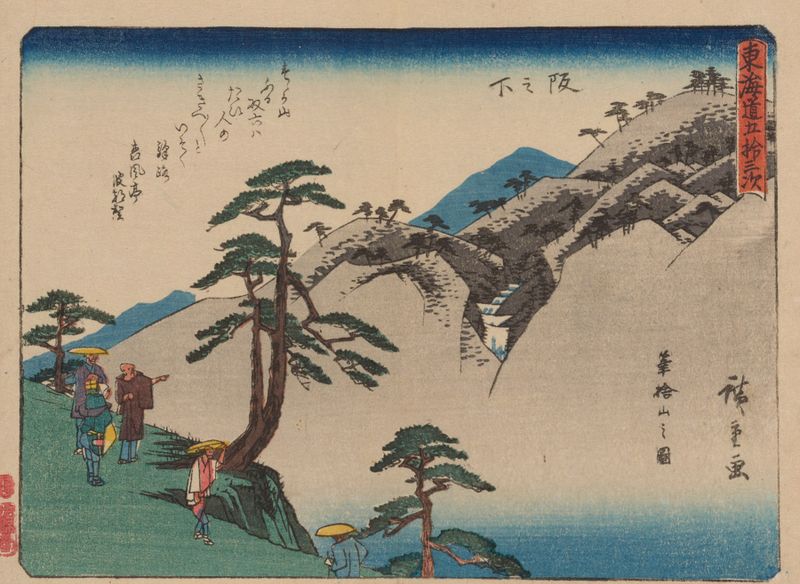
Tokaido gojusantsugi, Pl.49
Utagawa Hiroshige





