
Akasaka — History & Facts
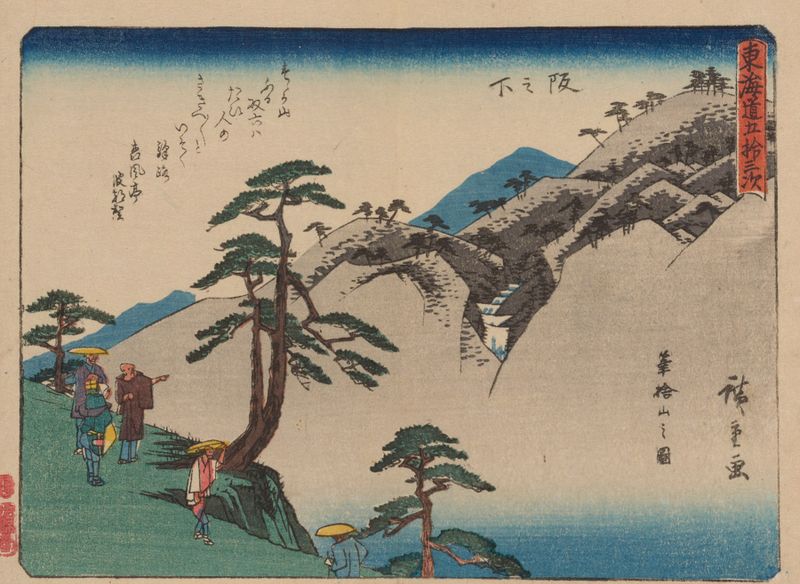
Can paint confess what words never could? In Akasaka, the quiet elegance of the scene captures a moment suspended in time, a harmony that speaks when language falls short. Look to the foreground, where a tranquil river winds gently, its surface a mirror reflecting the soft hues of dusk. The delicate brushwork creates a silken texture, drawing the eye to the subtle ripples of water that suggest a whispering breeze. Notice how the colors blend — pale blues and muted pinks intermingle with deep greens, establishing an ethereal quality that enchants the viewer.
The composition balances elements of nature and humanity, as silhouettes of travelers loom on the riverbank, inviting contemplation on their journey. There is a profound contrast between the quietude of nature and the movement of life, hinting at the passage of time. The reflections in the water symbolize an introspective journey, a floating moment where reality and dreams converge. The fading light encapsulates a fleeting beauty, suggesting both longing and peace, as if the painting births a silent dialogue between the viewer and the landscape. In 1841–1842, Utagawa Hiroshige painted Akasaka during the height of the Ukiyo-e movement in Edo, Japan.
Known for his landscapes, Hiroshige was exploring new techniques and perspectives in a rapidly modernizing world. This period marked a significant transition in Japanese art, where traditional forms began to merge with influences from Western art, and Hiroshige's work resonated with a growing appreciation for the beauty found in everyday moments.
More Artworks by Utagawa Hiroshige
Browse all →
Sudden Shower over Shin Ohashi Bridge and Atake (Ohashi Atake no yudachi), from the series "One Hundred Famous Views of Edo (Meisho Edo hyakkei)"
Utagawa Hiroshige
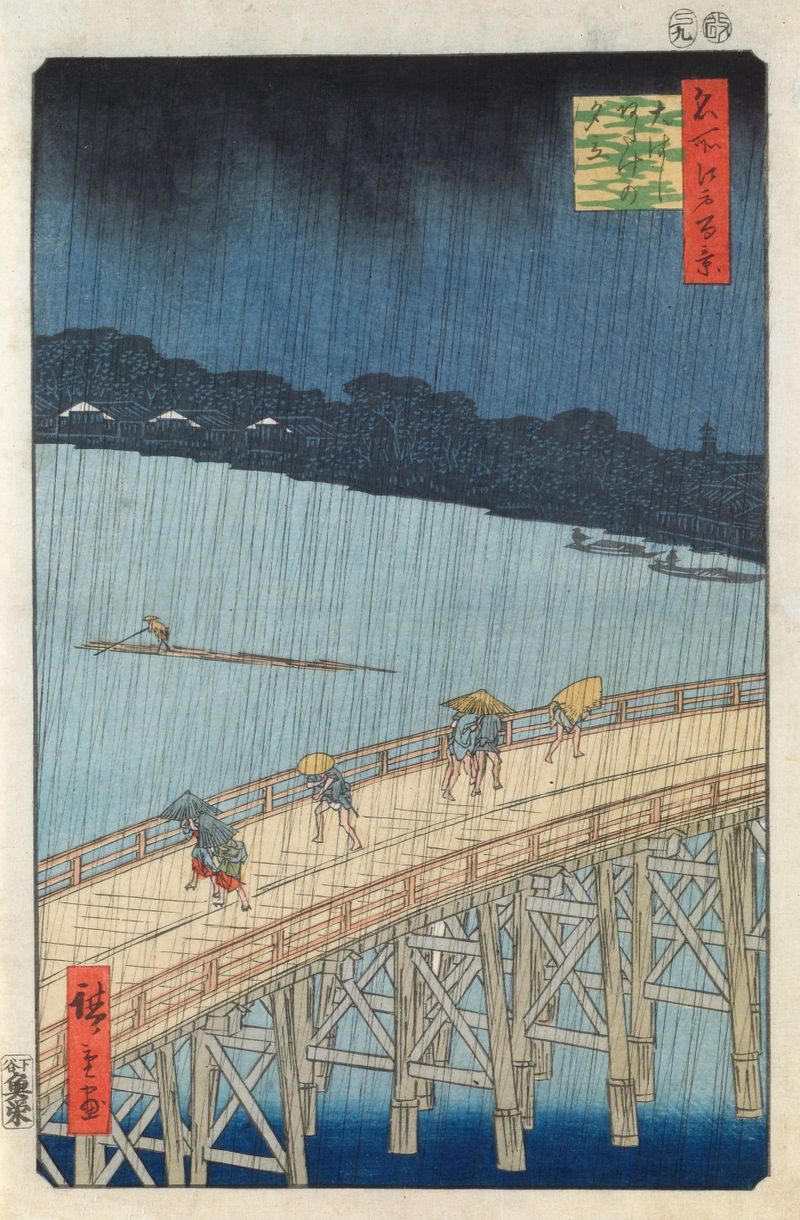
Sudden Shower Over Ohashi Bridge and Atake
Utagawa Hiroshige
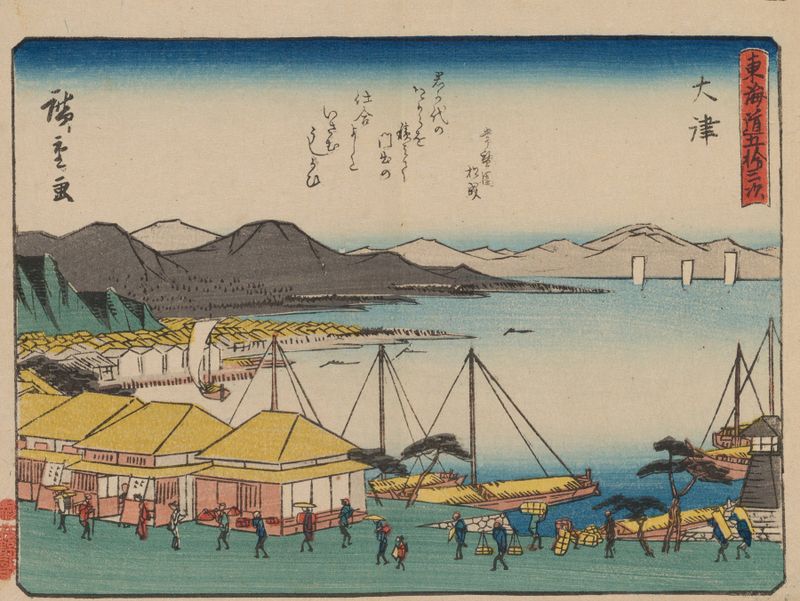
Tokaido gojusantsugi, Pl.54
Utagawa Hiroshige
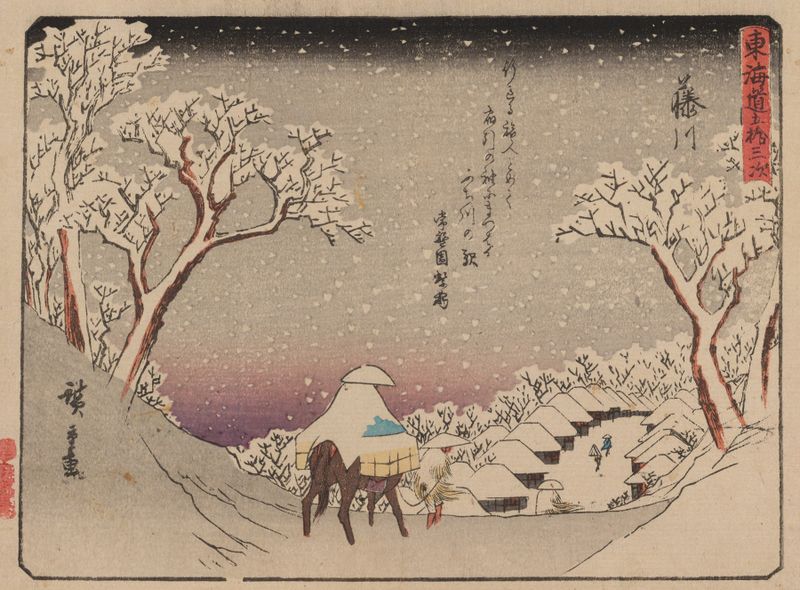
Tokaido gojusantsugi, Pl.38
Utagawa Hiroshige
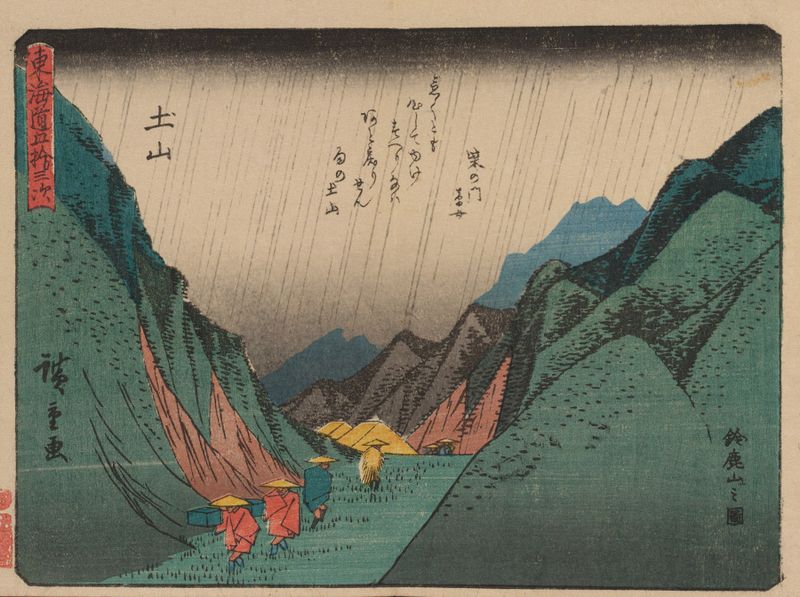
Tokaido gojusantsugi, Pl.50
Utagawa Hiroshige
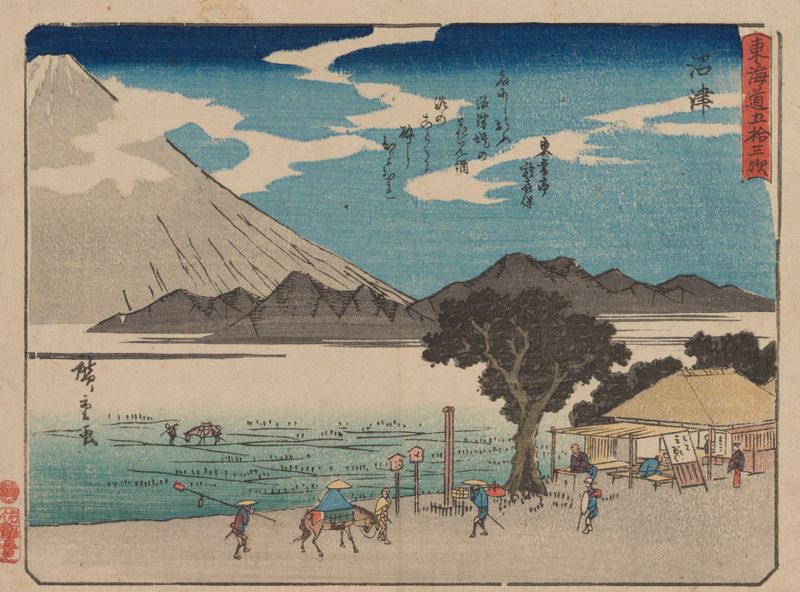
Tokaido gojusantsugi, Pl.13
Utagawa Hiroshige
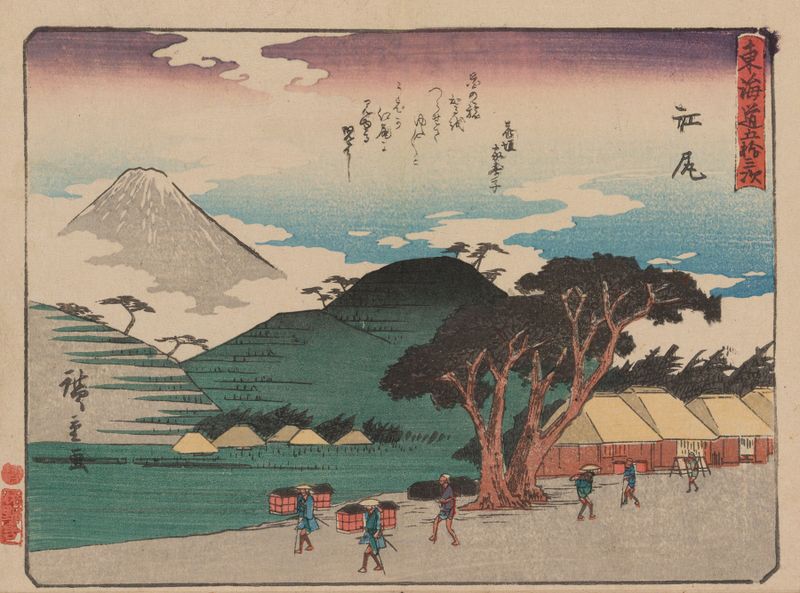
Tokaido gojusantsugi, Pl.19
Utagawa Hiroshige
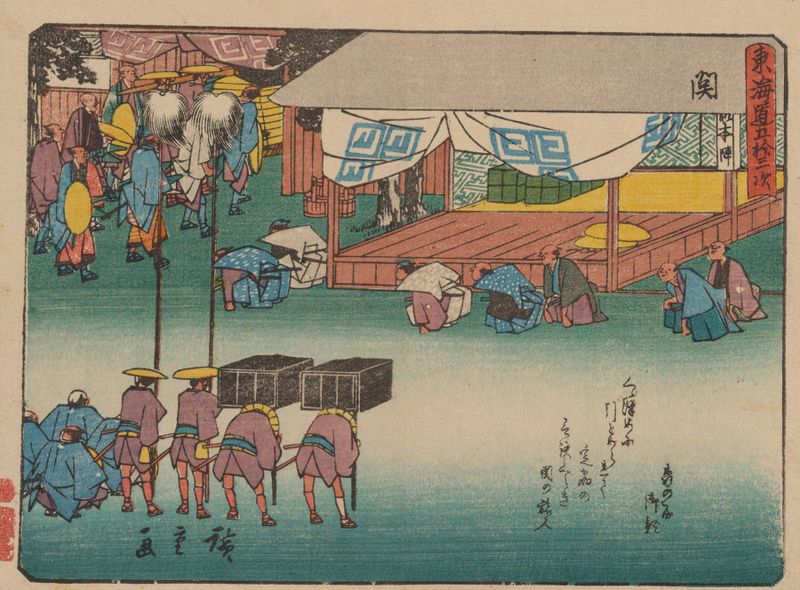
Tokaido gojusantsugi, Pl.48
Utagawa Hiroshige
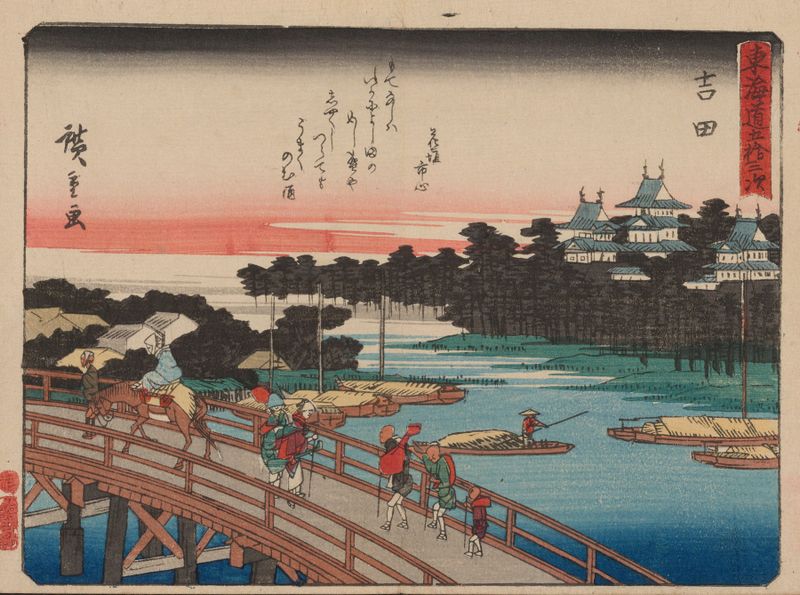
Tokaido gojusantsugi, Pl.35
Utagawa Hiroshige
Tokaido gojusantsugi, Pl.49
Utagawa Hiroshige





